Trail bike trails

From the Downs to the Sea – Day 1, Apr 2017

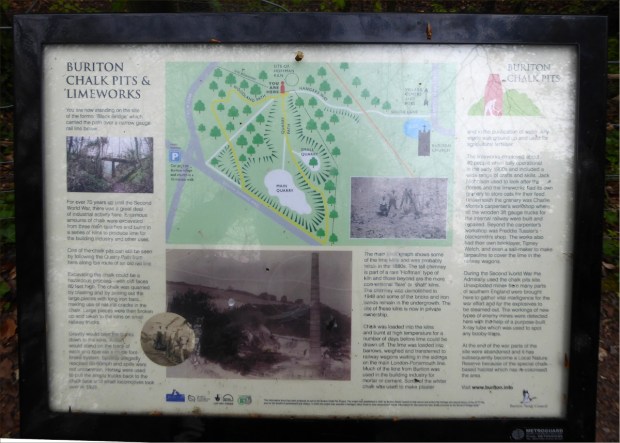
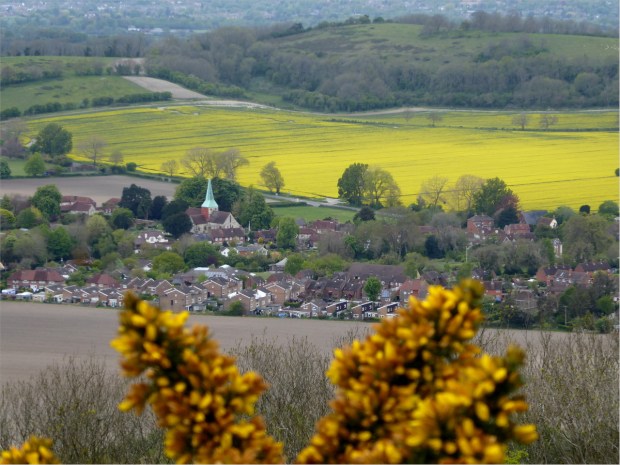
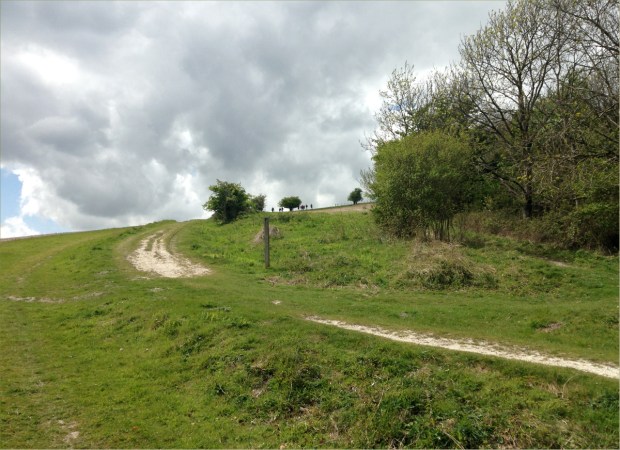
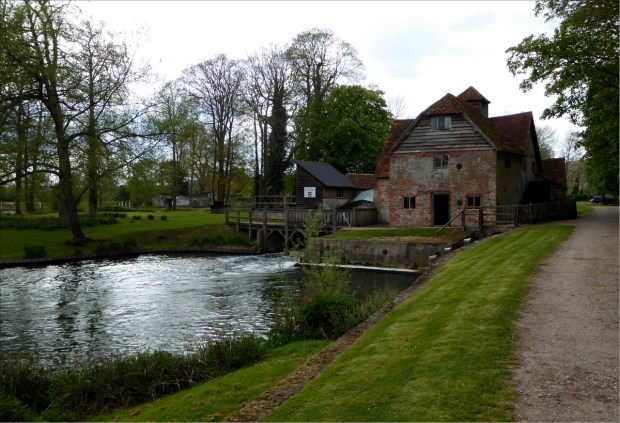
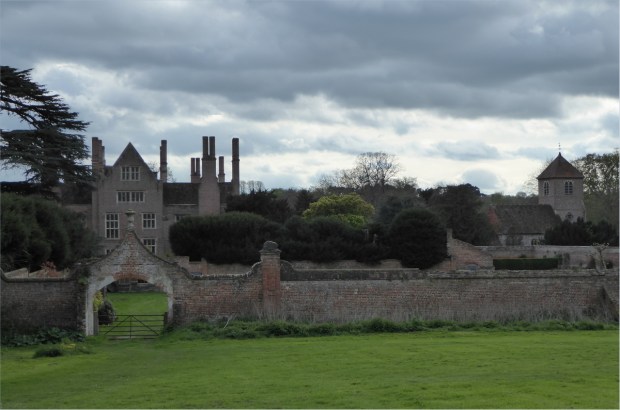
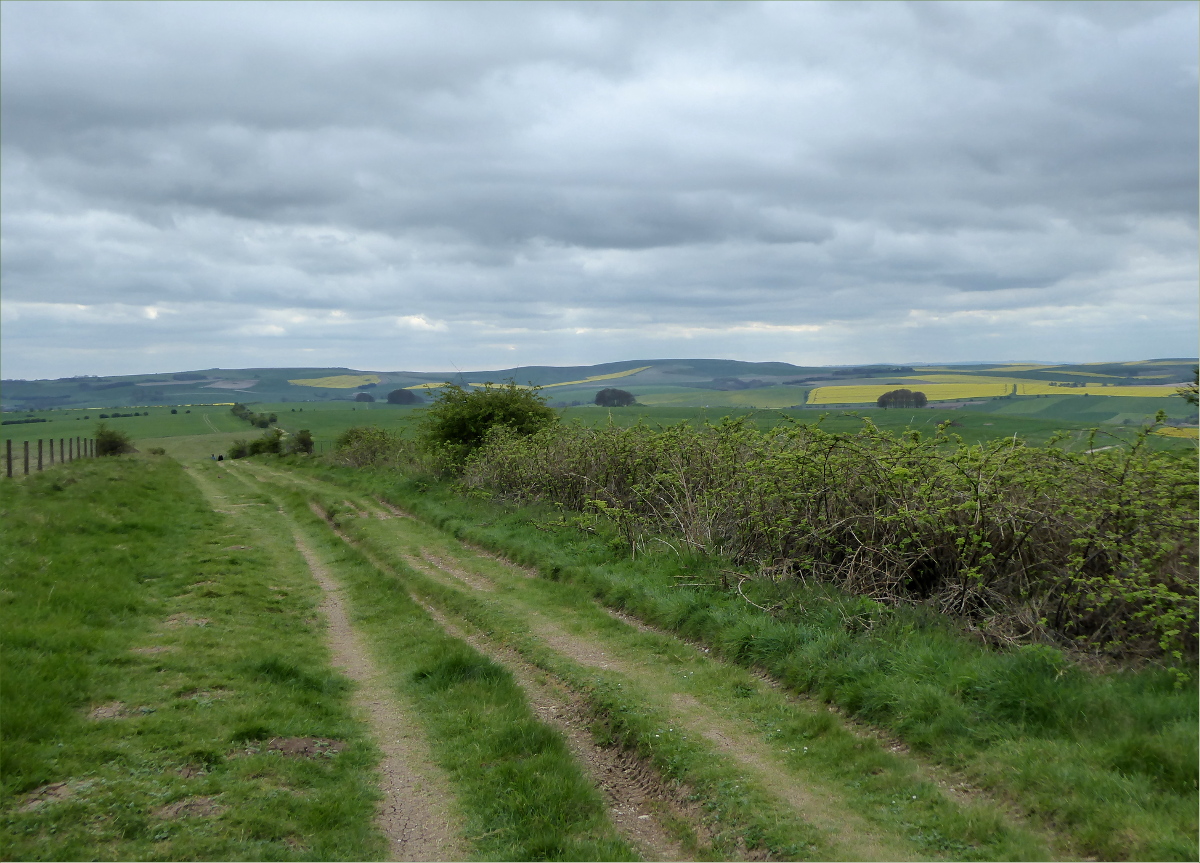
Our second cycle tour of the UK took us to the South Downs. We followed South Downs Way, a 100 mile (160km) off-road National Trail that connects Winchester, the Saxon Capital of England, with the white cliffs of Eastbourne. With a total of 3,800 metres, or 12,600 feet of ascent, it normally takes 7–10 days to walk, or 2–4 days to ride. We set out early one Saturday in April to do a one day tour, starting in picturesque Petersfield and ending in Emsworth, via Buriton Chalkpits and Limeworks, West Dean Wood and Kingley Vale National Nature Reserve.

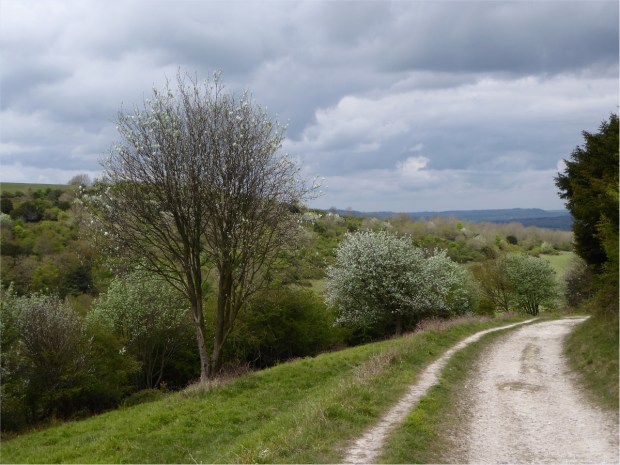
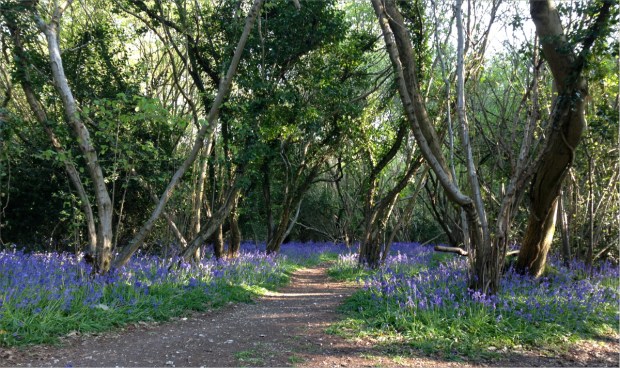
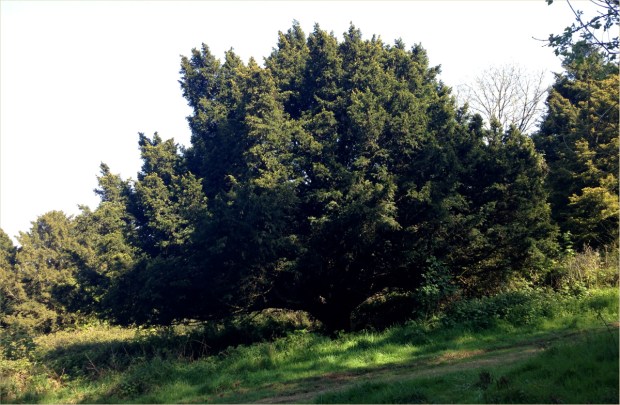
The trail through Buriton Chalkpits and Limeworks was shady and quiet. A couple busy roads intersect it, which seemed a bit dangerous. West Dean Woods was spectacular with hazel coppices and fields of purple violets. It’s also the home of the Andy Goldsworthy chalk balls, located along the aptly titled Chalk Stones Trail. Kingley Vale Trail takes you through an ancient yew tree reserve. Some of the reserve’s yew trees are the oldest living things in Britain!

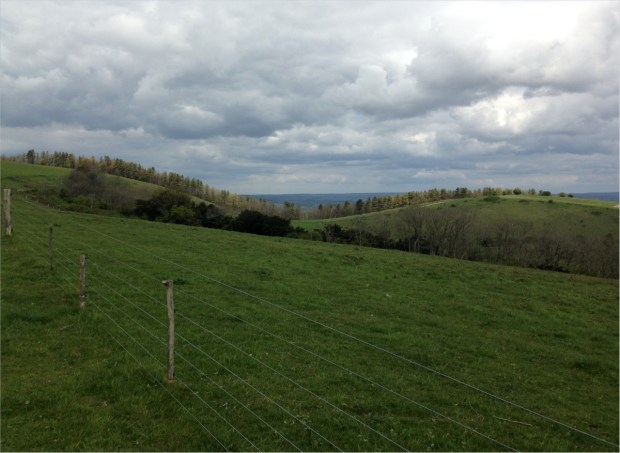
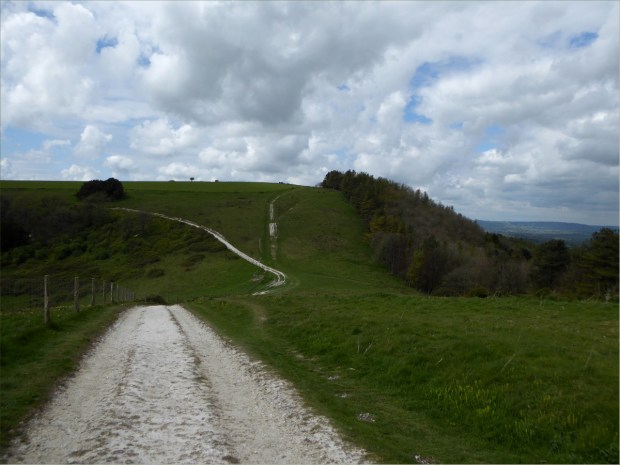
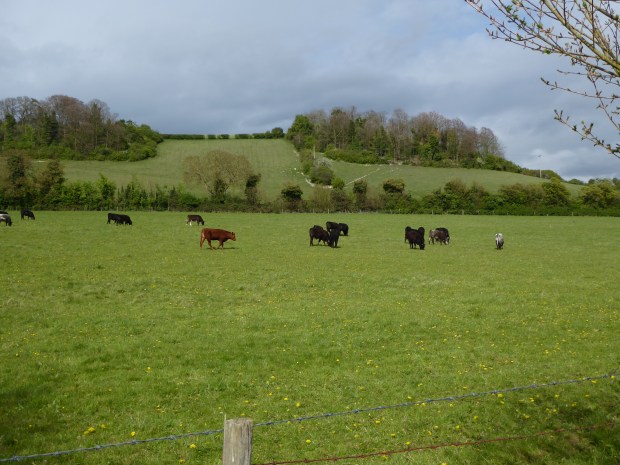
The grassy, round hills were a treat to ride. The ascents and descents were gentler than those of The Ridgeway, although I will say that we thought we’d hit the final hill five times before we actually climbed it. We saw quite a few mountain bikers and backpackers, but, strangely, no other female cyclists. And we added another word to our British lexicon: “hiya.” Unlike in the US, where the same expression sounds the way it is written, over here it sounds like “howareya”; it means the same thing, though. My dad, an Australian and long-time resident of the US, says hiya like the British do and always gets the response, “Good thanks; how are you?”

Petersfield

Brilliant graphism. These labels very effectively placed us in space, time and history.

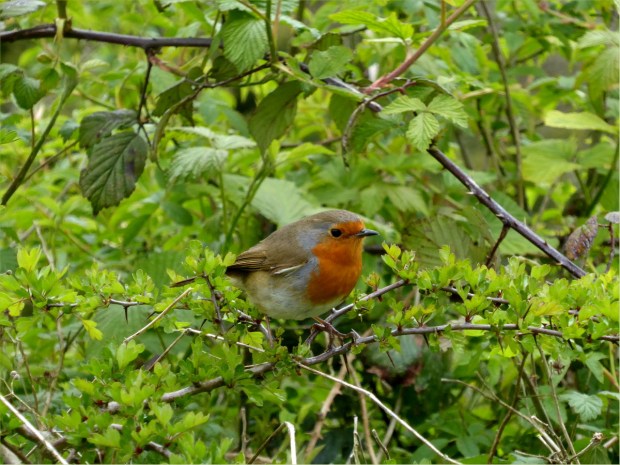
This little fellow entertained us as we at our lunch.

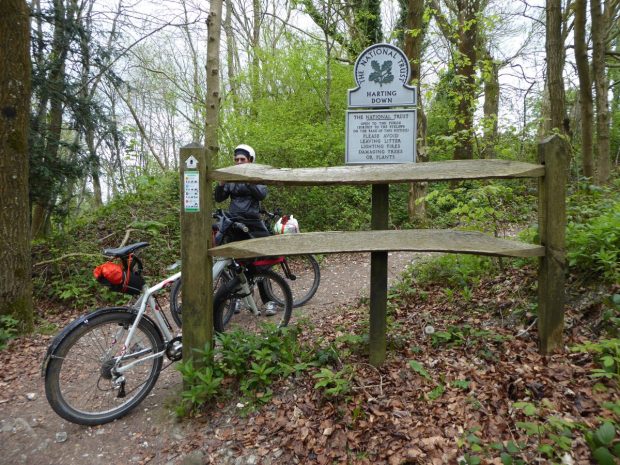
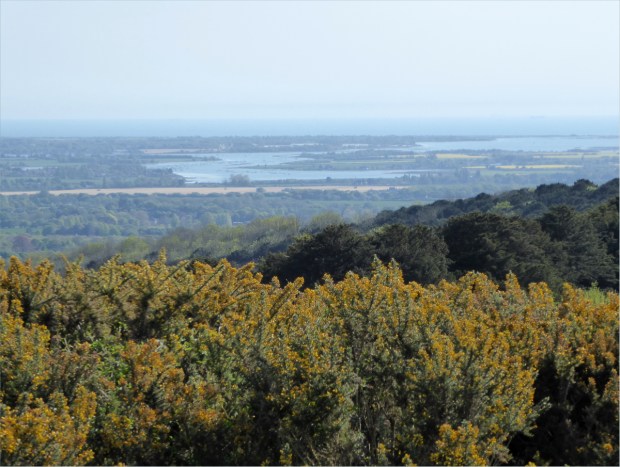
This was our view from Harting Down as we ate our lunch.


Andy Goldsworthy chalk stone

Notice the hazelwood fence

Yew tree

Chichester in the distance

Racton Monument, completed in 1775; a folly (i.e., not a real ruin) commissioned by the 2nd Earl of Halifax, possibly as a summerhouse or a lookout so the Earl could watch his merchant ships dock at the nearby port village of Emsworth.

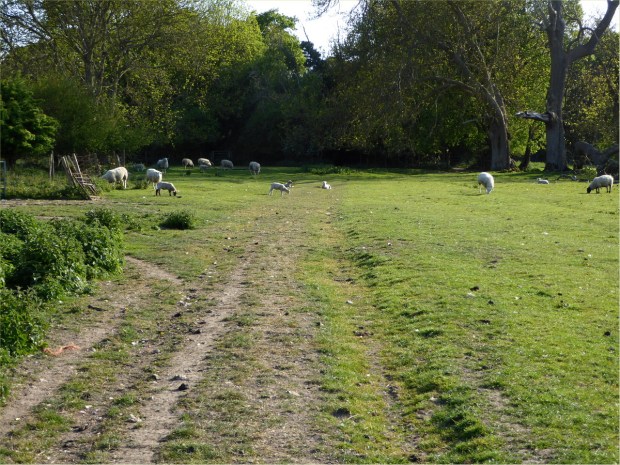
A bridleway overlooking Racton Monument took us through a small paddock full of sheep.

Resources consulted
Chalk Stones Trail
Guide to the South Downs National Park
Kingley Vale Trail
Racton Monument

Cycling The Ridgeway Trail – Day 3, Apr 2017

902 ft maximum height
National Trails The Ridgeway Trip Planner

The time between our brains receiving the message “Ache in bum region” to the time the message changed to “What heavenly surroundings,” was once again very rapid. The ascent up the side of the ridge was steep and wild and the trail rutted and crumbly. Gauthier carries Ollie in the basket except when riding up hills. Here’s how it works: I generally follow behind; when Gauthier stops at the base of hills to remove Ollie, he yells, “Go Emily, go!” at which cry I whiz past and Ollie tears after me.

racehorse gallop

A racehorse gallops!

The section of The Ridgeway between Wantage and Goring is a dream to ride. It has large stretches of grassy hard-pack, hardly any ruts, and few if any steep hills.

GWR tunnel
We stopped to have a snack atop a derelict GWR tunnel. “I remember riding this line with my dad before it was shut down in 1963,” a passing hiker told us.

leaving The Ridgeway
Before we knew it we were saying goodbye to The Ridgeway and turning our bikes towards Goring, a village of 3,200 inhabitants with a Norman church.

Goring village with view of church

Goring was recently in the press for being the home of and place where George Michael passed away. It’s also Wind in the Willows country.

Goring Lock

The homes are old, posh and lush. Goring Lock (above) is situated in Goring Gap.

mossy roof of Catherine Wheel
Catherine Wheel is Goring’s oldest inn, dating back to Elizabethan times. It serves traditional British food (i.e., a variety of roast dishes) and real ale, hosts live jazz, has a predilection for all things French…

French safari-inspired wallpaper at the Catherine Wheel

French safari-inspired wallpaper at the Catherine Wheel

and a sign at the bar informs guests that “Witches are welcome.”

Goring Gap with boats
Our final stop was Reading and to get there we took the Thames Path, which cuts through The Ridgeway just north-west of Reading at the Goring Gap.

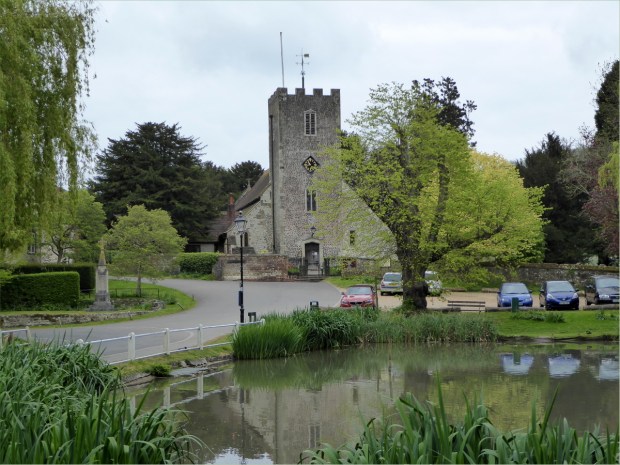
Norman church

We followed a quiet, gently descending road, canopied by trees and intermittently littered with horse droppings. The soundscape was fantastic: birdsong, burbling brook and the distant clip clop of horses’ hooves. Hidden behind the dense foliage was a large estate with another lovely Norman church.

donkeys
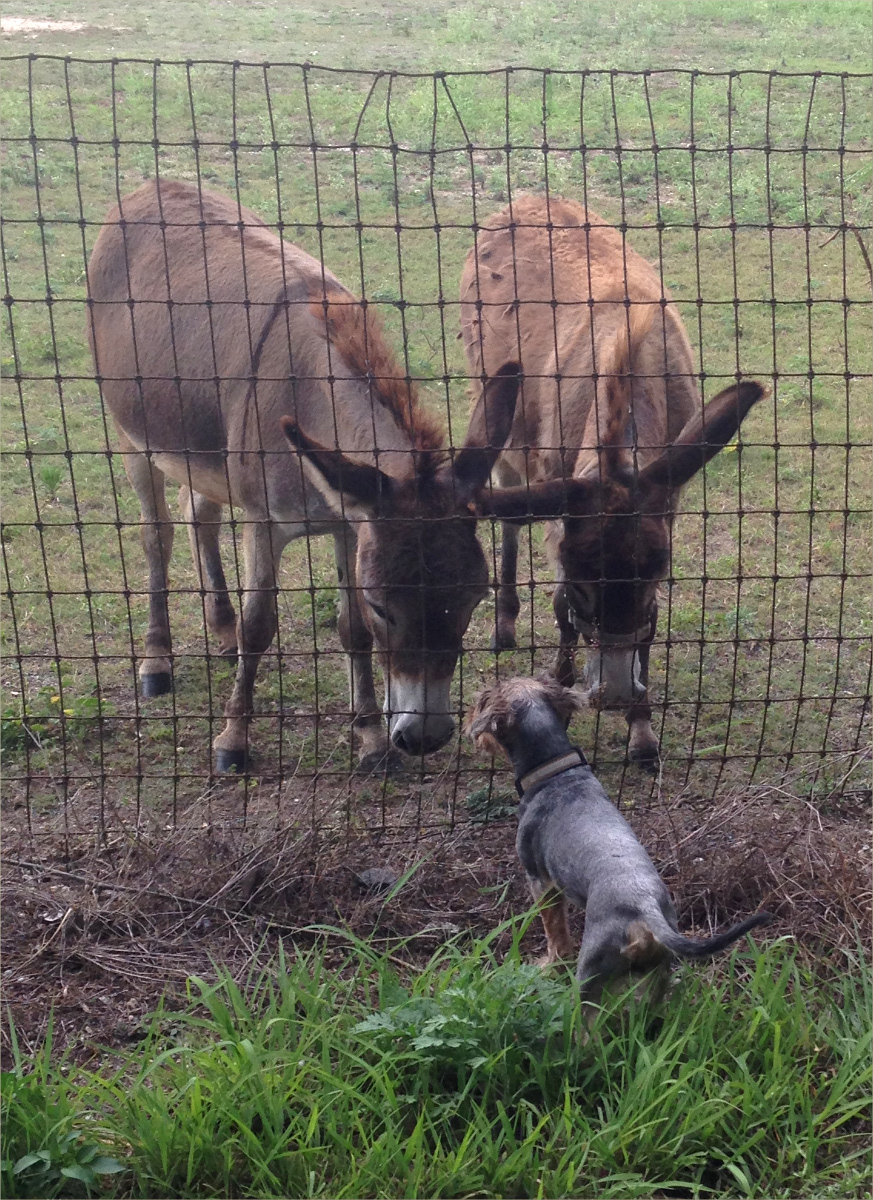
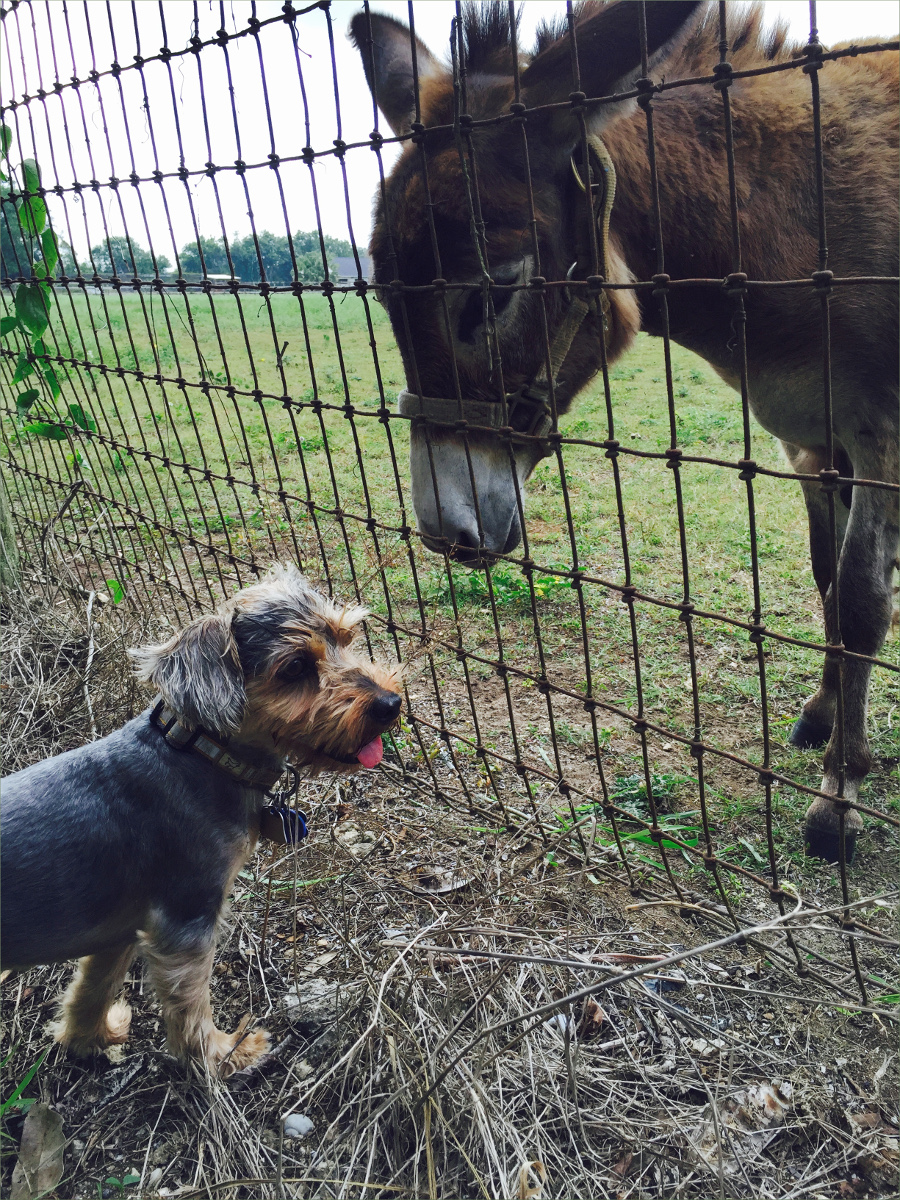
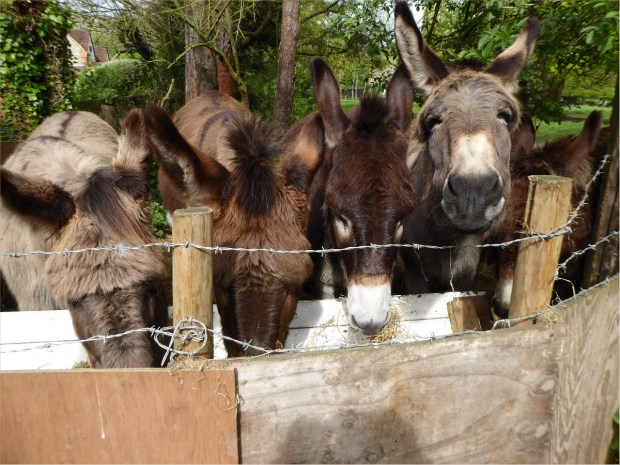
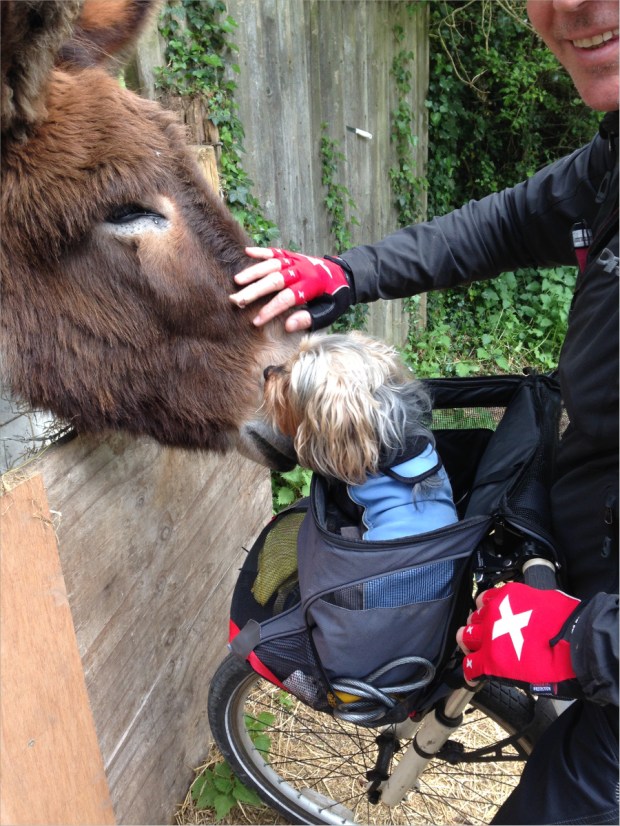
Ollie loves donkeys. These friendly fellows ambled over to say hello. Ollie gave one of them a little lick on the nose.

Ollie gives the donkey a lick
After taking us through the countryside, the Thames Path took us up a pine-scented hill with a wonderful view of the river.

Thames Path with view of Thames
The trail was narrow.

narrow path

and hilly.

steep descent
Can you picture Mr. Toad careening down this hill in a motor car? “Oh, pooh! I’m not afraid of heights! Silly, boyish fear! Sheer waste of time! Toot, toot!!”

steep ascent
It took a bit out of us to carry our bikes up this slope. Parts of the Path front lavish homes.

grazing cattle

and other parts take you past farms.

Mapledurham
And a very short detour takes you to Mapledurham, a tiny village of 317 inhabitants named after a 12th century family estate with one of the largest Elizabethan houses in Oxfordshire.

water mill

Also on the estate is the only water mill on the Thames to be in commercial production; the same water mill that graces the cover of Black Sabbath’s first album.

Mapledurham
Among the films and television programs filmed here are The Eagle has Landed, Miss Marple and Midsomer Murders.

Thames Path in Reading
Thames Path brings you almost to the doorstep of the Reading train station. With only minutes to spare until the next train left for London, and loath to wait an hour for the next one, we raced through the large station with Ollie at our heals and reached the train just in time. As Gauthier swung his bike aboard, Ollie leaped on after it, hopped up onto an empty seat and curled into a little ball. He was not about to be left behind!

To read more about our experience cycling the Ridgeway Trial, see our posts for Day 1 and Day 2.

Resources Consulted

BBC News: Wind in the Willows used in Goring Weir court plea, 18 November 2016

Cycling The Ridgeway Trail – Day 2, Apr 2017

902 ft maximum height
National Trails The Ridgeway Trip Planner

We were a lot more psychologically prepared on Saturday. Our bums ached a bit when we first set out, but the pain was quickly forgotten. We stopped again at Three Trees for scotch eggs and Belgian buns and then headed back up the side of the ridge. On the way we saw hang gliders!

hang gliders

This section of the Ridgeway is hillier than the section between Swindon and Avebury, but the hills are far gentler. We were treated to endless vistas, cows and sheep.

Uffington Hill Fort was a must-see and, conveniently, on the way. It’s one of several Iron Age hill forts built along the Ridgeway. Today it is believed that, contrary to popular belief, hill forts were not primarily used for defensive purposes, but rather were community centers in which Iron Age tribes or clans gathered for worship, feasting and to trade livestock, crops and other goods. Feast we did, nestled in Uffington’s ditch where we were protected from the wind. Grateful I was for my neck warmer and wind breaker. The wind up there was fierce! There were lots of kites and lots of dogs.

View from White Horse Hill; White Horse is out of view to the right

The Uffington chalk figure, known as the “White Horse,” was originally made by cutting a trench into the hillside beside Uffington Hill Fort and filling it with chalk blocks. For centuries local people have cared for the figure by “scouring” the surface and renewing the chalk infill to keep the horse white. In the 18th and 19th centuries, the Lord of the Manor provided food and entertainment for the scourers, which became a great annual celebration called the “Pastime” that attracted thousands of people. The White Horse is such a recognizable landmark that it was covered up during the Second World War to prevent it from being used as a navigation point by enemy aircraft.

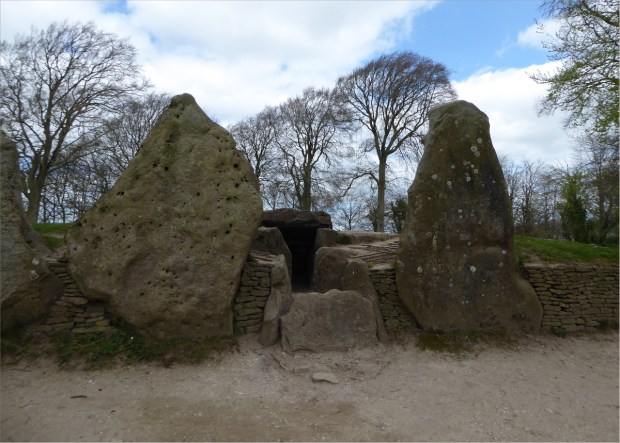
Wayland Smithy’s Long Barrow

Chalk figures were popularly created by landowners two centuries ago to add a sense of timelessness to their country estates. More recently they were created to commemorate a regiment or war. However, excavations during the 1990s established that the White Horse dates from between 1,400 and 600 BCE.

The trail also passes by Wayland’s Smithy Long Barrow, a five-thousand-year-old, communal burial chamber. It originally contained fourteen people, but by the time the chambers were examined in 1920, they had been ransacked. Legend has it that if you leave your horse here overnight, it will be magically reshod in the morning.

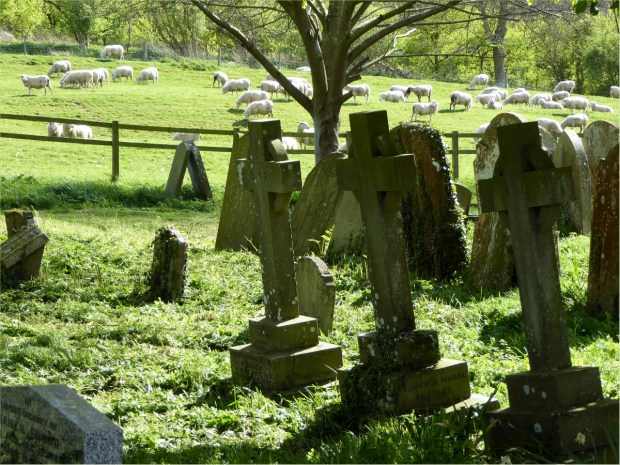
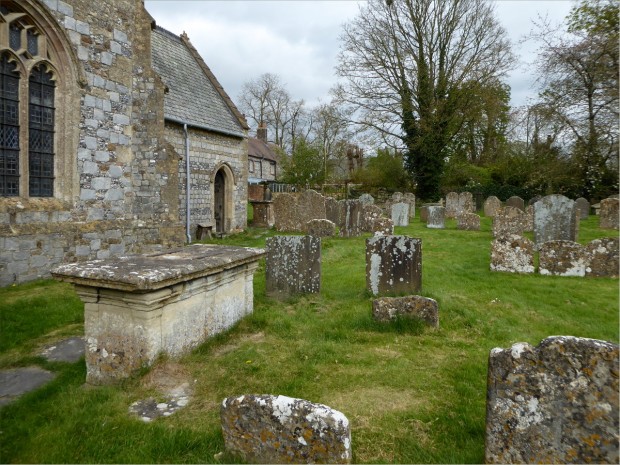
St. Michael and All Angels Church graveyaurd

Shortly before reaching Letcombe Bassett, our via-point to Wantage, we had a wipeout. My bike was fitted with grippy, fat tires built to handle uneven terrain, but Gauthier’s bike was not. The deep ruts, combined with the extra care needed to safely chauffeur the chien in his front-rack basket, resulted in the bike’s tire getting trapped in a rut. Oliver jumped gracefully from his basket before the bike hit the ground, but Gauthier fell with the bike. We learned an important lesson, which is that flint rocks have no problem slicing through human flesh. Go figure.

Letcombe Bassett

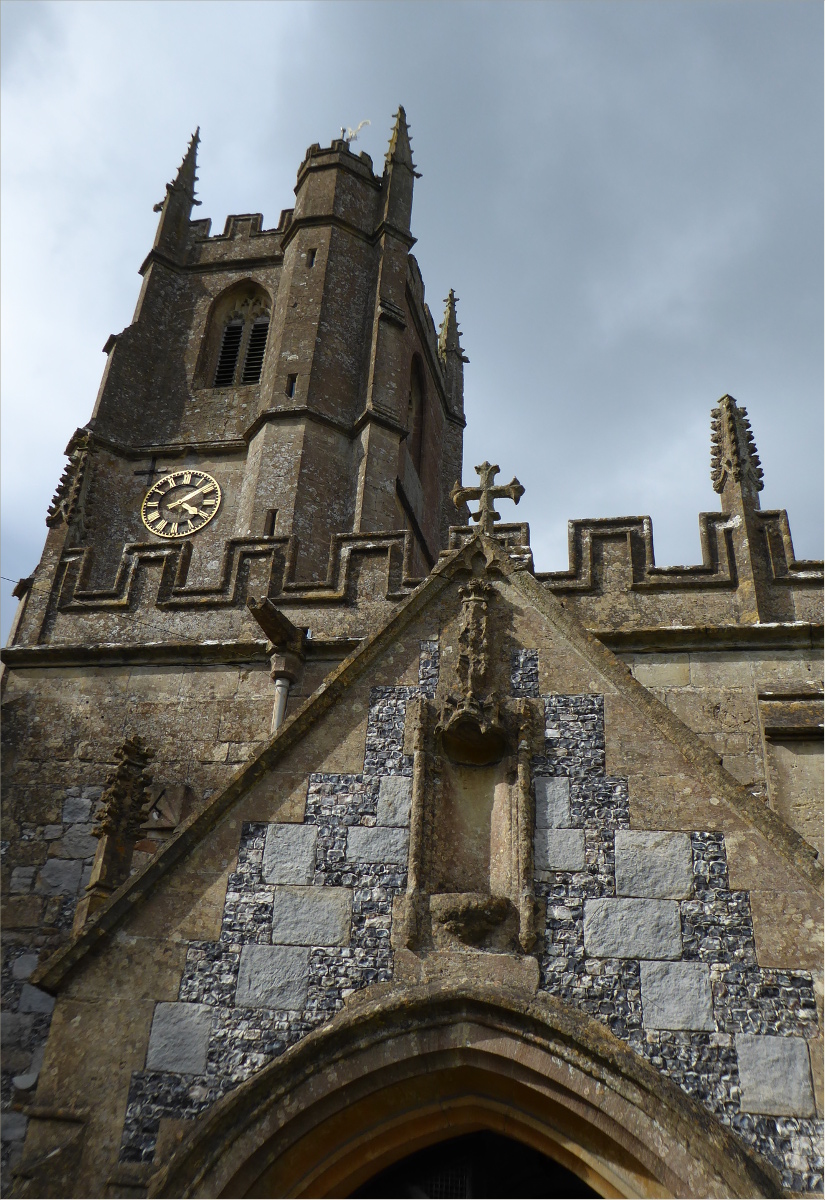
Letcombe Bassett was idyllic. St. Michael and All Angels Church, dating from the 12th century and now held by Corpus Christi College, Oxford, is an adorable building and the folk we met there – scrubbing the floor, mowing the lawn and braiding flower wreathes of every color – couldn’t have been kinder. Many times we had to decline the invitation to return home with them to dress Gauthier’s bloody knee. The man scrubbing the floor was also a bell ringer and told me all about full circle ringing.

Letcombe Bassett map

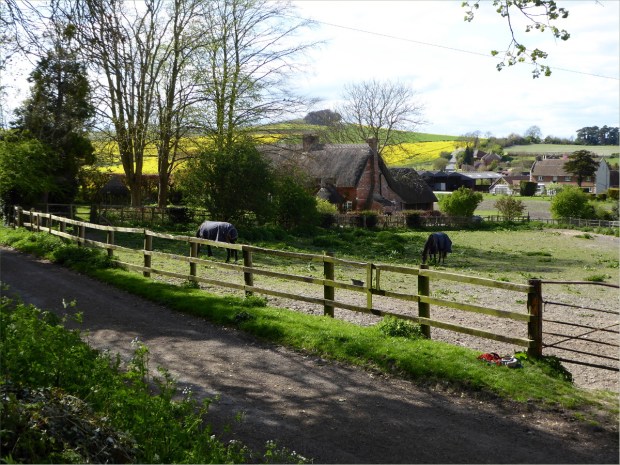
Outside the church, grazing sheep formed a backdrop to leaning grave stones, and horses in jackets like Ollie’s were grazing in paddocks framed by thatched farmhouses and stables. We followed a narrow footpath that followed a brook to the base of the hill where the brook had once been used to farm watercress. A sequence of similar footpaths delivered us to Wantage. On the way we met a retired farmer with a beautiful Shetland sheepdog who reminisced fondly about the intimate relationships that are formed between sheepdogs and their sheep.

Former watercress farm

We arrived in Wantage about 4 pm. Alfred’s Lodge, where we stayed overnight, was clean and tastefully decorated. The owner recommended we wet our lips at Shoulder of Mutton before dinner. The pub dates back to about 1830 and is known for its good selection of real ales. Dinner was at The Lamb, the only restaurant in town that allowed dogs.

Wantage town centre with back view of statue of Alfred the Great built 1877.

Wantage, population 10,000, was originally a Roman settlement and is famous for being the birthplace of King Alfred the Great in 849. Weekly trading rights were first granted to the town by Henry III in 1246. Markets are now held twice weekly on Wednesdays and Saturdays. St. Peter and St. Paul’s Church dates from the 13th century. Its size indicates the importance of the town as a trading center.

St. Peter and St. Paul’s Church dating from 13th century.

That night, I dreamed a ghost in mortal form fell in love with a young socialite named Willow Ash. He gave her gifts of clothing that had once belonged to his deceased wife, and when an epidemic swept through town, the clothing protected her by concealing from the grim reaper that she was mortal.

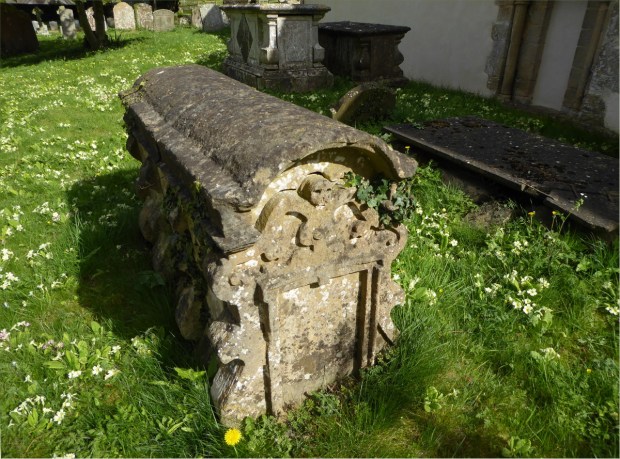
Tomb with rounded top and skull sculpture at St. Michael and All Angels Church, dated 1690.

To read more about our experience cycling the Ridgeway Trial, see our posts for Day 1 and Day 3.

Resources Consulted
Photographer’s Resource: Uffington White Horse 
Walking World: Ridgeways
Wantage (Wikipedia)

Cycling The Ridgeway Trail – Day 1, Apr 2017

902 ft maximum height
National Trails The Ridgeway Trip Planner

We spent a lot of time at the public library when we first moved to the UK, and one day we checked out a travel guide about the ancient Ridgeway trail, Britain’s 5,000 year-old road. Captivated by visions of neolithic pilgrims, Roman soldiers, Viking and Saxon invaders, drovers and traders, we promised ourselves we would cycle it as soon as the weather warmed up.

Originally a complex of braided tracks along the 400-mile chalk crest of the North Wessex Downs and The Chilterns, some as much as a mile wide, with subsidiary ways diverging and coming together, today the exact course and width of the tracks is defined by earth banks, thorn hedges and barbed-wire fences. This change occurred over two-hundred years ago during the local Enclosure Acts of 1750, which saw common land transferred into private hands.

In 1972 the 87-mile central section was approved as The Ridgeway National Trail. Most of the remainder has been way-marked, however, and is shown on Ordinance Survey maps under different names. Some local landowners objected to the Trail, so in 1987 the Countryside Commission charged all local highway authorities with ensuring that every footpath be unblocked by the year 2000. Lawsuits were filed and today access to the Trail is unfettered.

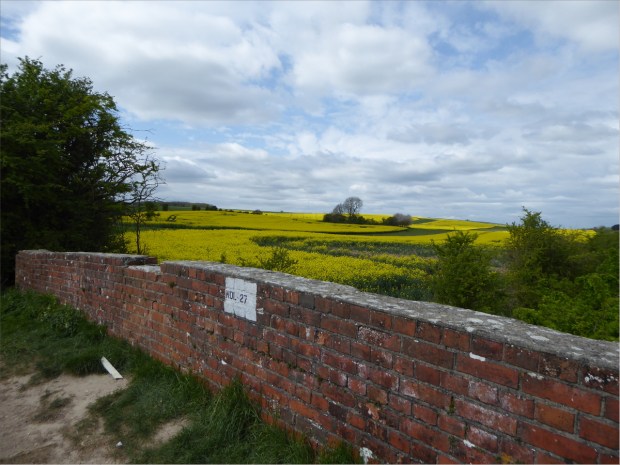
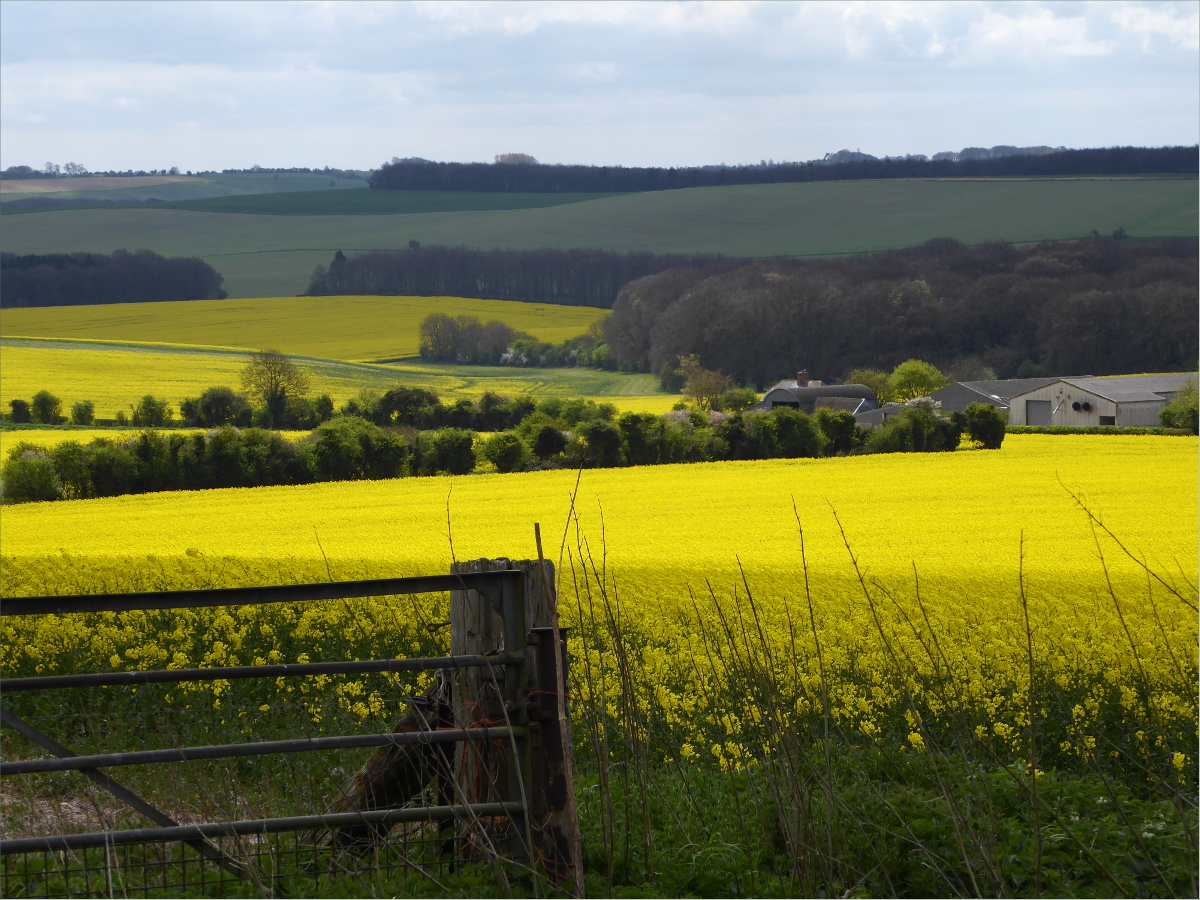
Spectacular, bright-yellow fields of rapeseed were in bloom everywhere.

Spectacular, bright-yellow fields of rapeseed were in bloom everywhere.

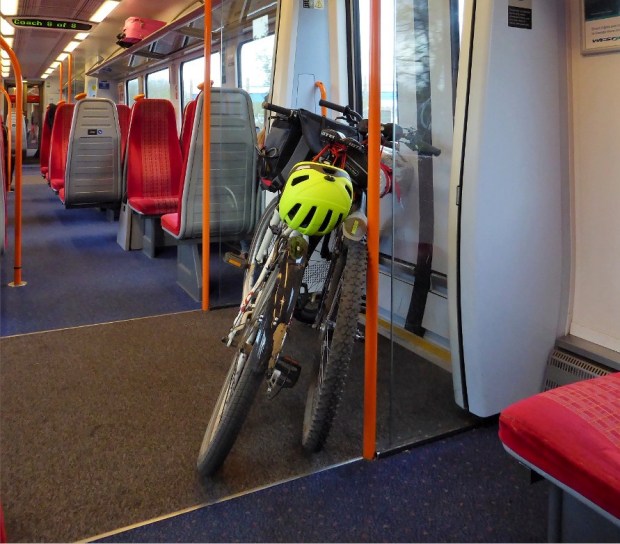
The streets were eerily quiet on Good Friday morning when we cycled to Paddington Station via Hyde Park to catch the 0927 to Swindon. We were glad we’d made bike reservations as space for bikes is limited on GWR trains and some cyclists were turned away.

We had a thorough ride itinerary that considered routes, weather, accommodations and food for both ourselves and Ollie. Our route avoided car traffic as I can’t enjoy cycling with cars whizzing by. The plan: day one we would cycle Swindon to Avebury and back to Swindon (25 miles), day two we would cycle Swindon to Wantage (25 miles), and day three we would cycle Wantage to Reading (25 miles) where we would take the train back to London.

We used four mapping websites: 1) Sustrans provides a map of the National Cycle Network, or NCN, which is a series of safe, traffic-free paths and quiet on-road cycling and walking routes that connect to every major town and city in the United Kingdom; 2) CycleStreets caters to the needs of both confident and less confident cyclists and provides an exceptional map of bridleways and footpaths, some of which are all but hidden from the naked eye; 3) Walk4Life, originally government funded, provides trail characteristics, such as surface (flat, firm), barriers and hazards; and 4) GoogleEarth street-view helped us visualize the route.

Ollie patrols the perimeter at Three Trees farm shop.

Ollie patrols the perimeter at Three Trees farm shop.

We packed light. We carried 12kg, including Ollie and a thermos full of tea: Ollie – 5kg, Ollie’s bag – 800g, tea thermos and water – 2kg, change of clothes – 1.5kg, bike lock and tools – 1kg, food – 1.5kg. We used front racks rather than panniers as front racks distribute weight more evenly. Packing light was important because my bike has only three speeds.

The M40 pedestrian/cycle overpass.

The M4 pedestrian/cycle overpass.

NCN 45 connects to the Ridgeway and is well-marked and easy to find from Swindon Station. It’s a 30 to 40 minute cycle from the station to the trail. If you plan on taking this route, note that this section of NCN 45 follows both footpaths and minor roads, so pay attention to signposts.

We stopped at Three Trees farm shop, where we snacked on delicious scotch eggs and Belgian buns and picked up some Wiltshire blend tea. From Three Trees we took the NCN 45 northwest to some minor roads that took us through scenery out of a story book until we reached a track that led up the side of the down.

The track was paved for about three miles and then turned into a multiplicity of dirt-based surfaces for the duration of the ride to Avebury, which was to be our destination before heading back to Swindon for the night. We stopped several times to inflate or deflate our tires to adjust to trail conditions. There were few other cyclists, but many hikers. The trail is intersected by roads, so it is easy to ride or hike small sections.

Birdsong followed us throughout the trip as we passed through Marlborough Downs before reaching Avebury.

“In 2012 the Marlborough Downs farmers formed a unique partnership and began to work together to make space for nature on their farms. Originally government funded, the partnership involves over 30 farms covering 25,000 acres of Wiltshire countryside.”

“One of the most important geological sites in Britain. Natural events have created valleys with spectacular quantities of sarsen stones, which now support rare and unusual lichens. The remains of settlements, field systems, burial mounds, ancient tracks and the widespread working of sarsen stones show that people have worked and lived in this downland landscape for over 7,000 years. The reserve is part of the Avebury World Heritage Site.”


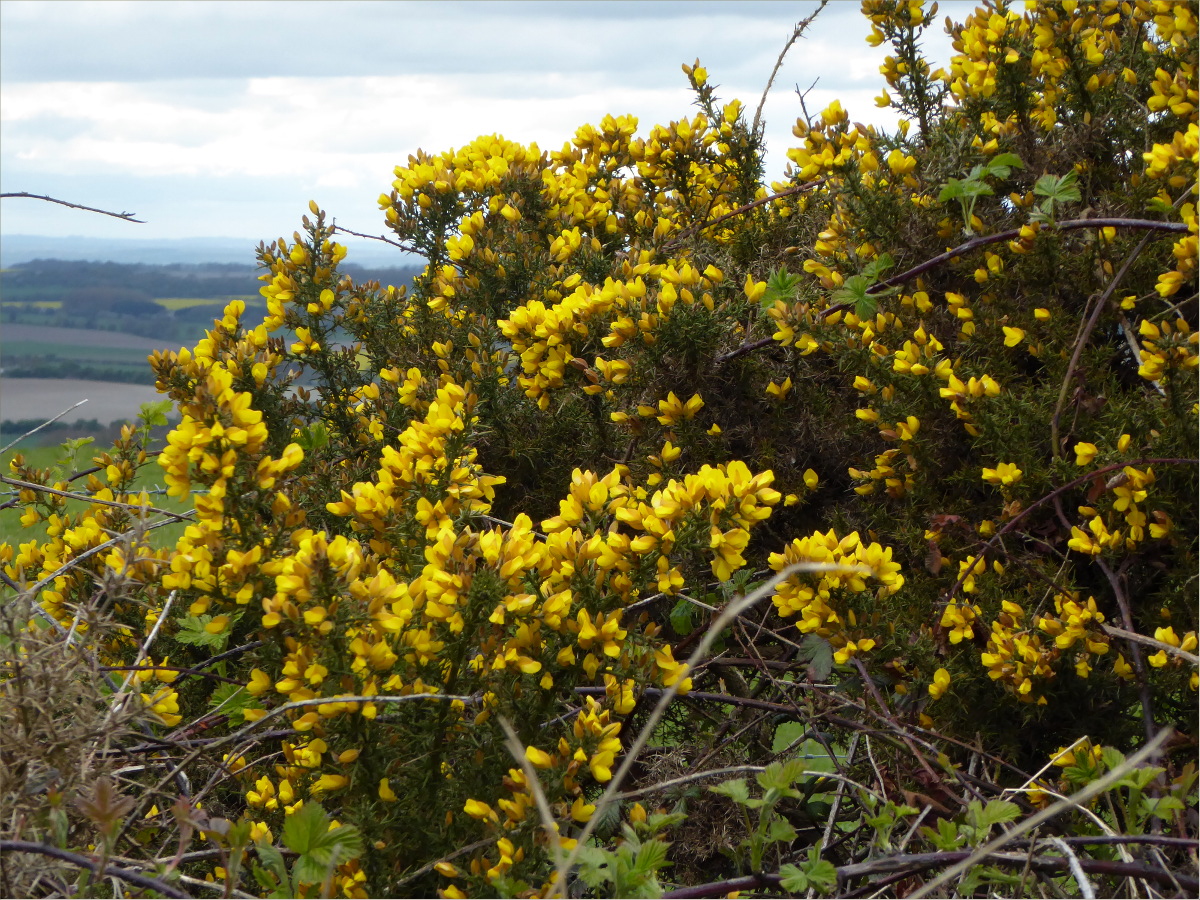
What we found most striking about the chalk grasslands of Fyfield Down were the giant, yellow-flowered broom bushes and the large, silicious sandstone boulders (i.e., sarsen stones) that were transported to the area through glacial action during the ice age.

Fairly significant sections of the trail are sadly deeply rutted by motor vehicle traffic, which is very detrimental to walkers and cyclists alike, as well as being ugly and unnatural-looking, although it does provide an outstanding opportunity to practice some technical riding. Riding the rutted parts in sustained rain, with puddles and mud, would be hellish, so it’s important to pay attention to the weather forecast.

It’s also uphill for a good third of the way. The combination of ruts, ascents and an 18 mph wind in our face made the ride challenging, but it was totally worth it.

Ridgeway trail terminates a few miles before Avebury in a gigantic mound complete with standing stones. The sarsen stones were dragged from the surrounding hills in the late Stone Age. We found it interesting that whereas henges with defensive purposes have ditches with external banks, Avebury Henge, like Stonehenge, has an inside ditch. We also found it interesting to note how well protected the Henge was from the wind, situated as it is in a valley.

Standing inside the bank, looking at the massive stones, contemplating the incredible amount of labor needed to create such a monument was awe-inspiring. English Heritage points out that henges such as Avebury’s “bear witness to the existence over many hundreds of years of a great civilisation in this part of Wessex. […] The sheer amount of labour required to excavate the huge ditches, to gather, transport and erect the massive stones, and to raise the strange mound of Silbury Hill, indicates the availability of a substantial population, and the quality of the work, particularly in the latter stages, shows their considerable skills.”

Apparently, by the 1930s many of the stones had fallen over and the site been disfigured by buildings. English Heritage explains that “the appearance of the site today owes much to Alexander Keiller, heir to a fortune made from the famous Keiller marmalade, who bought the site and cleared away buildings and re-erected many stones in the late 1930s.” I found out a little more about Alexander Keiller’s role from some documents stored at The National Archives.

In addition to exploring the Henge, we ate at the Red Lion where we were entertained with stories about thatch rooves and hidden rooms by a retired historic building conservation consultant, and admired St. James Church, the earliest parts of which date from 1,000 CE.

Lichen covered gravestones.

We did not have enough time to do Avebury justice. That would have taken at least four hours. Also, bringing a dog placed limits on what we could do. We would have liked to visit the 16th-century manor house (you can actually touch the furniture and lie on the beds!) and the Alexander Keiller Museum.

With the wind at our backs and a mostly downward journey, the trip back to Swindon was swift and fairly painless. It would be a lie to say we weren’t suffering a bit by the time we arrived at our hotel around 7pm. Among other aches and pains, I had somehow acquired a sunburn on my lips. We stayed at TravelLodge. It was clean, quiet, well-located, had a bar and 24 hour restaurant and, most importantly, accepted dogs and bikes.

Swindon is an interesting city rich in railway heritage. Swindon’s rail workers received health care that became a model for the NHS, and access to personal enrichment programs that included xylophone lessons. It also had the UK’s first lending library. Today it is home to Oxford University’s Bodleian Library book depository, which contains 153 miles of bookshelves. It also has the English Heritage National Monument Record Centre and the headquarters of the The National Trust. And apparently you can see iconic punk-rock bands, such as the U.K. Subs, play live at local dive-bars for £8 (if only we’d known this sooner)!

To read more about our experience cycling the Ridgeway Trial, see our posts for Day 2 and Day 3.

Resources Consulted
Atlas Obscura: Found A Hidden Stone Square Inside the World’s Largest Megalithic Stone Circles
Friends of the Ridgeway: The Ancient Ridgeway
Fylde Ramblers Walking Holidays: The Ridgeway, 4th April to 10th April 2013
History of Avebury Henge and Stone Circles
Introduction to Heritage Assets: Prehistoric Henges and Circles
Swindon (Wikipedia)
Walking World: Ridgeways

Archbold, Mar 2016

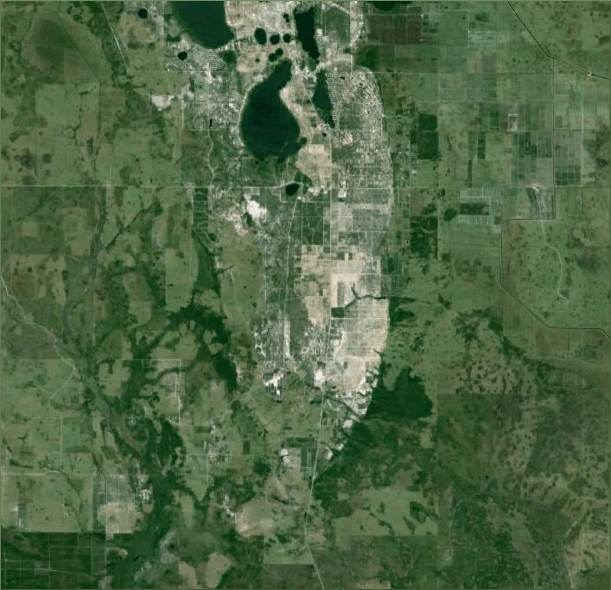
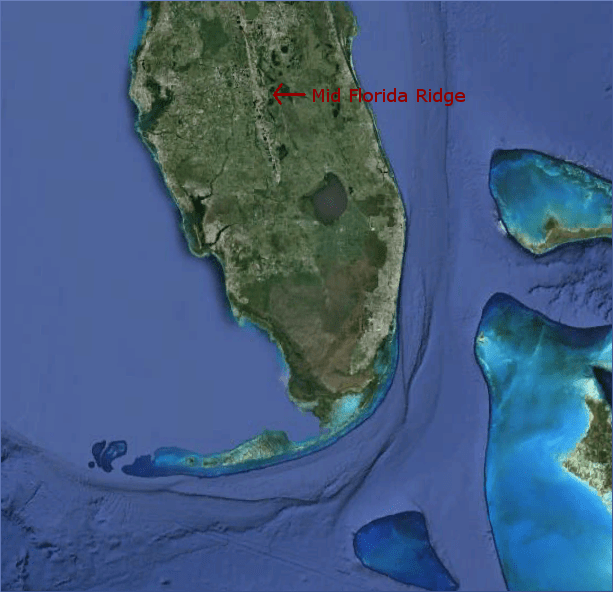
In March, we spent the Easter long-weekend here. This is Lake Wales Ridge, also called the Mid-Florida Ridge. The long, narrow dune extends 115 miles in length and four to 10 miles in width; the sands were deposited 650,000 years ago.
florida ridge

Doesn’t the outline of the southern end of the Ridge bear a striking resemblance to Florida’s southern coastline?
florida

I like to imagine that we traveled not to Highlands or Polk County, but back in time to prehistoric Florida, when the Ridge was a series of land islands connected to the southwestern United States by the now-sunken Florida Shelf. While our primary goal was to visit Archbold Biological Station, we took detours to Platt Branch Wildlife and Environmental Area, New Boot Heal Road, and a once-public road on a now-private ranch. We stayed overnight at Fisheating Creek Outpost .

Platt Branch Wildlife and Environmental Area
Managed by the Florida Fish and Wildlife Conservation Commission
27°03’00.5″ N 81°21’54.0″ W elev 100 ft

Bikes are prohibited on this other-worldly, sandy trail.

P1010086

P1010085

P1010087

We’re not sure, but it’s possible that we saw a Florida black bear here. Although it was too far away to tell, it was the right size and color. We also saw deer, scrub jays, sandhill cranes, and mockingbirds, as well as the below Polygana nana (Candyroot).

P1010089

Polygala nana (candyroot)

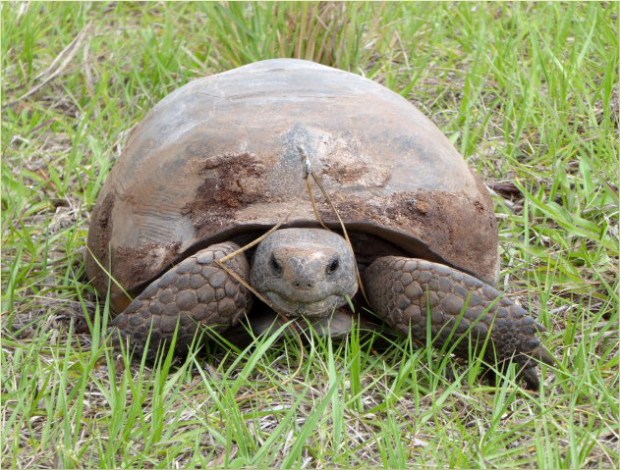
Just down the road from Platt Branch, we saw this gopher tortoise. We stopped in the middle of the road to photograph it. While we were stopped, a ranger pulled up beside us. “It’s incredible!” Gauthier exclaimed. The ranger smiled and replied, “This is their home.” Burrows dug by gopher tortoises provide refuge to many other animals during woodland fires and high summer temperatures.
P1010158

New Boot Heal Road
Start 27°05’15.47″ N 81°24’20.96″ W elev 85 ft
End 27°07’15.12″ N 81°26’51.61″ W elev 74 ft

This 10-mile ride took us along a mostly hard-pack road that zigs and zags in the pattern of… yes, a new boot heal. We passed by homes with large, beautifully maintained yards, ranches with hundreds of cows that stopped to watch us as we rode by, and a logged tree farm with the logs left stacked fifteen feet high in the middle of the road. The road ended at a dead end where a very lovely, yellow bird, perched upon a power line, sang us a song.

P1010145

P1010140

P1010155

Fisheating Creek Outpost
26°56’21.73″ N 81°19’06.17″ W elev 39 ft
Fisheating Creek Outpost, 7555 U.S. 27, Palmdale, Florida, 33944

Campsite map and rules

We’d stayed here before, but not on a holiday weekend… or during a big, televised soccer match. Oh boy did our fellow campers enjoy that match. It was not a tranquil stay, but the cook got to try out his newly designed, ultra light-weight camp stove and all the kids running about reminded me of the camping adventures of my youth: the feel of gumboot-clad shins wading in the cool water of yabbie-filled creeks, scaling dried-up waterfalls, and riding my bike ten miles into town to buy my first bikini.
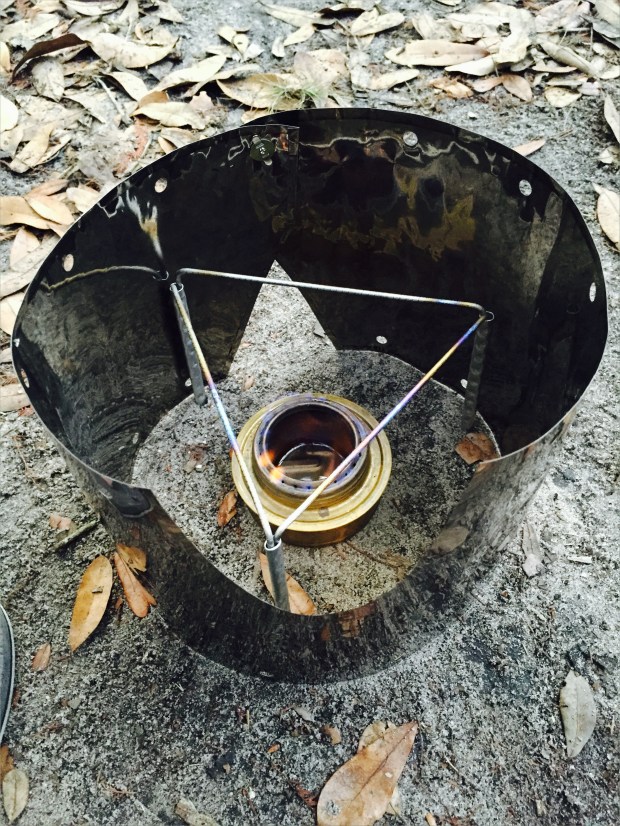
campStove

“I can’t take it?” I overheard one kiddo ask his dad. “No,” was the unequivocal answer. “I can’t take it?” he asked again… and again. Finally, exasperated, the dad explained to the equally exasperated child, “You can’t carry a 200 pound alligator.”

P1010123

The view from our tent

P1010129

A Once-Public Road
Start 27°05’29.90″ N 81°28’54.33″ W elev 72 ft
End 27°06’15.92″ N 81°29’04.10″ W elev 69 ft

I am a stickler for rules, so I reluctantly ignored the large sign indicating that the property we were about to enter was private. “On the map it looks like a public road” Gauthier patiently explained.
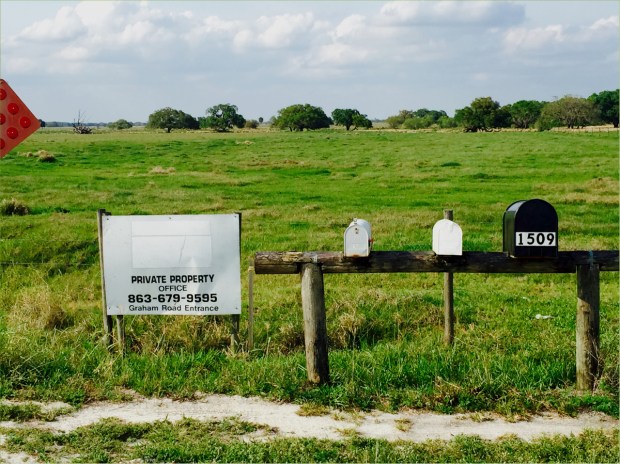
privateProperty_1200

It wasn’t fifteen minutes before we were escorted out by a very polite woman, vaguely resembling my sister-in-law, with an SUV full of lil ‘uns. “It was a public road a long time ago,” she corrected us with apologetic eyes, but a firmly set jaw. In Europe, it’s not uncommon for private property to be intersected by public roads.

P1010112

P1010111

Archbold Biological Station
123 Main Dr, Venus, FL 33960
(863) 465-2571
27°10’58.19″ N 81°21’07.50″ W elev 137 ft

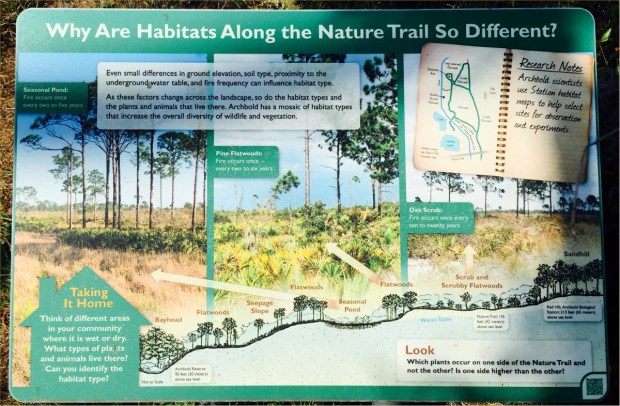
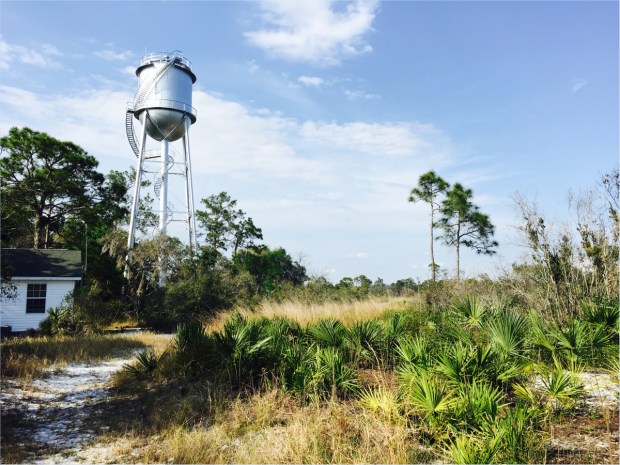
Archbold Biological Station has fantastic labels. The trails are labelled, the buildings are labelled, the donation box is labelled, the reused-concrete bridge is labelled. I love labels and I love Archbold Biological Station, even though they don’t allow dogs (hence no Ollie pictures in this post).

archboldAr2_1200

habitats_1200

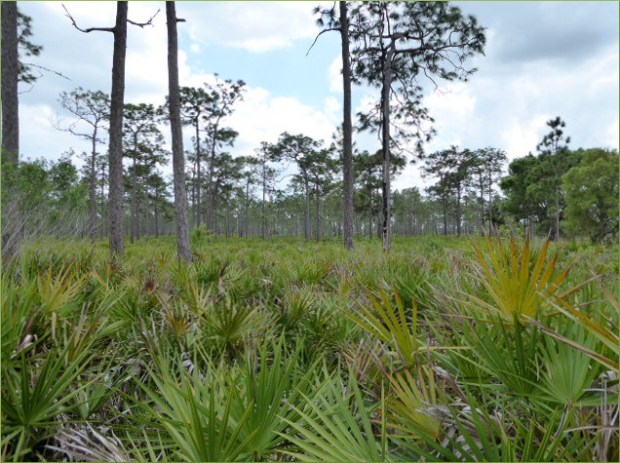
The labels encouraged me to touch the curled-up, waxy scrub oak leaves so that I’ll never forget them, and observe the different plant species on either side of a trail with two different elevations – one side was sandy and the other side had a layer of clay. I also learned how to tell scrub palmettos apart from saw palmettos. I love that scrub jays line their nests with the fibers that grow along the edge of scrub palmetto leaves.
archboldTrail1_1200

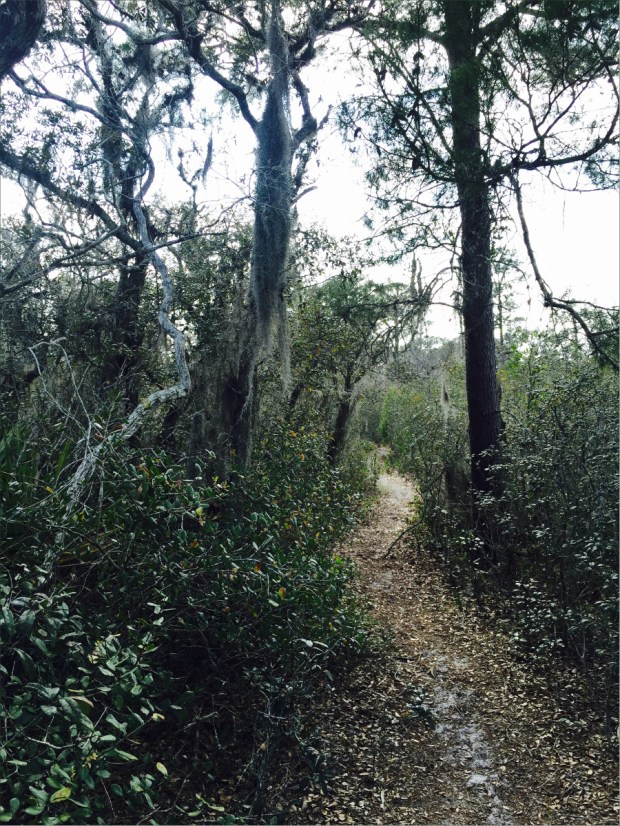
Shrub-like scrub oak (Quercus inopina), sand live oak (Q. geminata), Chapman oak (Q. chapmanii) and myrtle oak (Q. myrtifolia) lined the trail.
archboldTrail3_1200

It’s hard to tell saw palmettos and scrub palmettos apart, as you can see in this photo.

moss_1200

We didn’t know it at the time, but this captivating species of lichen, Cladonia perforata (Florida perforate reindeer lichen), is endangered.

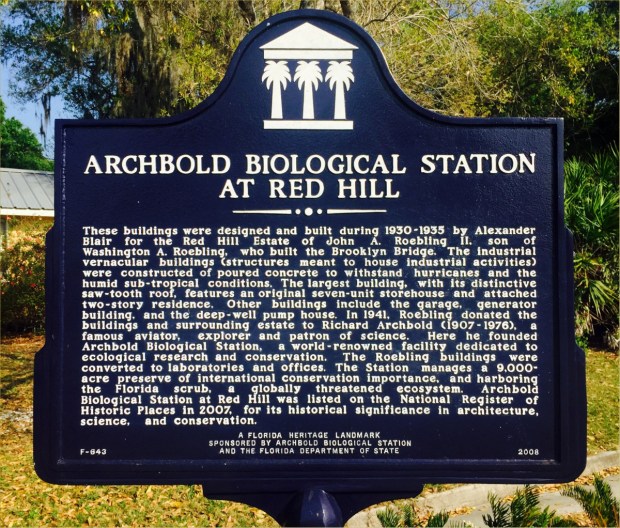
It’s wonderful that the Roebling and Archbold families recognized early on how special the Ridge ecosystem is and preserved it, and it’s doubly wonderful that it is accessible to the lay public as well as scientists. The architecture is also very cool.

archboldAr3

archboldAr1_1200

Resources Consulted
Lake Wales Ridge, Lanscope America
History of Archbold Biological Station
Biking Picayune, Jan 2016

26°05’43.35″N 81°37’06.97″W elev 9 ft
Picayune Strand State Forest,
Naples, Florida 34117
(239) 348-7557

We had been driving west along Tamiami Trail for a while. I occupied the passenger seat and felt a little guilty about it because it meant that I could sight see and Gauthier, in the driver seat, couldn’t. “Holy moly, are there ever a lot of alligators!?” I would exclaim, or “Did you see that Sandhill crane?! I’ve never seen one this far South!” but by the time Gauthier had looked over his shoulder, we had driven past it every time.

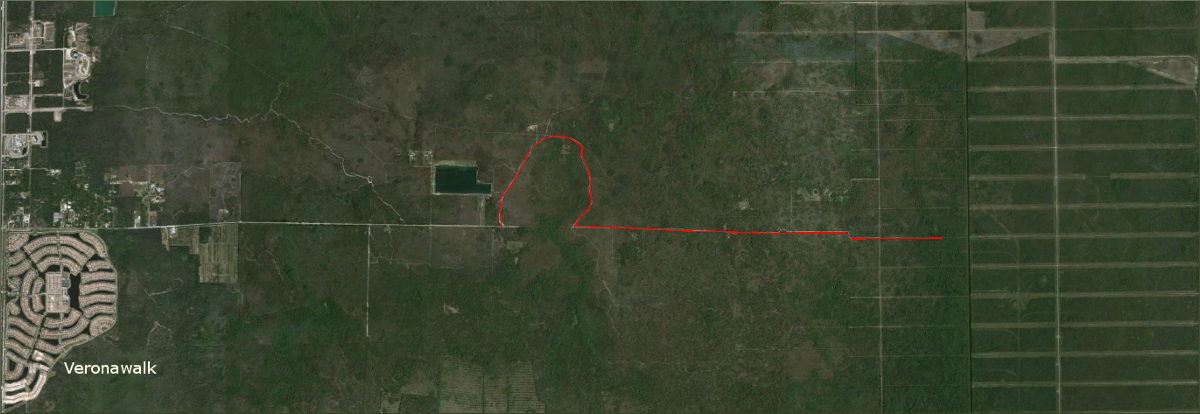
trail red

By the time we reached Collier Blvd, my exclamations had become less frequent and their tone had changed. “Veronawalk?” I asked skeptically as we drove past a cement bridge painted a muted red with gleaming white pilasters that led into a gated community. Emerging from a newly tarred four-lane roadway and as-yet vacant strip malls, Veronawalk looked like it could have been snapped together from an “Italian Revival” modeling kit. “Are we going in the right direction?” I asked.

Turning off of Collier Blvd onto Sabal Palm Road, I received my answer.

P1000689_1200

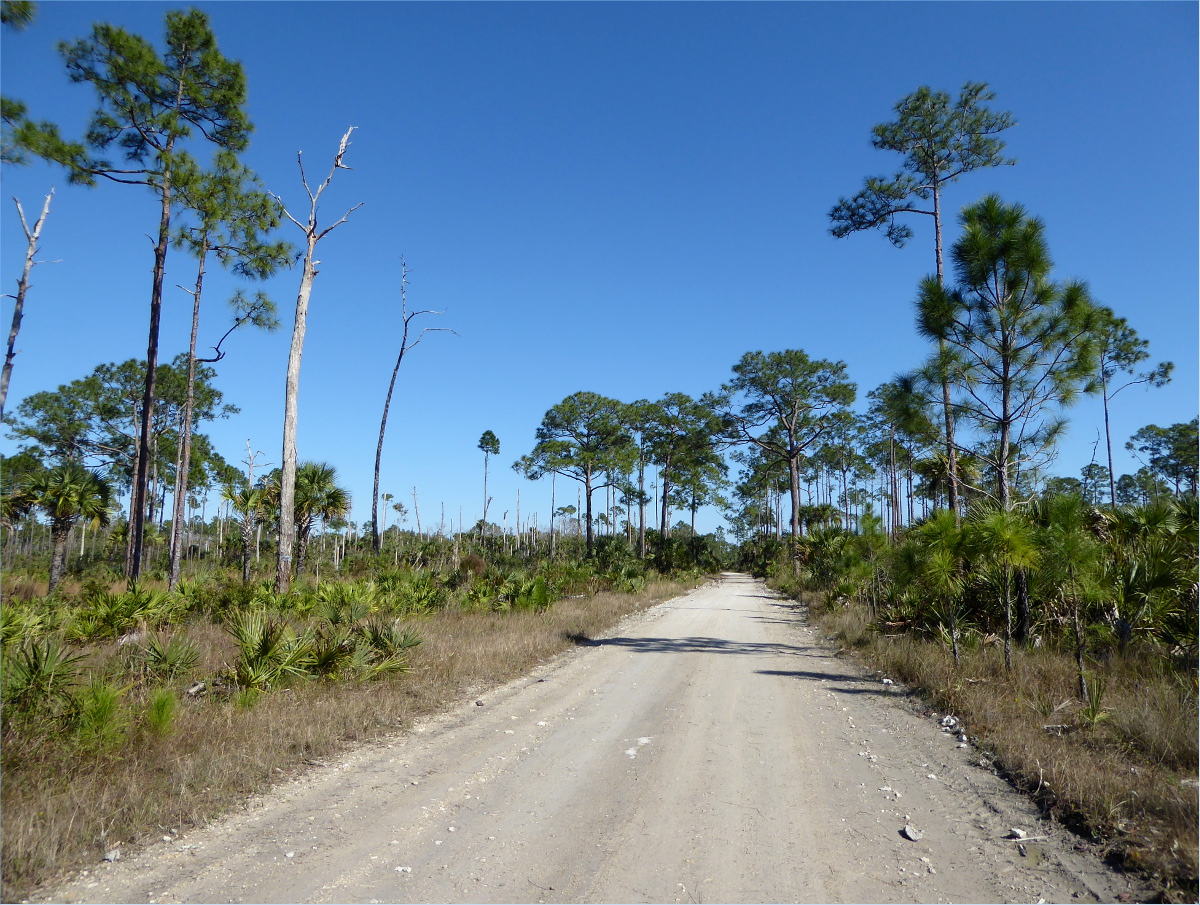
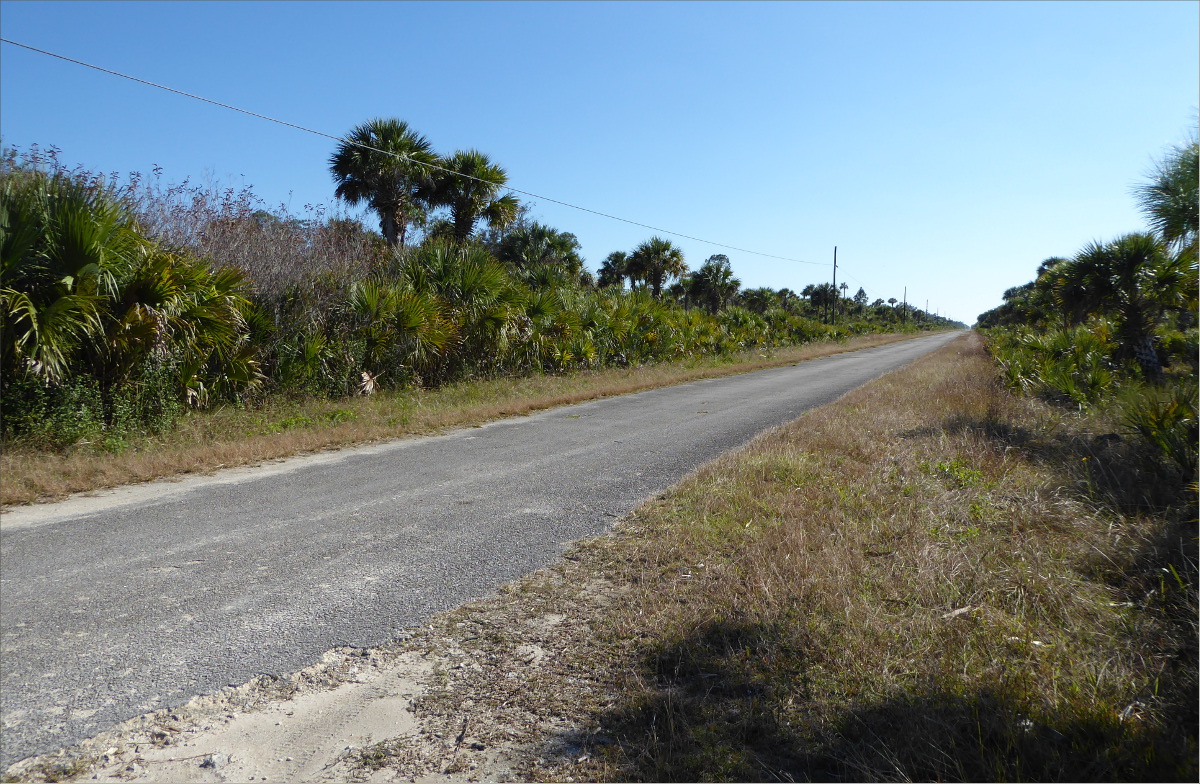
Driving along the narrow dirt road, a filament bounded on either side by a wild array of sable palmettos, saw palmettos and long leaf pines and the occasional elevated house and fern colony, Veronawalk seemed outrageously alien and sterile, the realization of a dream sold to 17,000 unsuspecting victims in one of the first swampland real estate schemes.

P1000690_1200

P1000665_1200

P1000671_1200

Platted, dredged and drained, Picayune Strand State Forest lacks the diversity of its neighbors, Fakahatchee Strand State Preserve, Florida Panther National Wildlife Refuge, and Collier Seminole State Park.

P1000658_1200

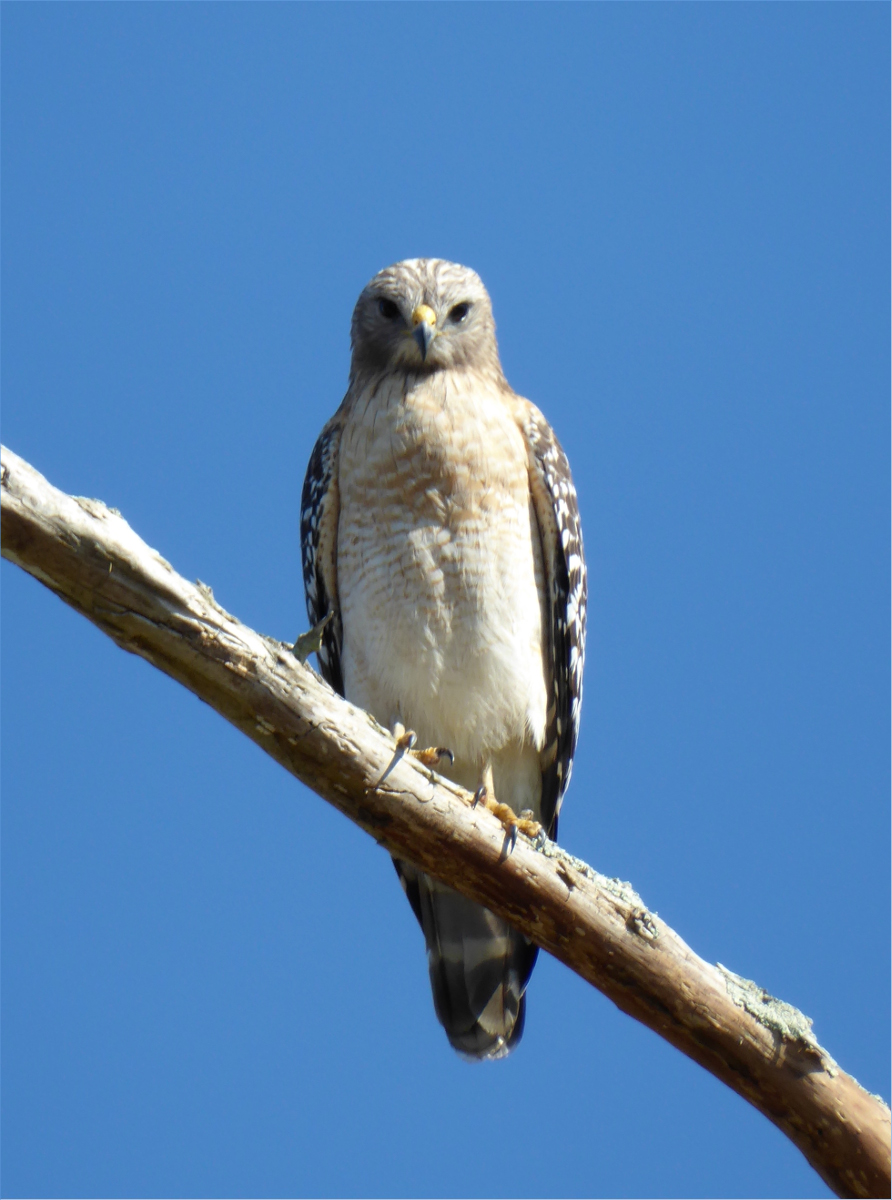
The trunks of erect but dead Australian pines add a vertical dimension to the grid of canals and roads that was “Golden Gates Estate.” Perched atop this trunk was a gorgeous Red-shouldered hawk (Buteo lineatus).

P1000660_1200

P1000661_1200

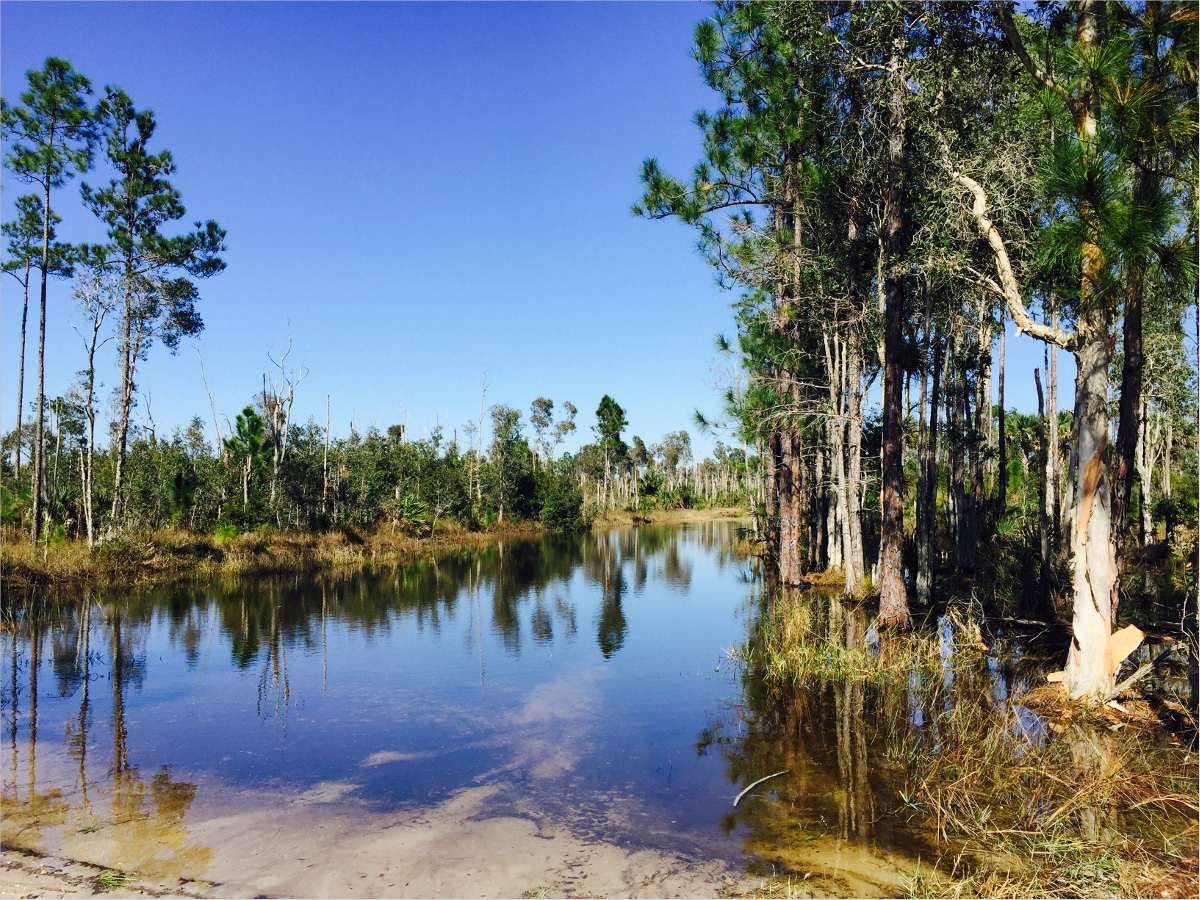
We parked at the edge of the swamp, where the road forks. Two-feet-deep puddles, murky but fresh from the constant sheetflow of the Everglades, had formed in the ruts of tire tracks and spread out across the road in both directions.

P1000664_1200

We hopped on our bikes and headed north, skirting the edges of the puddles and trying not to get wet with little success.

P1000663_1200

We passed a surprising number of jacked-up trucks, SUVs and Jeeps. Hunting is permitted and apparently popular in Picayune. The trail we had planned to take was completely flooded.

trail_1200

One truck stopped to ask us if the road we were on led back to a main road. “Are there any gates?” he asked. At over 76,000 acres, it’s scary to think of how easily you could get lost in Picayune.

P1000679_1200

P1000677_1200

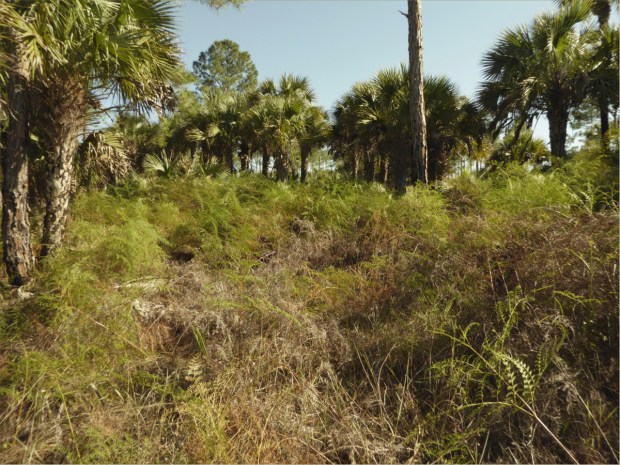
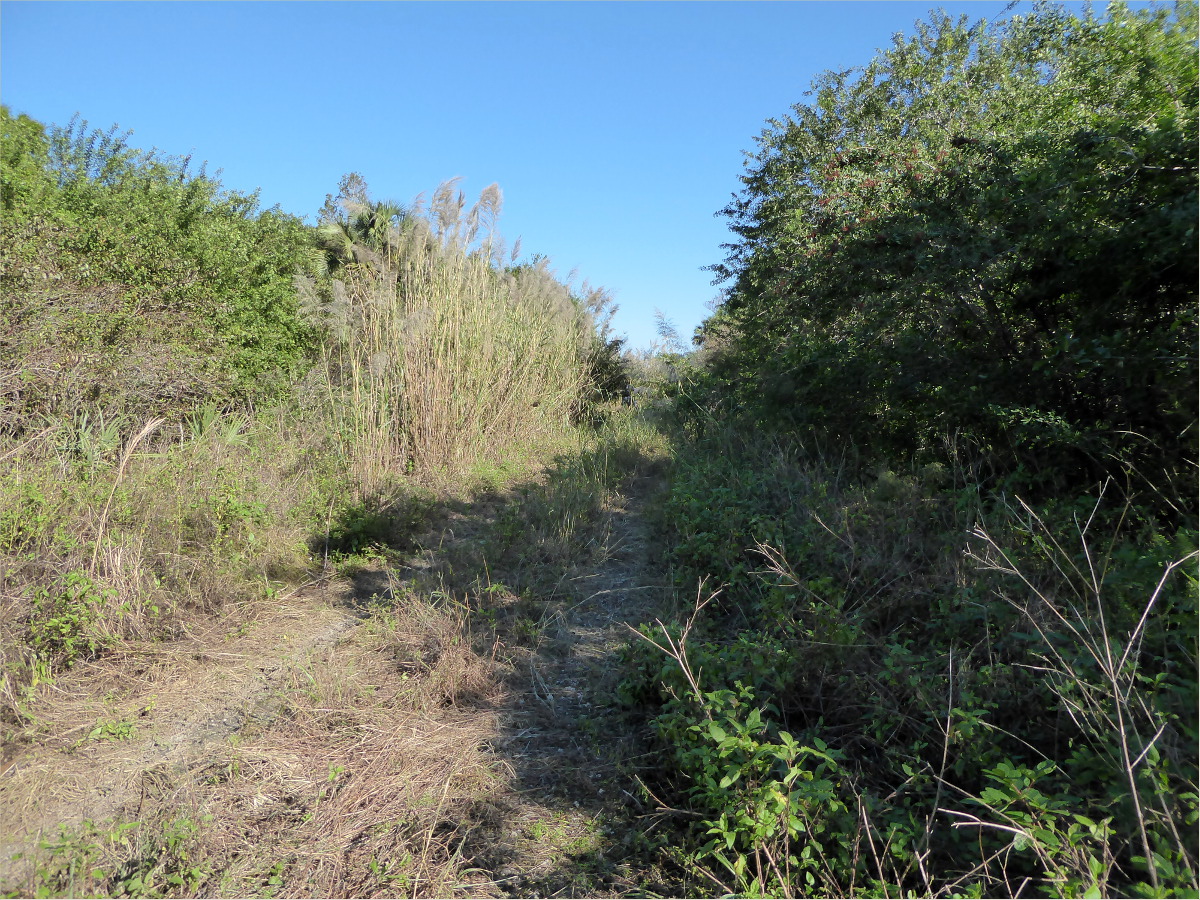
Where the road crumbled and disappeared is where it was wildest.

P1000680_1200

And a good place for a picnic.

ollie bike me_1200

P1000685_1200

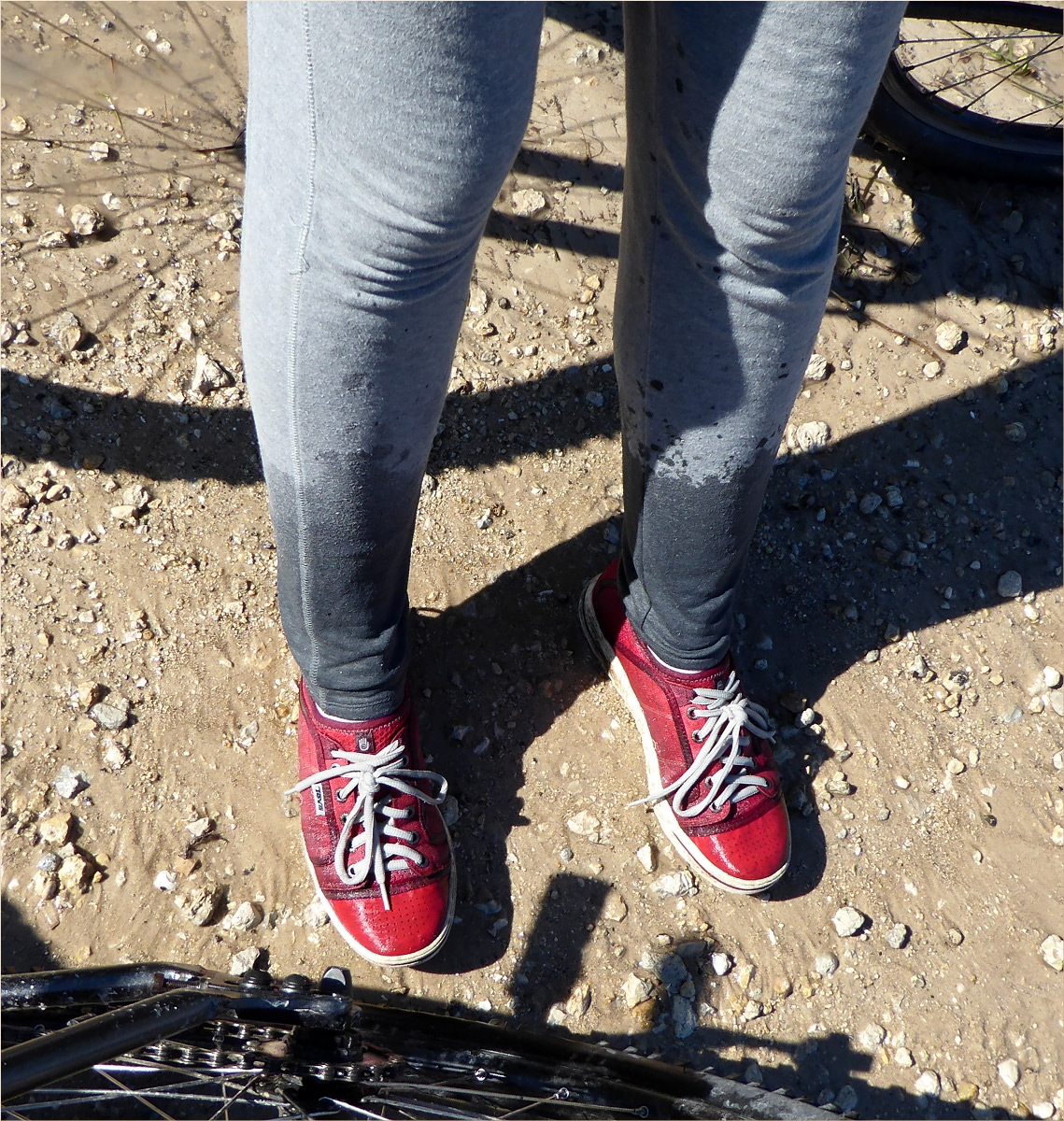
On the return ride, we abandoned the idea of staying dry and rode our bikes straight through the middle of those giant puddles. Fat tires inflated to just the right pressure, seat post shocks and padded underwear eliminated any discomfort we might have felt from the rocky and uneven surface and allowed us to pick up enough speed to keep our balance as our tires sunk into wet gravel and we projected ourselves through the water. It was exhilarating. I almost made it back without falling. Within view of the car, I fell, drenching my pants, but I still felt like a winner.

FullSizeRender (9)_1200

Resources consulted:
Everglades Foundation
Florida Natural Areas Inventory
Florida Fish and Wildlife Conservation Commission
Naples Daily News
Comprehensive Everglades Restoration Plan
Tidewater Florida

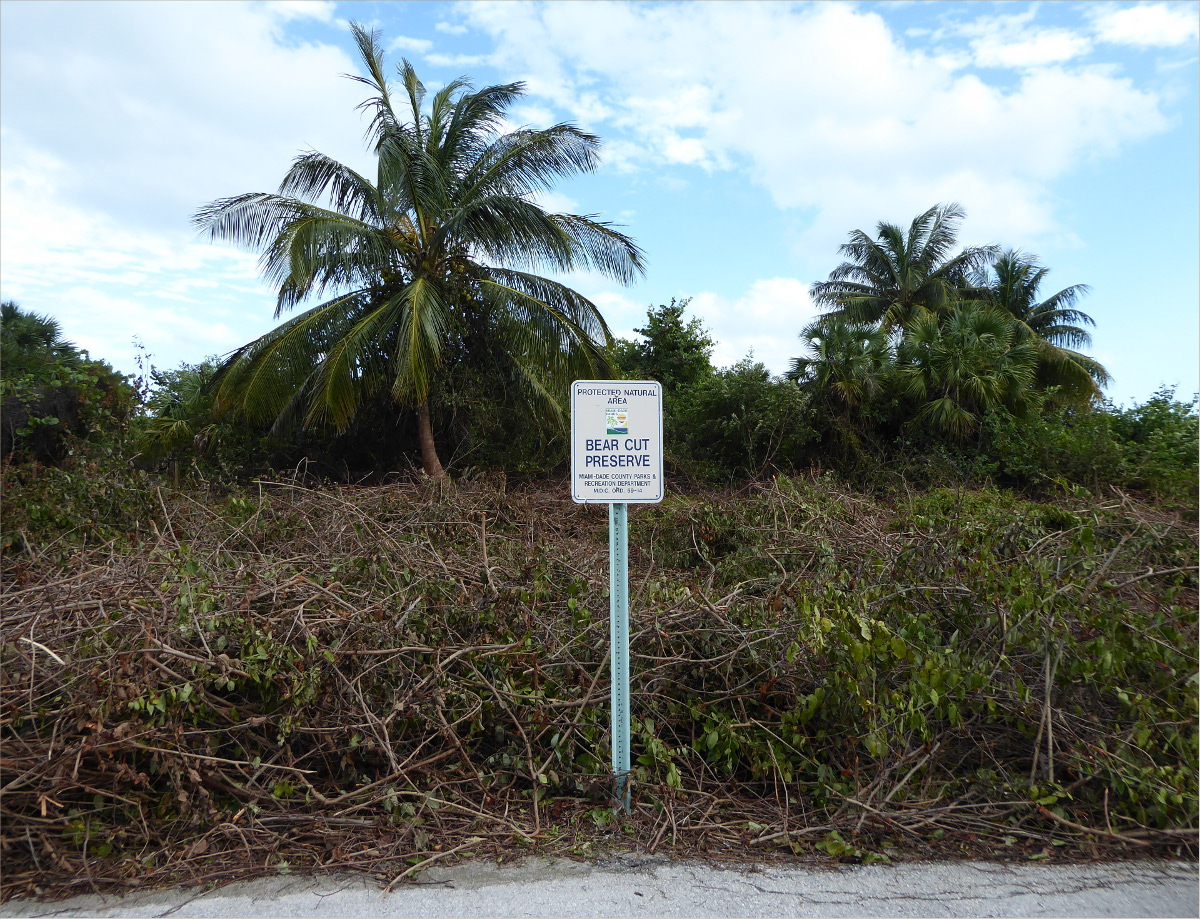
Bear Cut Preserve

25°43’34.35″N 80°09’13.38″W elev 8 ft
Bear Cut Preserve, Crandon Park
Key Biscayne

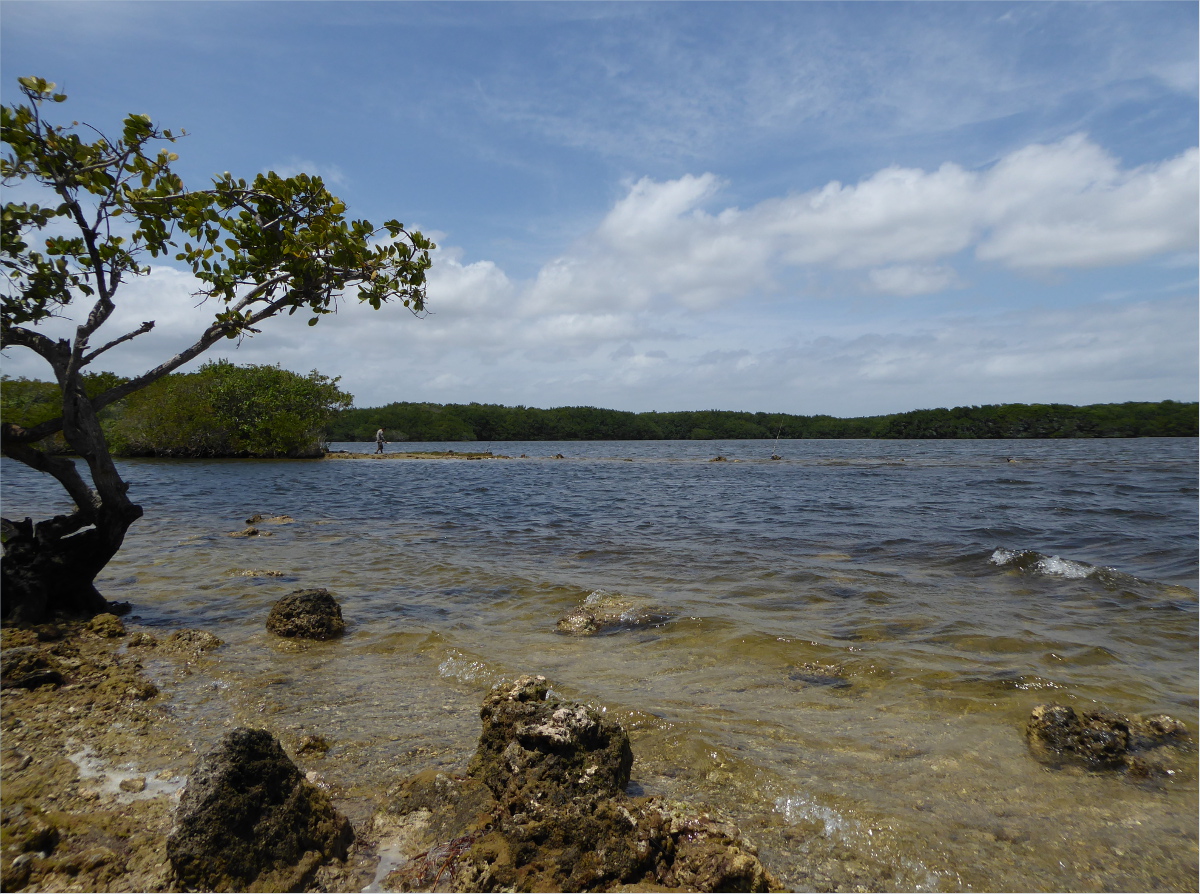
We hike, jog and bike this short 3.5 mile (5.5 km) trail regularly. I’ve provided the latitude and longitude of the entrance we always use. Parking is free across the street in the Crandon Park Marina. Fifteen years ago, there was ne’er a person to be seen on the trail and the gay community found privacy on the beach. Recently the trail has become popular with bicyclists. The southern end of the beach is popular with kite boarders.

Nov 2012

Nov 2012

At the northern end of the beach is a very cool fossil reef. Before they banned swimming in this section of the beach, we snorkeled there and once as I was parting the sea grass, one single blade failed to move, and when I looked more closely at it, I discovered that it wasn’t a blade of grass at all, but a seahorse! It stayed still only long enough for my eyes to focus on it and then it disappeared. We’ve also seen sting rays and jelly fish.

Apr 2013

Sting ray, Apr 2013

Restricted section of beach where fossil reef is, Jan 2016

Restricted section of beach where fossil reef is; notice the beach erosion; Jan 2016

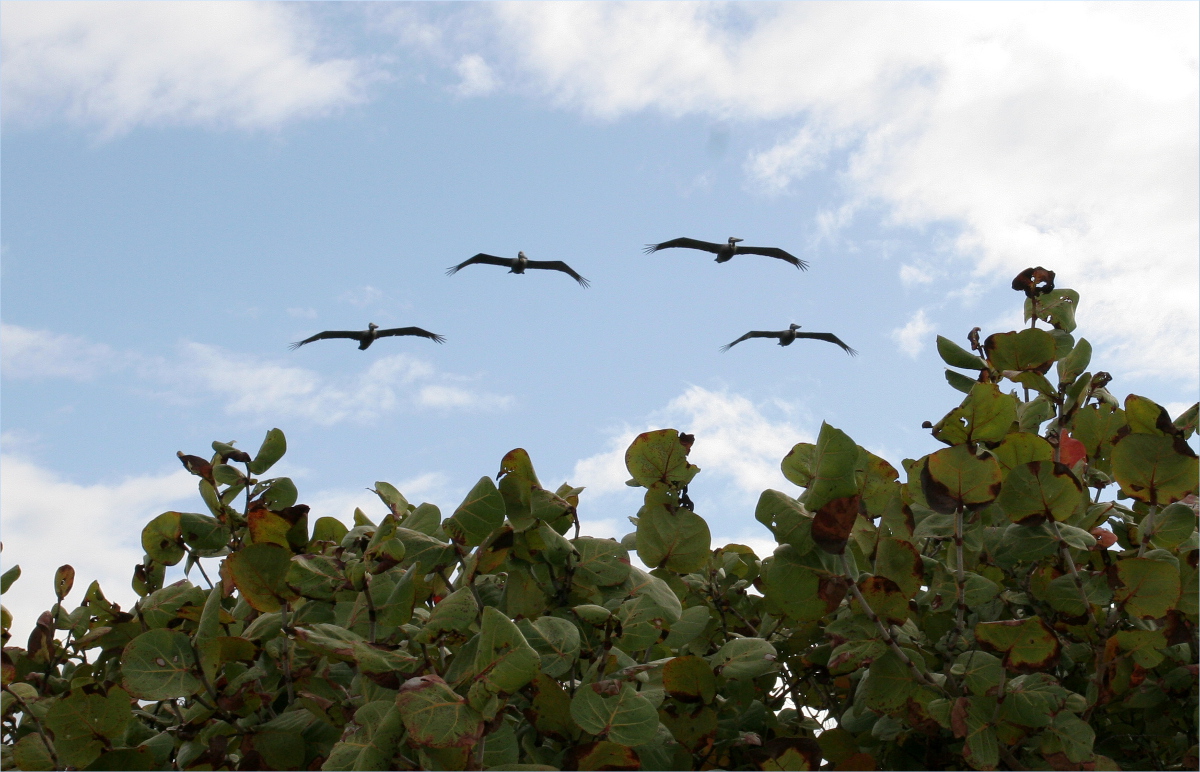
Although it’s suffered from invasive nickernuts, kudsu and, more recently, beach erosion, it’s still a beautiful trail. All kinds of birds hunt along the coastline and on the many sand bars: plovers and sanderlings, terns, herons, pelicans, cormorants. We’ve even seen yellow warblers in the trees along the trail.

Nicker nut control, Jan 2016

Nickernut control, Jan 2016

Apr 2013

Brown pelicans, Apr 2013

Sometimes you’ll see a metal variety of bird flying high overhead: commercial jets, sea planes, and once we saw a fighter jet darting back and forth across the sky. Cruise ships departing from the Port of Miami are also a frequent sighting.

Apr 2013

Apr 2013

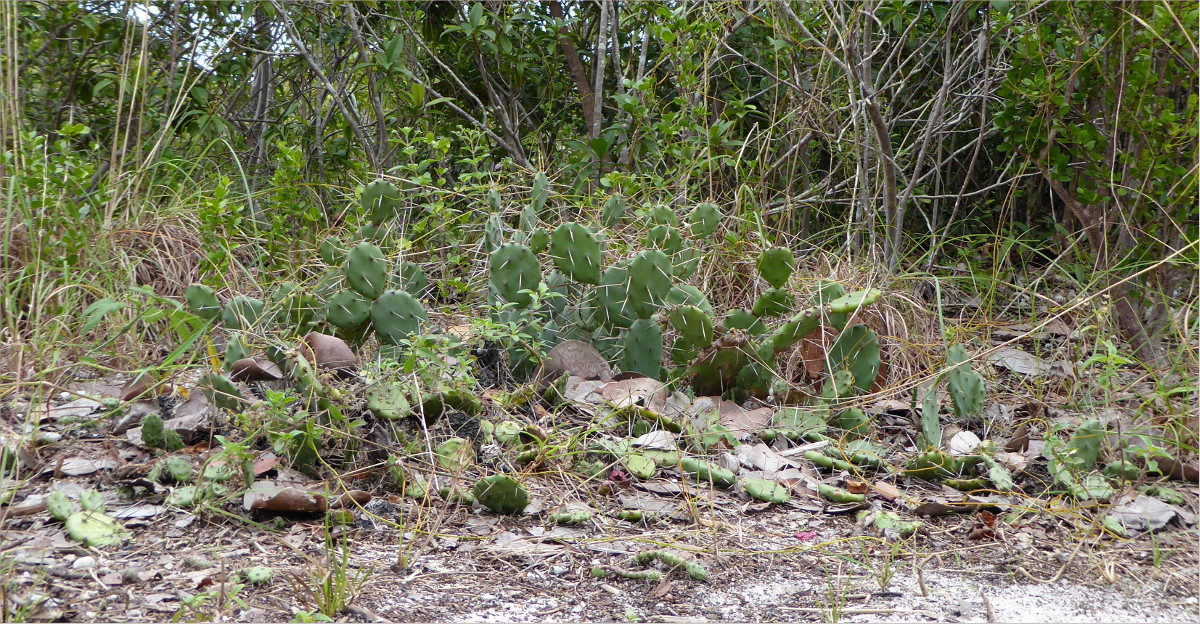
Papaya trees, sea grapes, sable palmettos, coconut palms, mangroves, wild coffee bushes (psychotria nervosa, perhaps the most appropriate Latin name ever given to a plant), American beauty berry, black eyed susans, morning glories, and even a couple edible plants, like sea purslane and prickly pear grow along the trail.

Sea purslane, Apr 2013

Sea purslane, Apr 2013

Prickly pear, Apr 2013

Prickly pear flower, Apr 2013

Prickly pear, Jan 2016

Prickly pear, Jan 2016

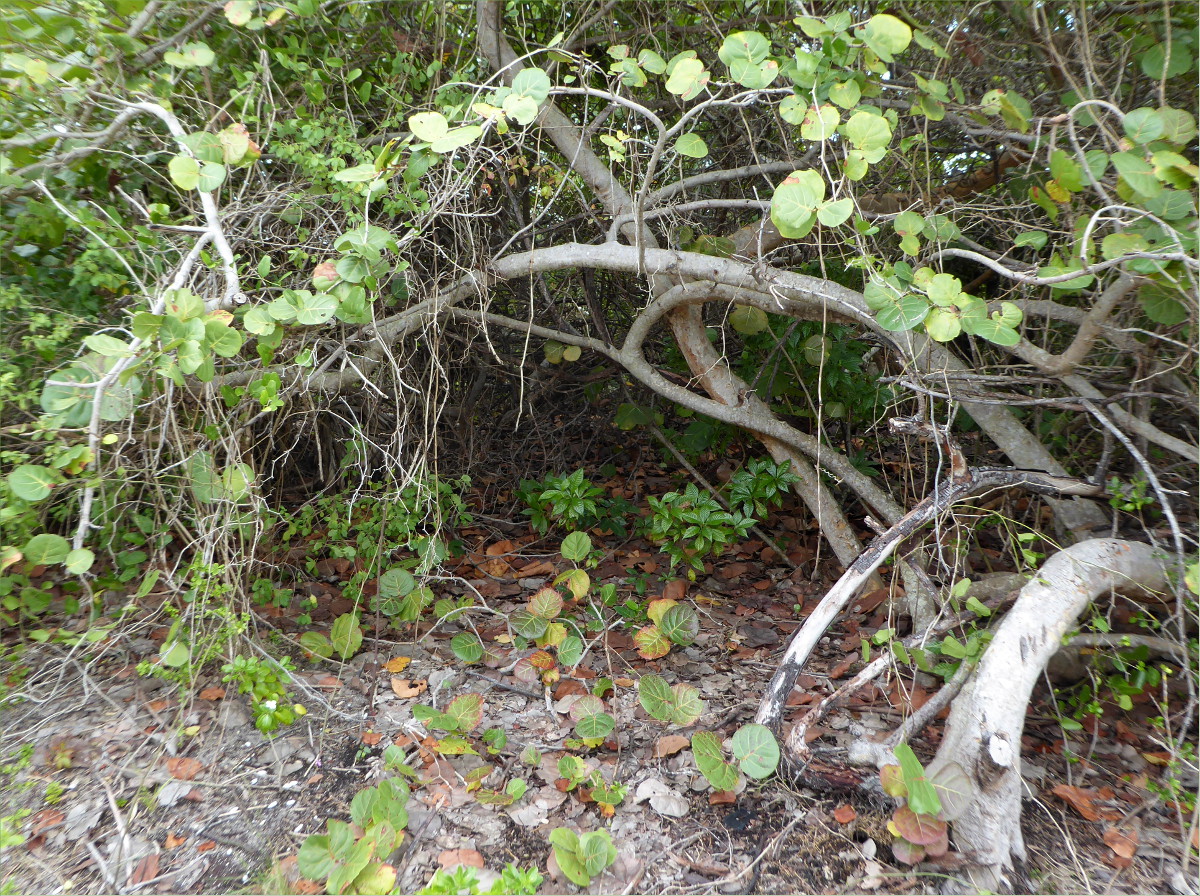
Psychotria nervosa under the protective arm of a sea grape, Jan 2016

Psychotria nervosa nestled under the protective arm of a sea grape, Jan 2016

Sea grapes, Jan 2016

Jan 2016

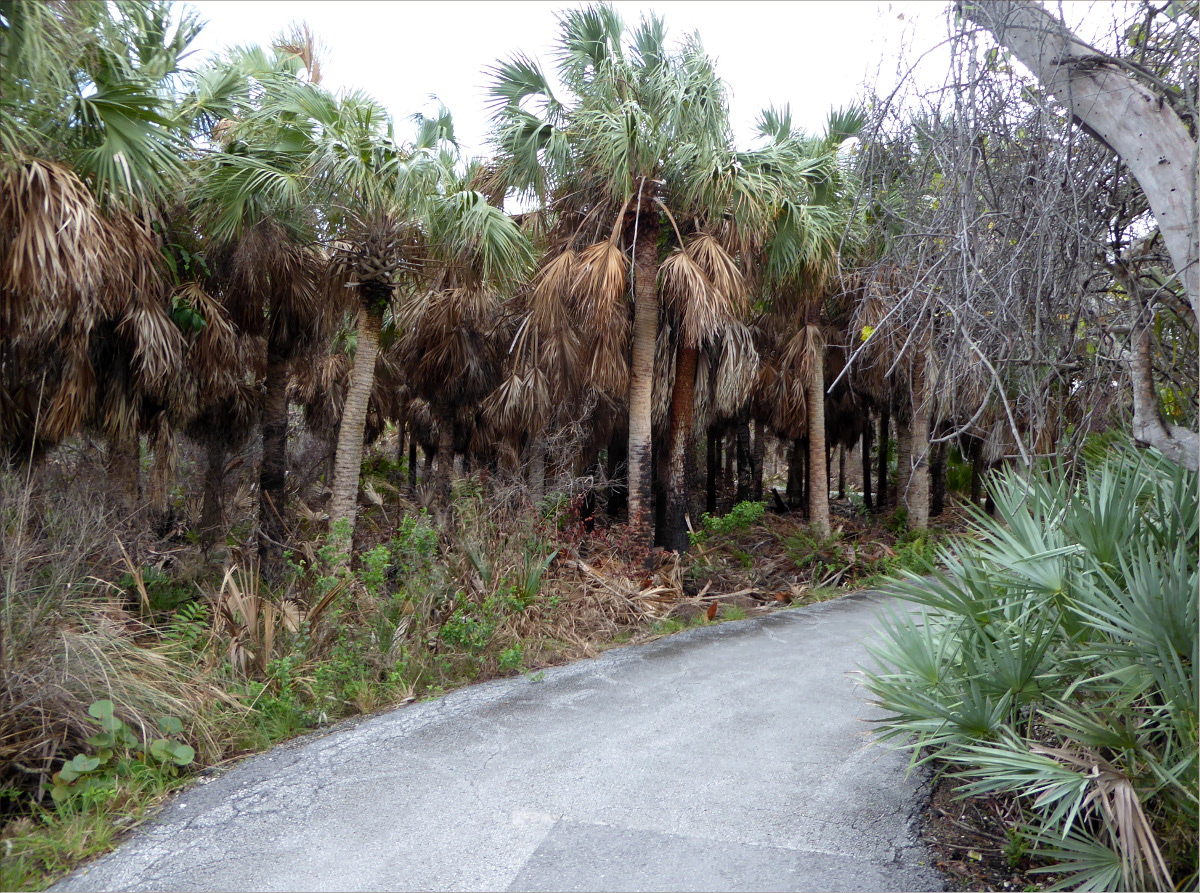
Sable palmettos, Jan 2016

Jan 2016

Path leading to beach from Osprey trail, Jan 2016

Jan 2016

Apr 2013

Dogs are not permitted on the beach, but until recently it wasn’t patrolled, Apr 2013

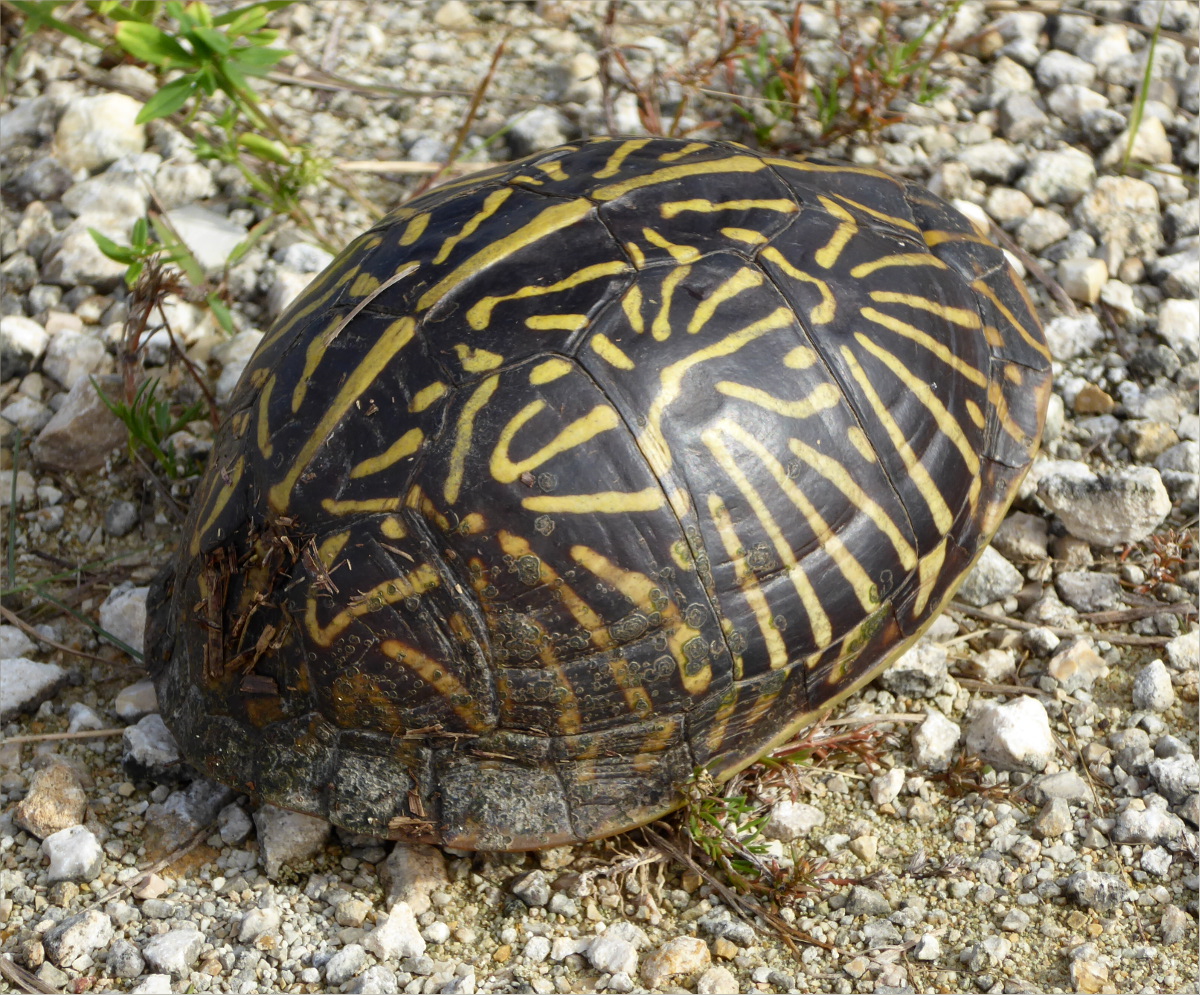
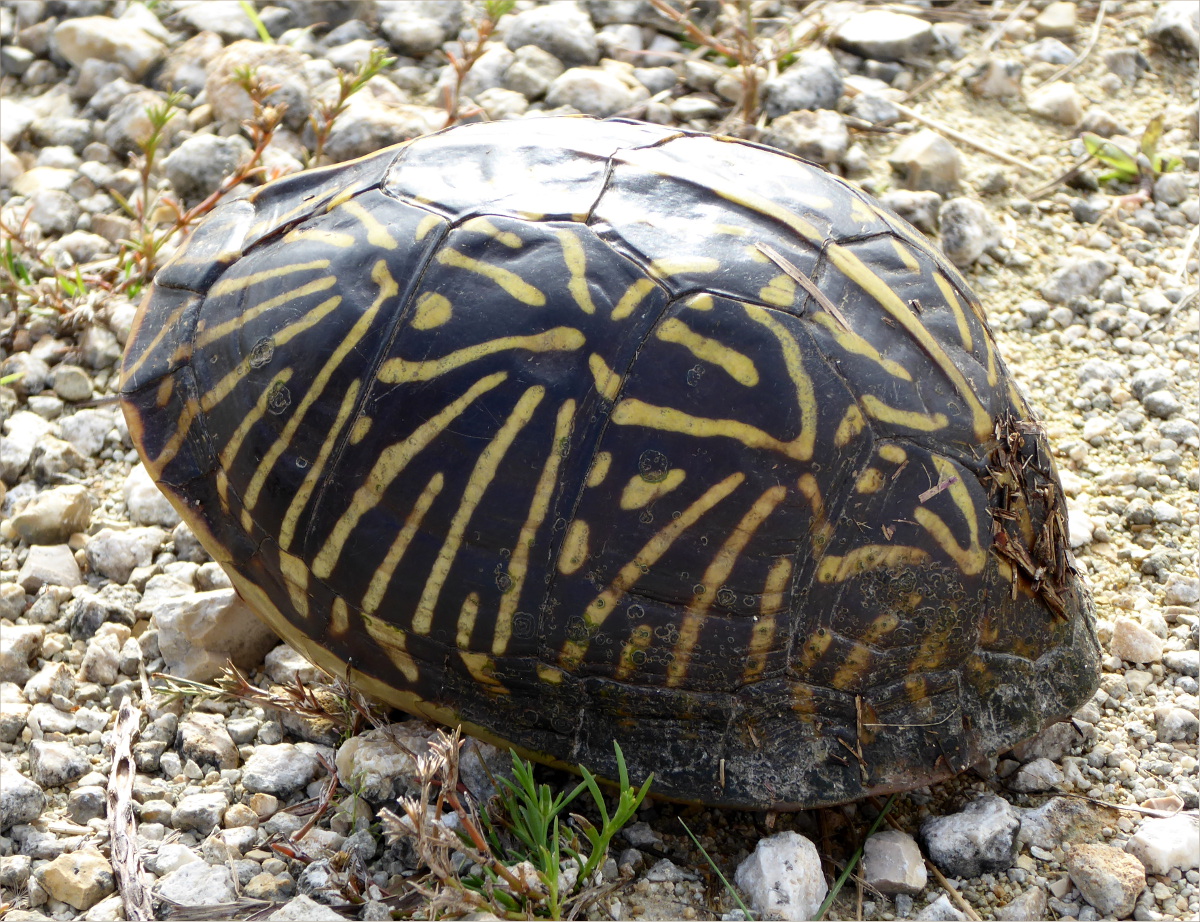
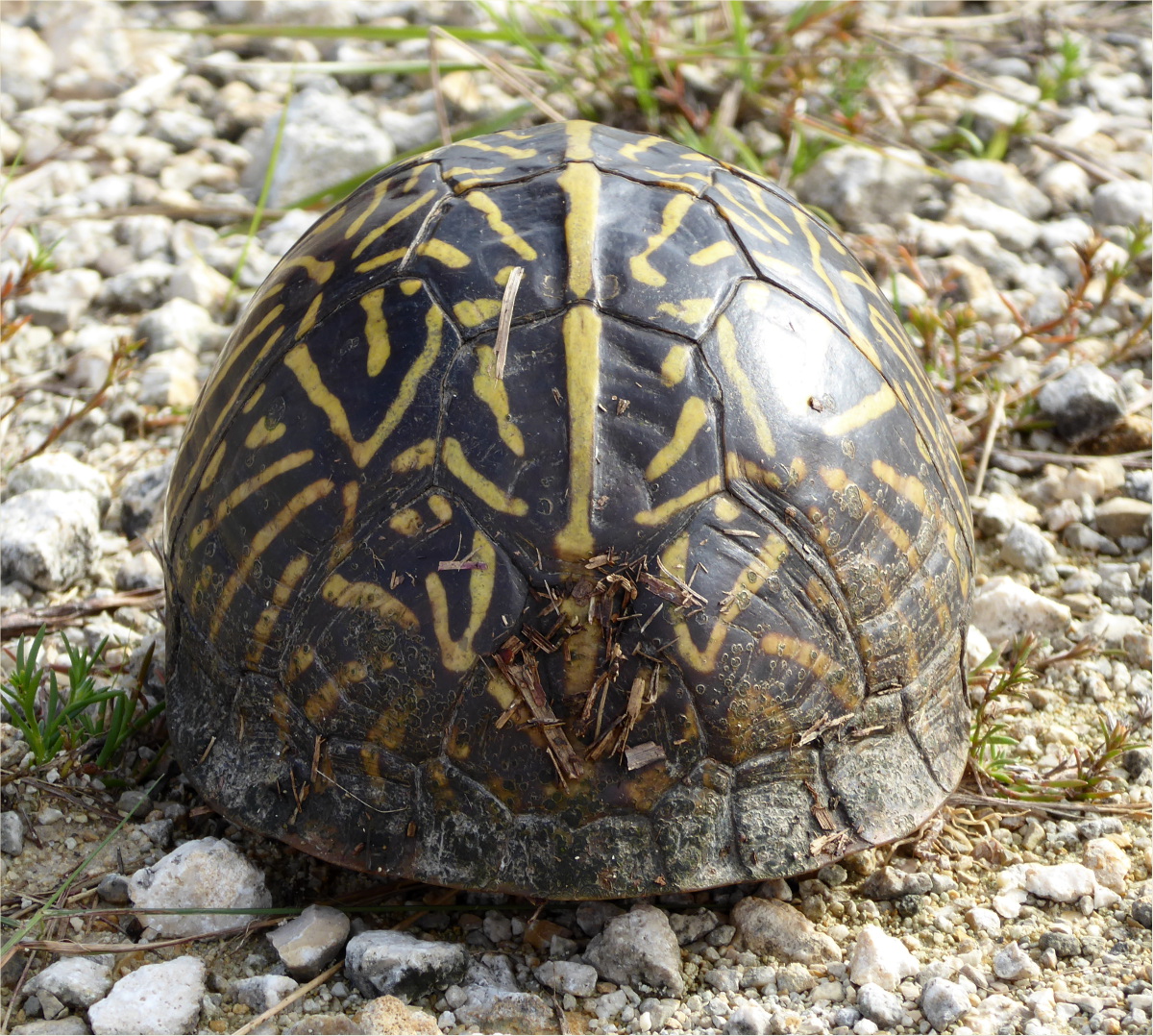
We Saw a Florida Box Turtle! Dec 2015

25°38’56.13″N 80°30’55.71″W elev 5 ft
Edge of Everglades Trail
Everglades National Park
Red line represents 8.7 miles (14 km)

Edge of Everglades North map_1200

“X” marks the spot where we saw it. [Nous avons vu une Terrapene carolina bauri! “X” marque l’endtoit ou nous l’avons vu.]

P1000458_1200

A hinged plastron enables it to close its shell tightly. [Un plastron a charnieres le permet de bien fermer la carapace.]

P1000459_1200

P1000461_1200

P1000460_1200

P1000462_1200

We also saw Gulf fritillary (Agraulis vanillae) butterflies. [Nous avons vu des Agraulis vanillae egalement.]

P1000441_1200

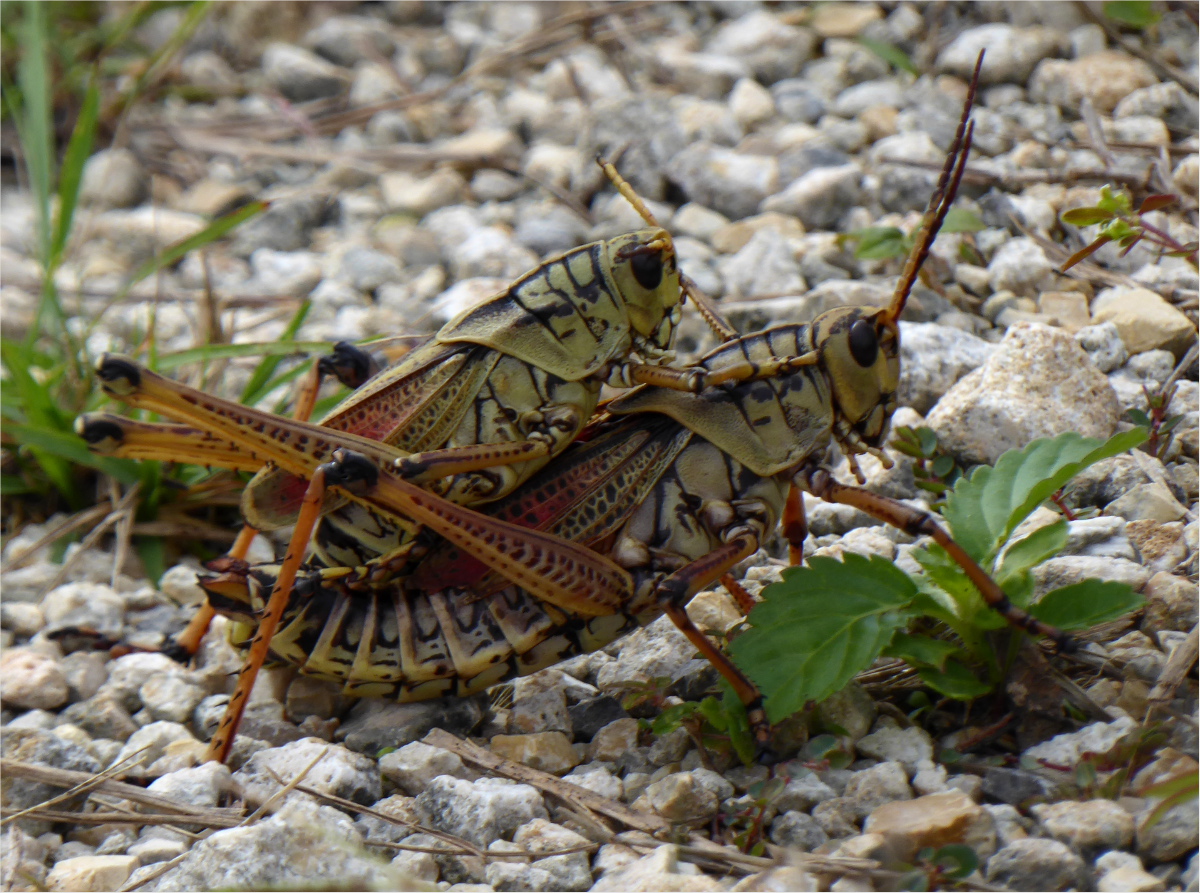
And some horny Southeastern lubber grasshoppers (Romalea microptera). [Et des Romalea microptera tres excites.]

P1000445_1200

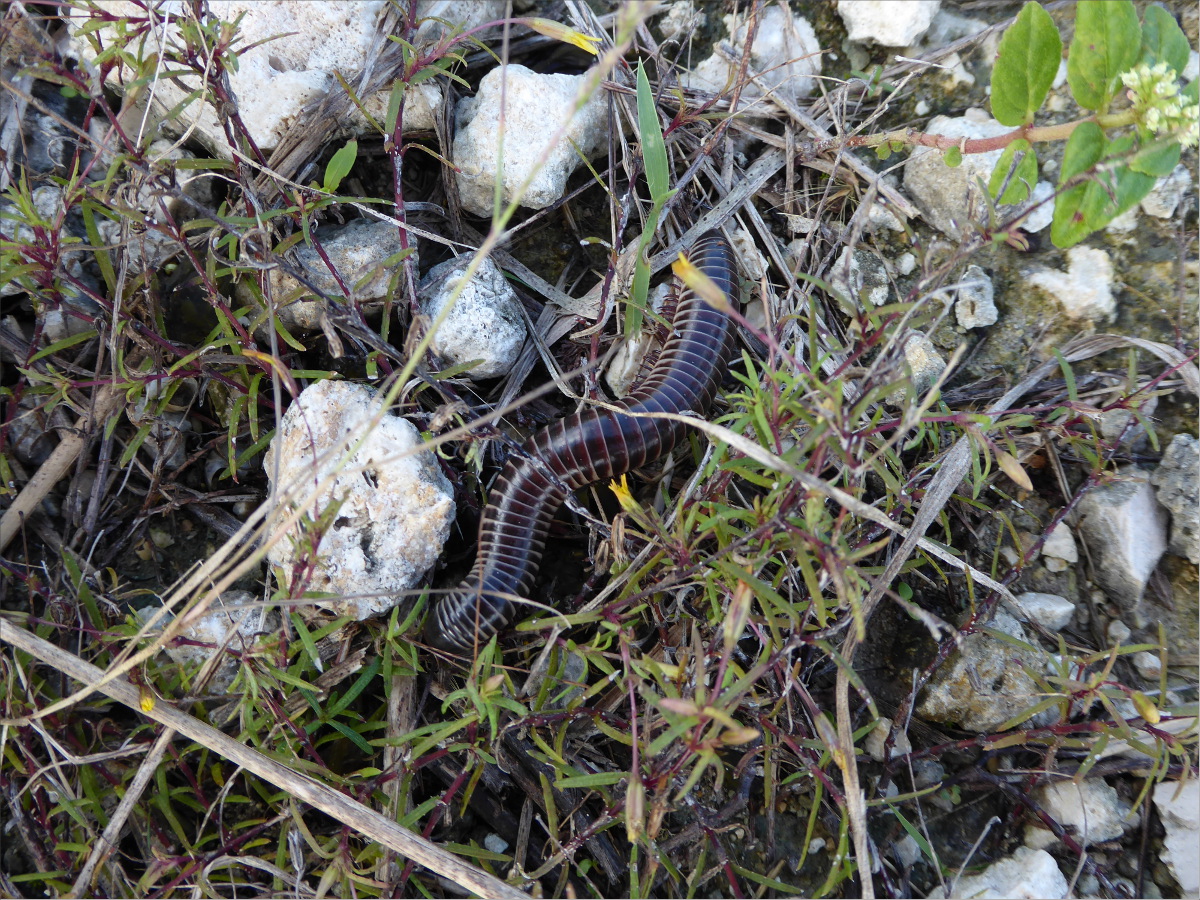
And four-inch long Florida ivory millipedes. I love their colorings. Their stomachs are white! [Et des Florida ivory millipedes qui etaient dix centemetres de long. J’aime leur couleurs. Leur ventres sont blancs!]

P1000451_1200

Florida is a strange place. Its relationship with nature has a fraught history. [Florida est un pays etrange. La relation avec le millieu naturel a une histoire tendue.]

P1000455_1200

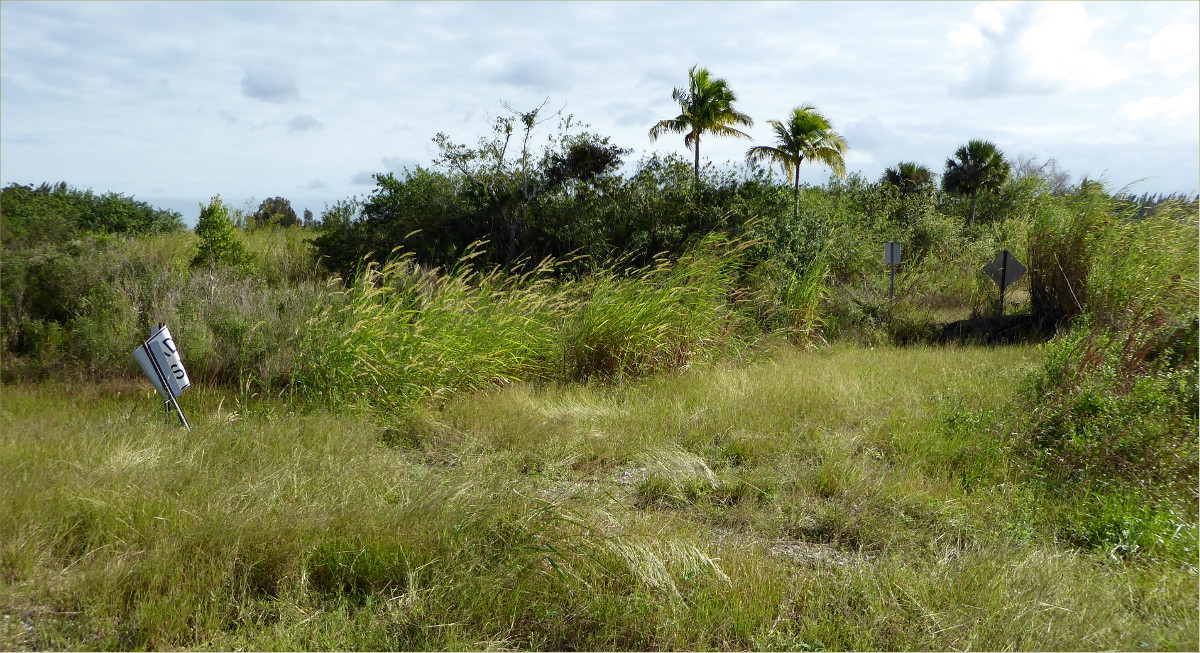
Can you believe that this was once a street? [Pouvez vous imaginer que il’y avais une route ici?]

P1000454_1200

[Je m’excuse pour n’utiliser pas des accents. C’est difficile les utiliser avec WordPress.com.]

Spring and Fall in Southwest Miami-Dade County, 2015


Spring starting point:
Silver Palm, FL 33170
25°33’03.40″N 80°26’43.82″W elev 11 ft

Fall starting point:
SW 168 Street and SW 208 Avenue, Miami FL 33187
25°36’30.57″N 80°31’30.14″W elev 5 ft

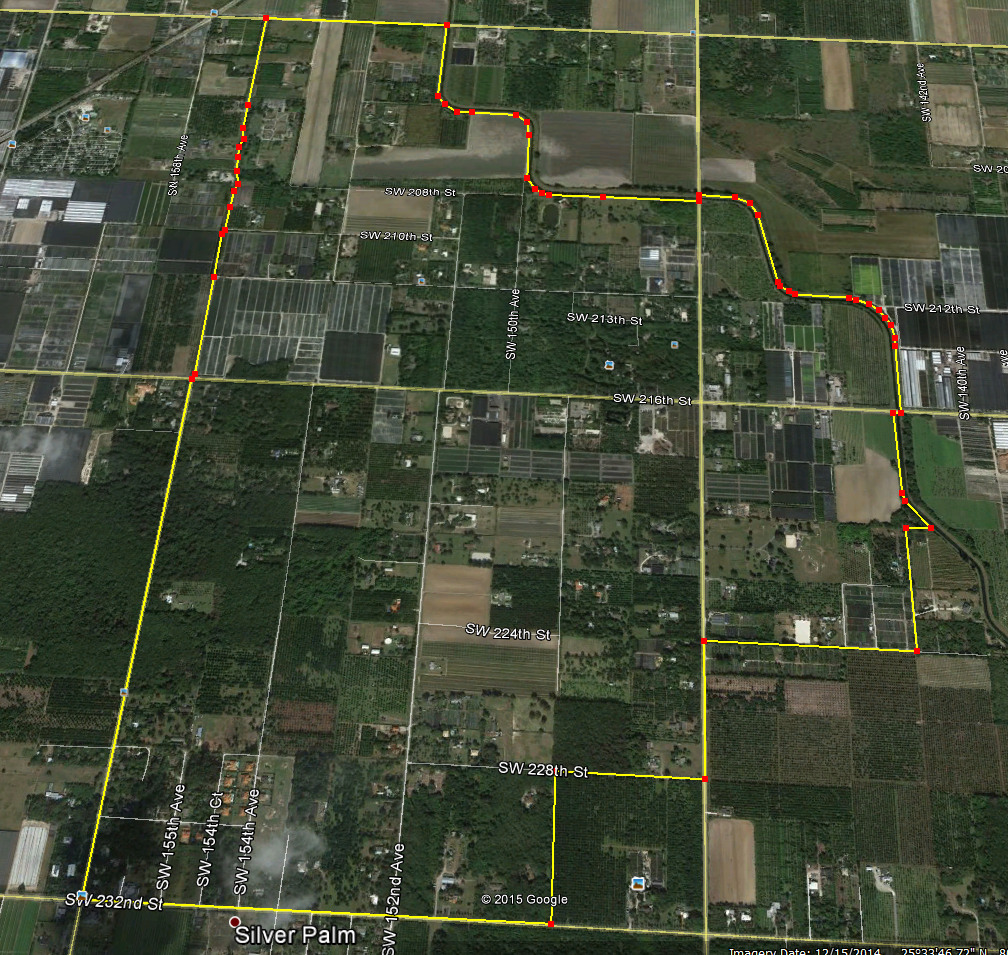
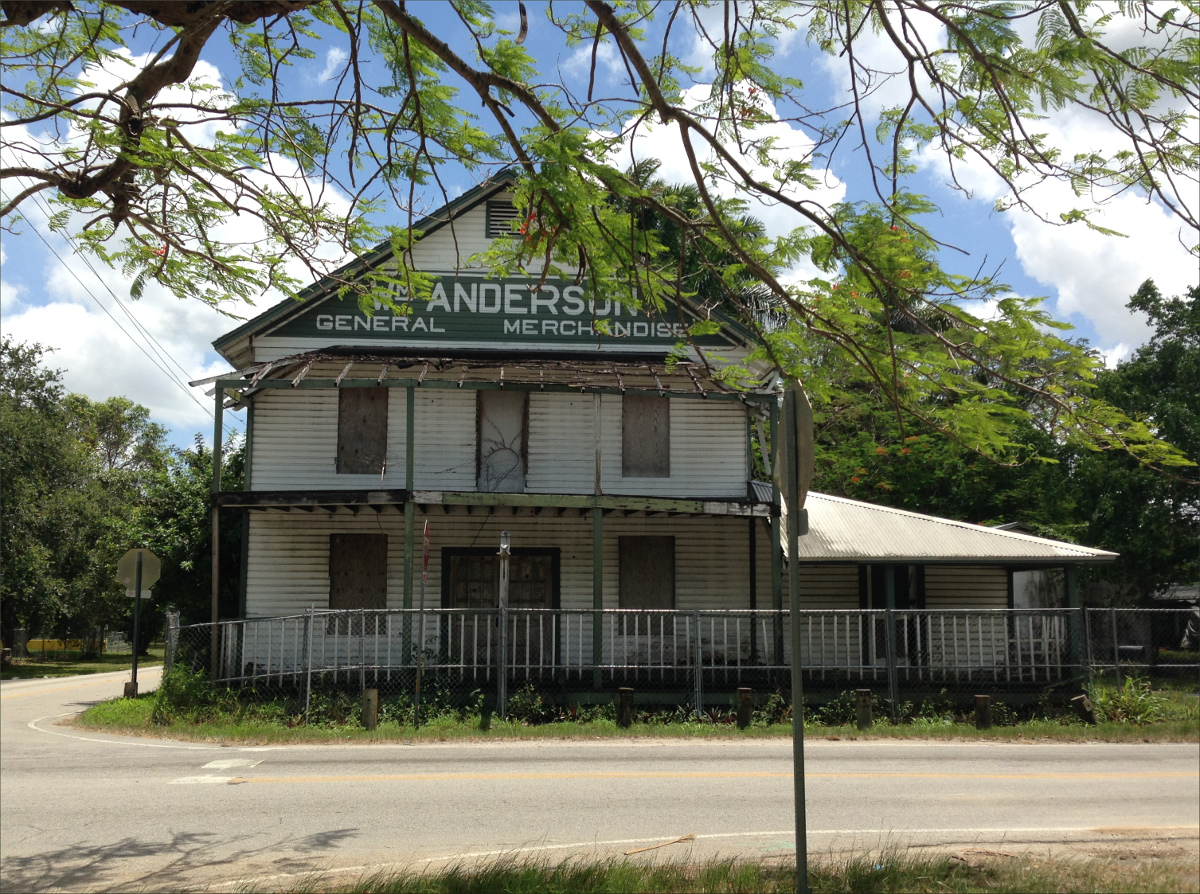
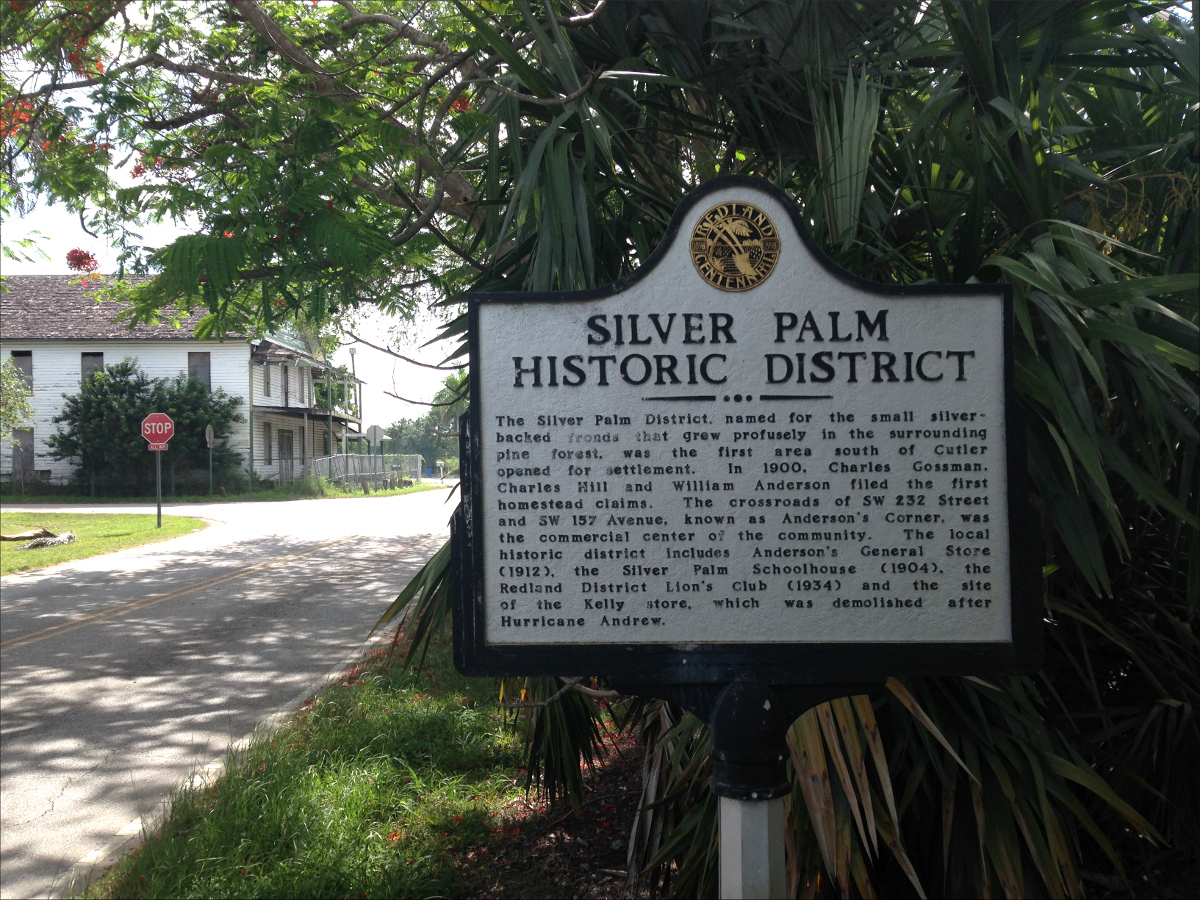
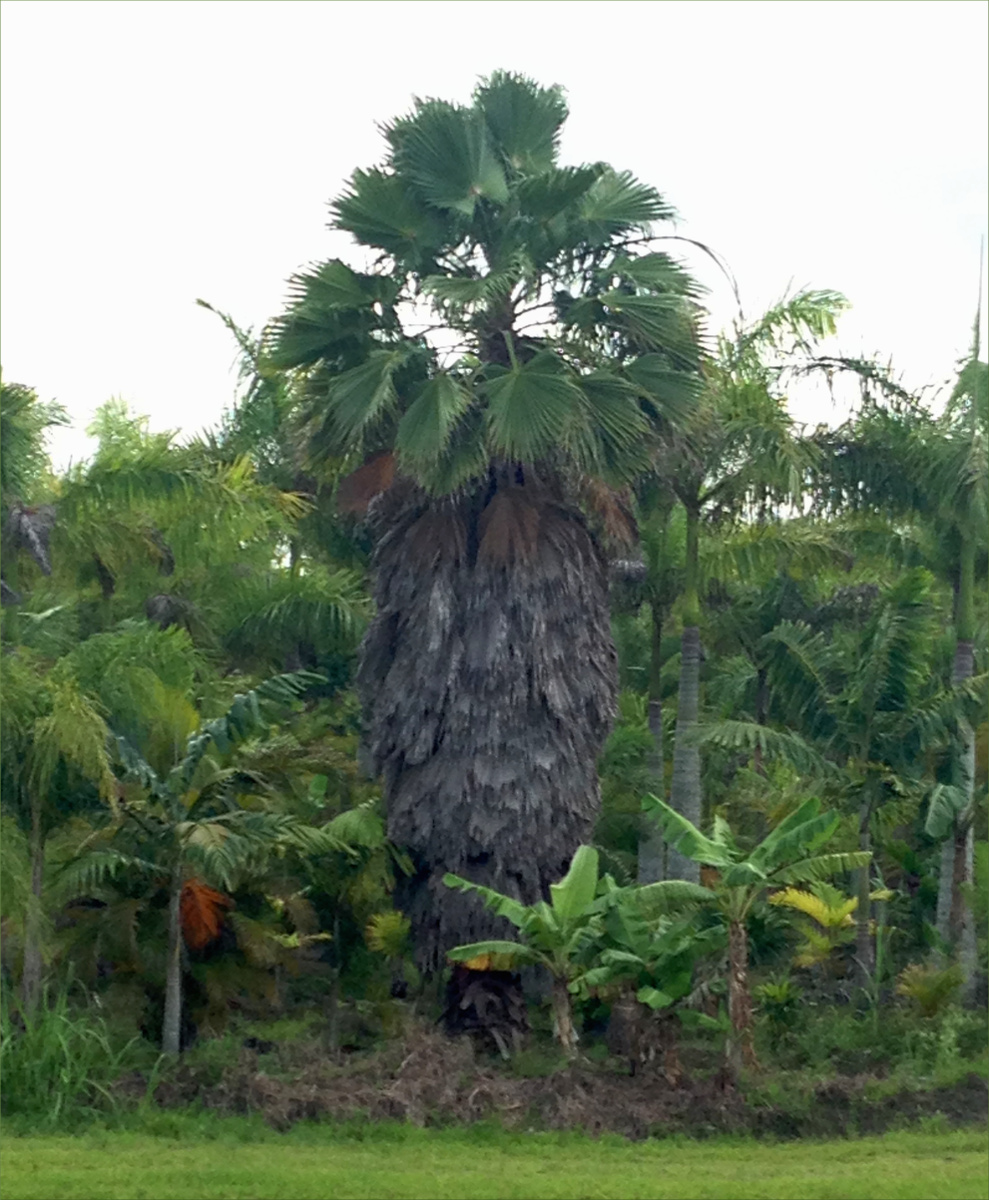
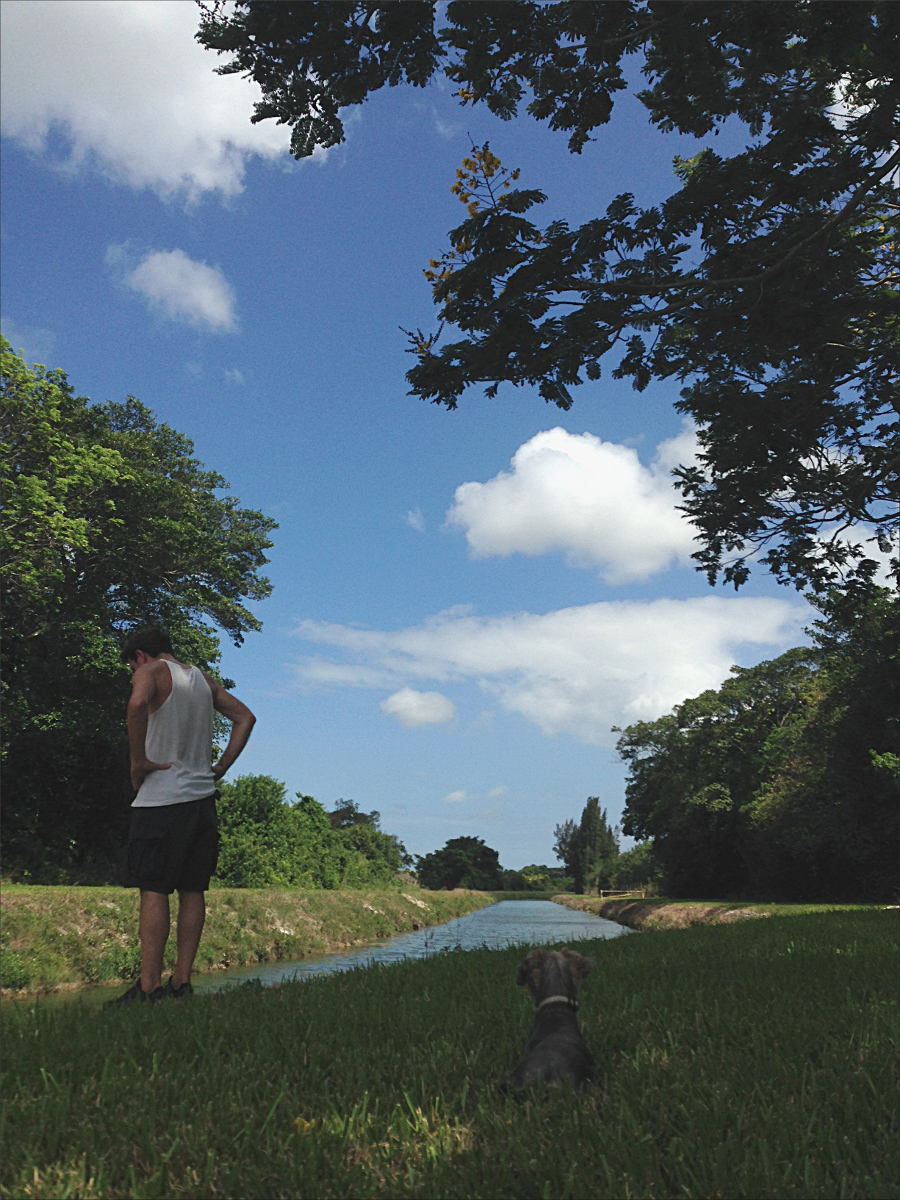
Our bike riding adventures took us to southwest Miami Dade County twice this year. In May, they took us to the Redland historic agricultural area. Our path followed public roads barely recognizable as roads and canal C-102. We saw a variety of farms: avocado, palm tree, mango, dragon fruit, bromeliad and many others. We also saw donkeys and purple love grass.

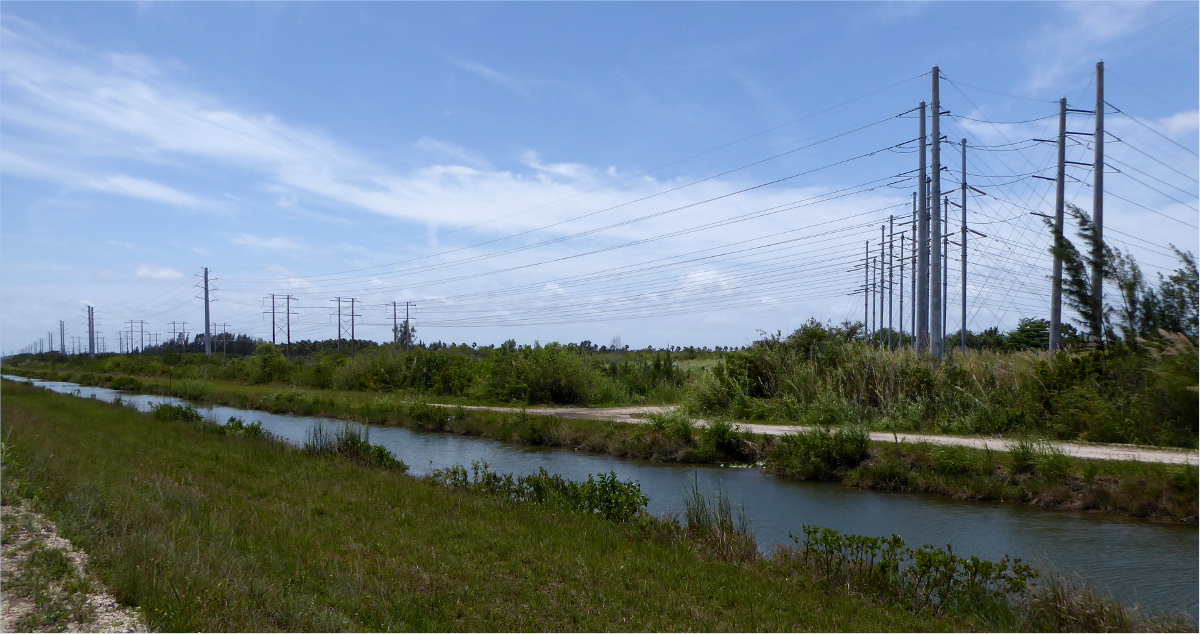
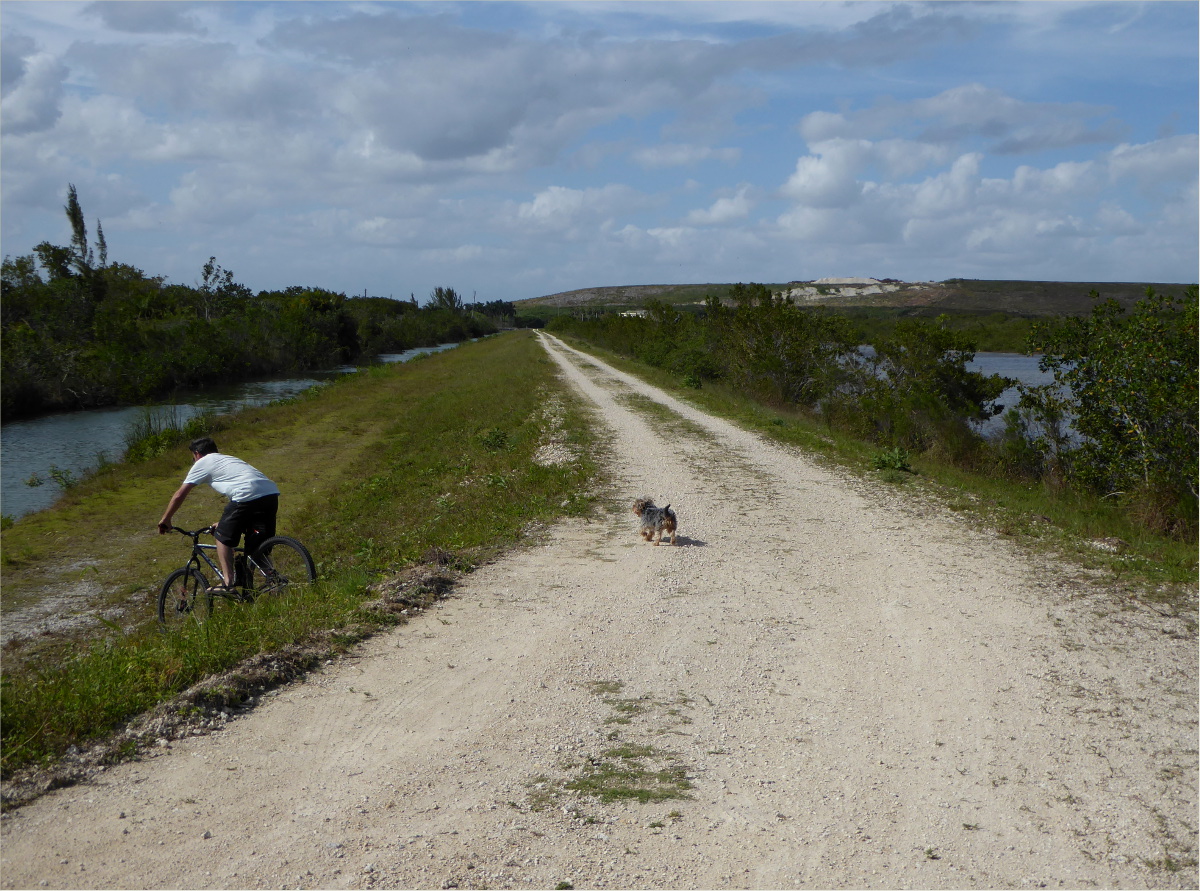
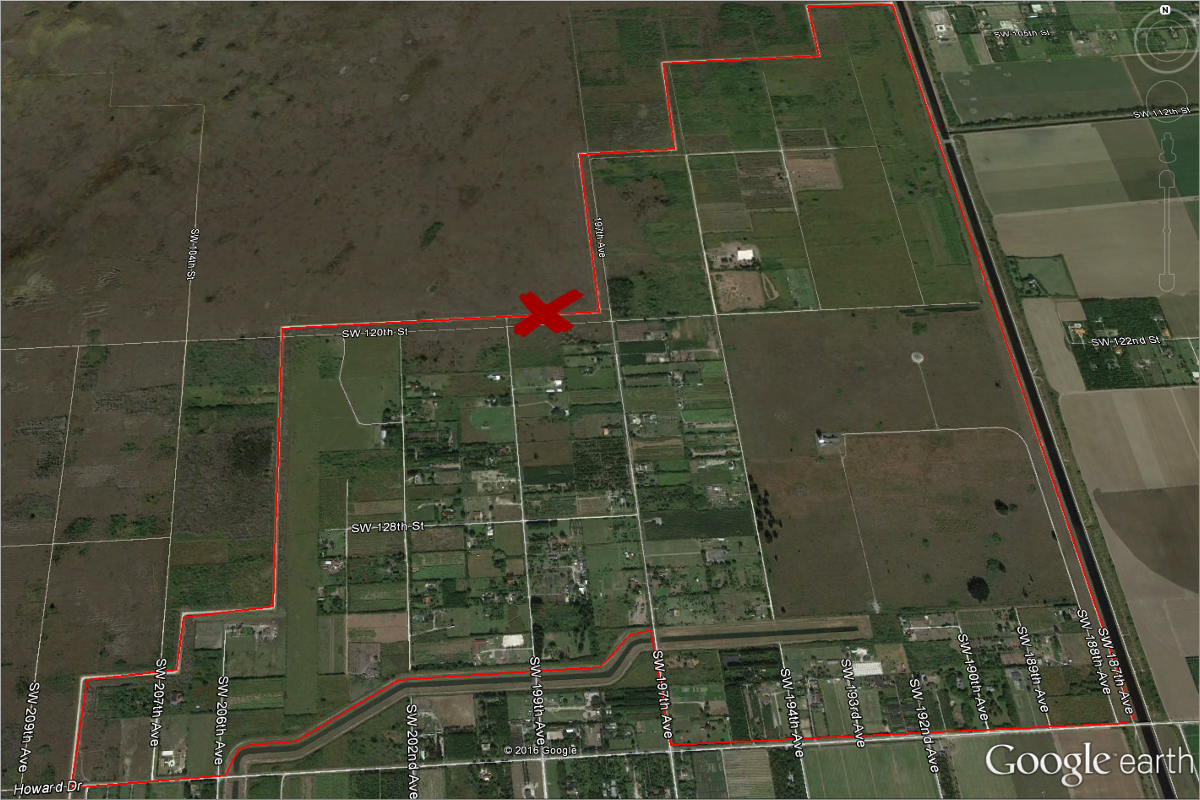
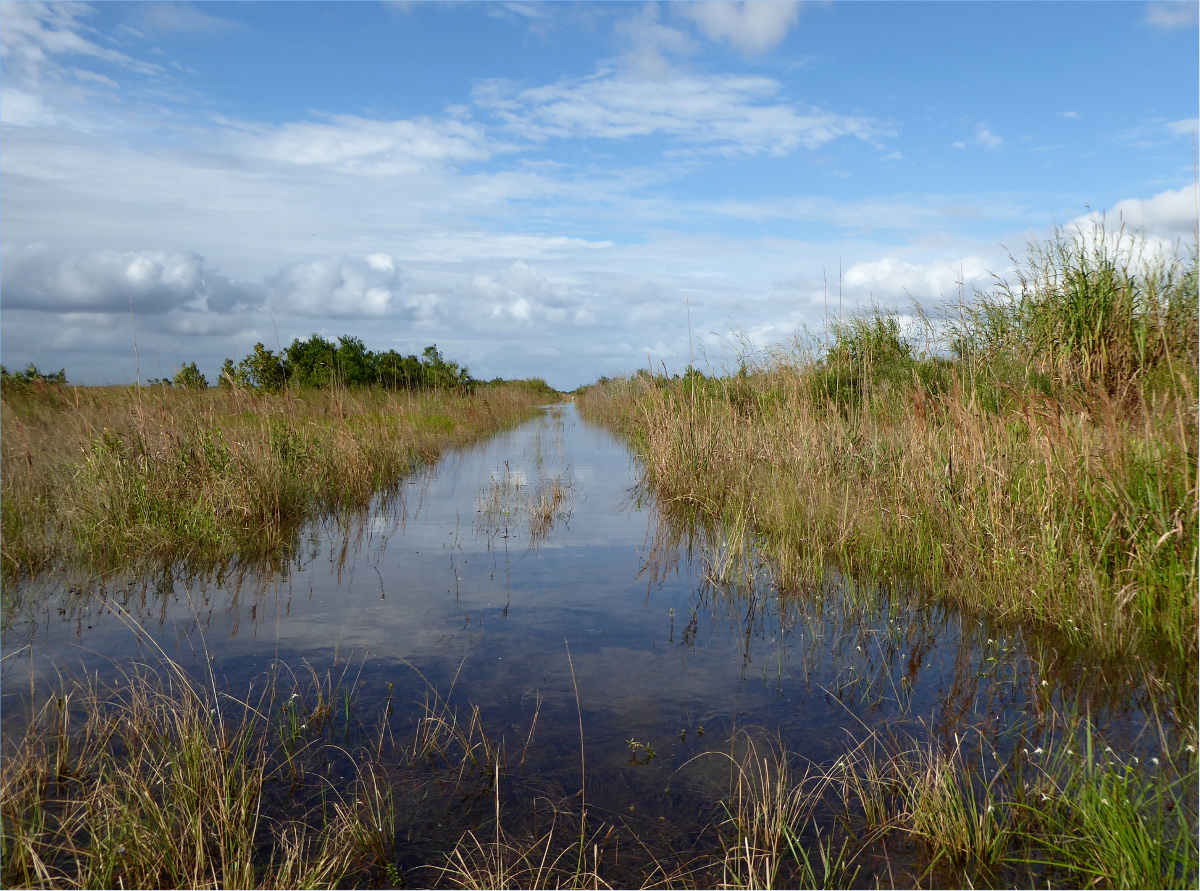
In November, we ventured into the fringe of Miami Dade County just west of the C-357 seepage canal where “farmburbia” peters out and the Everglades National Park begins. Once again we followed the ruins of public roads. This time they were overgrown with grasses as thick as your thumb and so high they blocked out the sun. Once inside the perimeter of Everglades National Park, there were two roads to choose from. One was cut out of the native limestone floor. We took this road as far as we could before it became flooded, which wasn’t very far. The other was made of raised hard pack and offered a great view of the endless horizon of Shark River Slough. We saw mocking birds, blue jays, butterflies, goats, chickens, cows, horses, dogs and, unfortunately, discarded tires, soda pop cans, mini fridges and cell phone accessories circa 2005. We also stumbled upon Julio’s Apiary, a licensed bee farm.

redlands

1505-4

1505-9

1505-7

1505-5

1505-3

1505-12

1505-11

1505-6

1505-2

1505-10

1505-8

1505-1

7 miles on the Fringe

151101-1

151101-2

151101-3

151101-6

151101-5

151101-4

Resources
Select Florida Native Grasses for North Central Florida – Fact Sheet #67, by Gale Kempner, University of Florida IFAS Extension
Modified Water Deliveries to Everglades National Park, 8.5 Square Mile Area, by Michael J. Collis, US Army Corps of Engineers, Jacksonville District, May 23, 2012
Agrilicious: Julio’s Apiary & Avocado/Mango Grove