Author: inthegooey

Archivist

Cape Sable – Night One/Day Two, Feb 2016

25°07’06.31″N 81°04’48.28″W elev 1 ft
East Cape, Everglades National Park
Launch site: Flamingo Visitor Center,
40001 State Hwy 9336, Homestead, FL 33034
(239) 695-2945

Wilderness Trip Planner: A guide to camping in the coastal portions of the Marjory Stoneman Douglas Wilderness

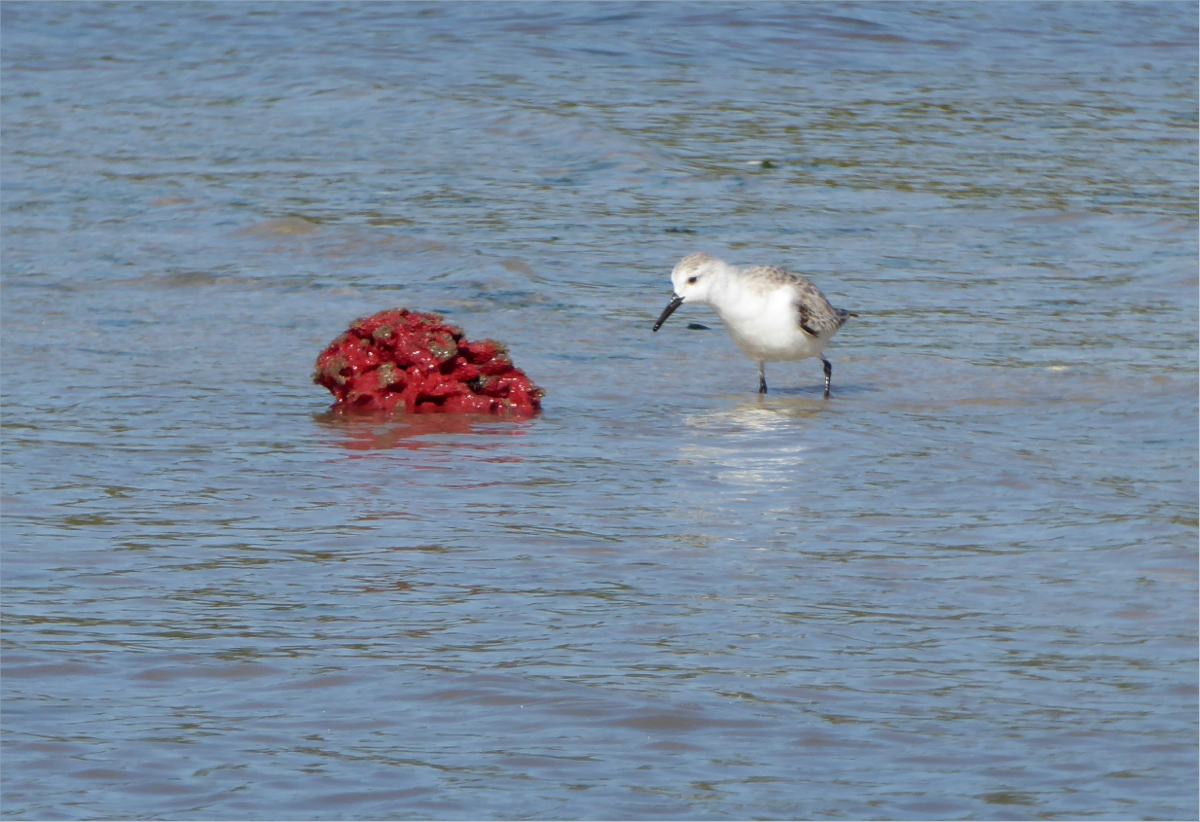
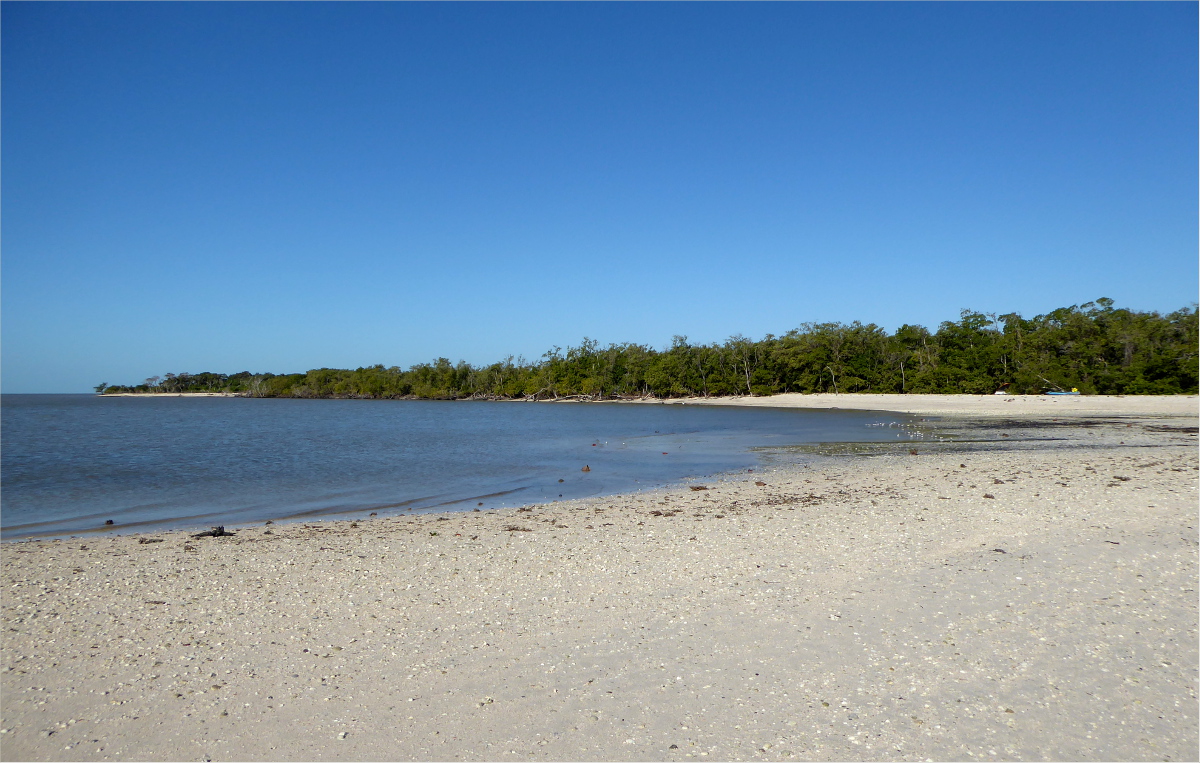
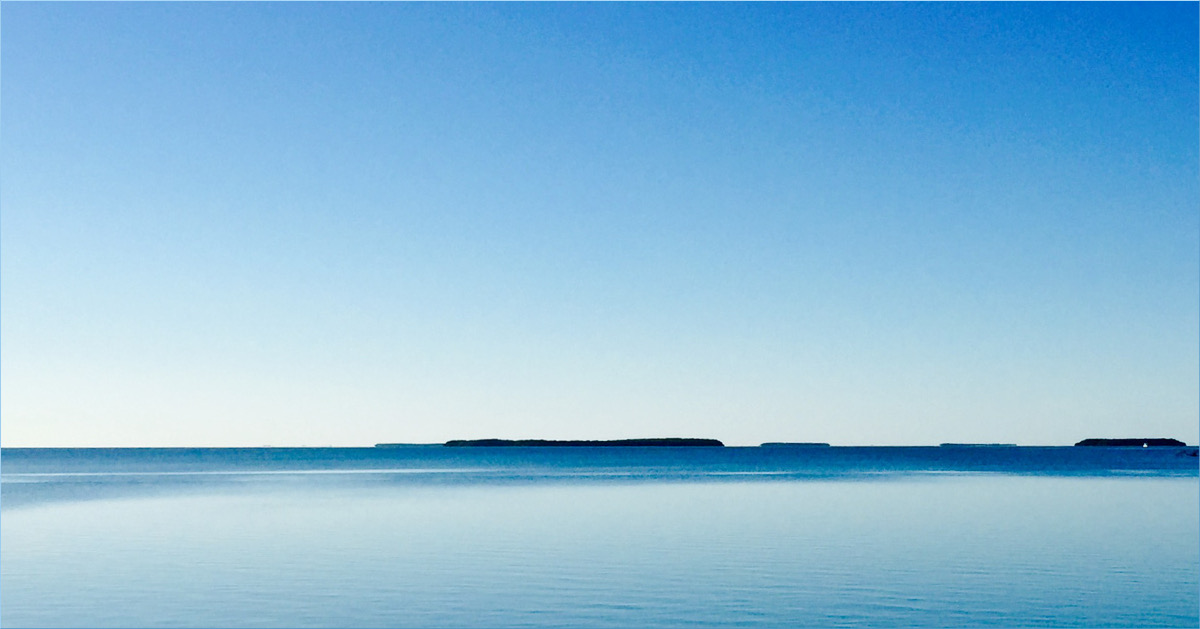
And on the 900th stroke, we arrived at East Cape. We were greeted by a family of campers in a motor boat that gave us first pick of a camp site out of deference to our muscle-powered wake, and a flock of Sanderlings.

P1000826_1200

P1000835_1200

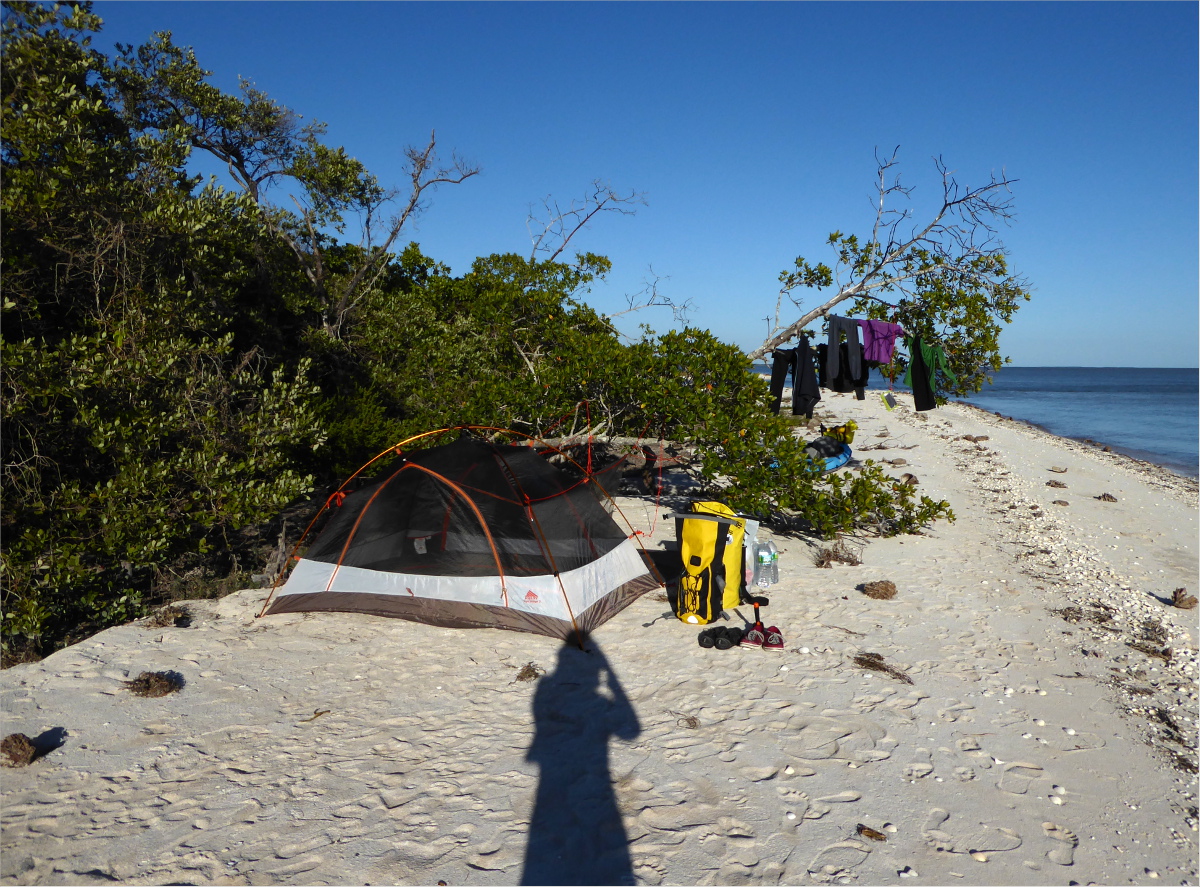
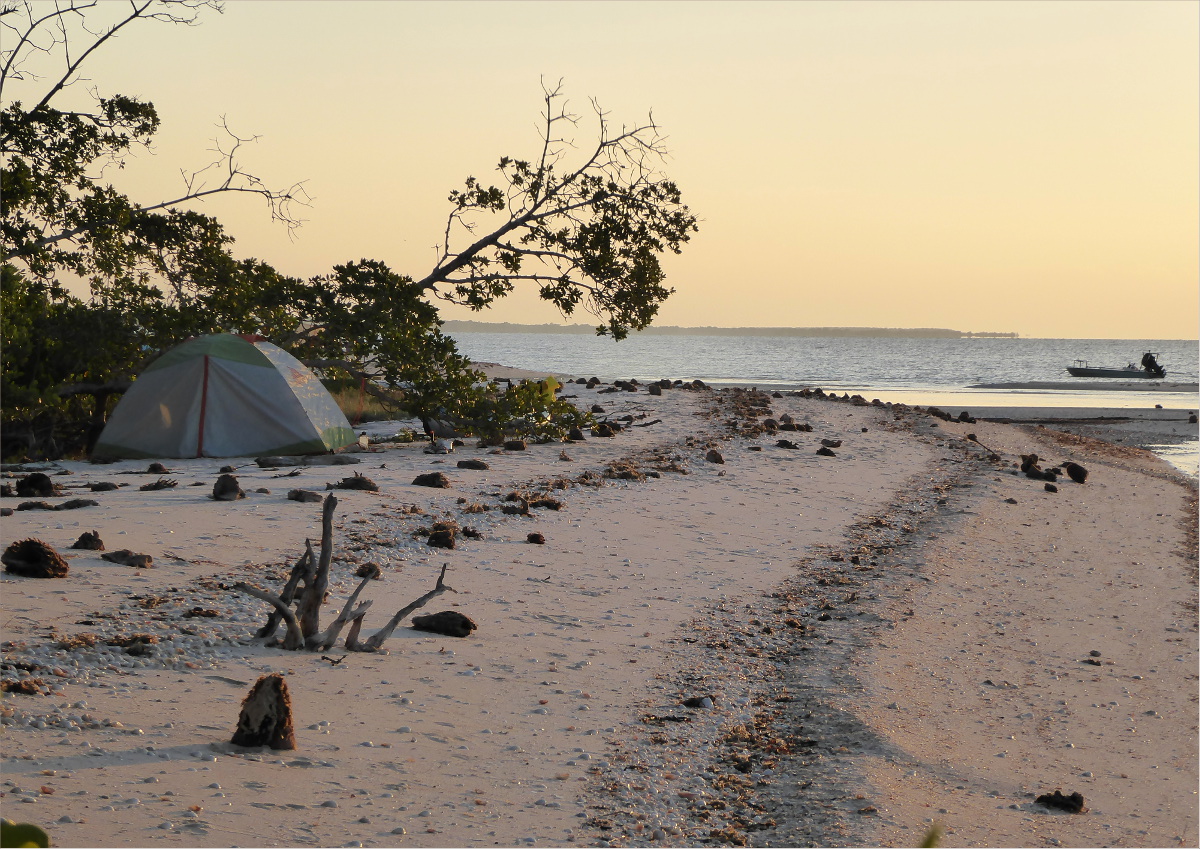
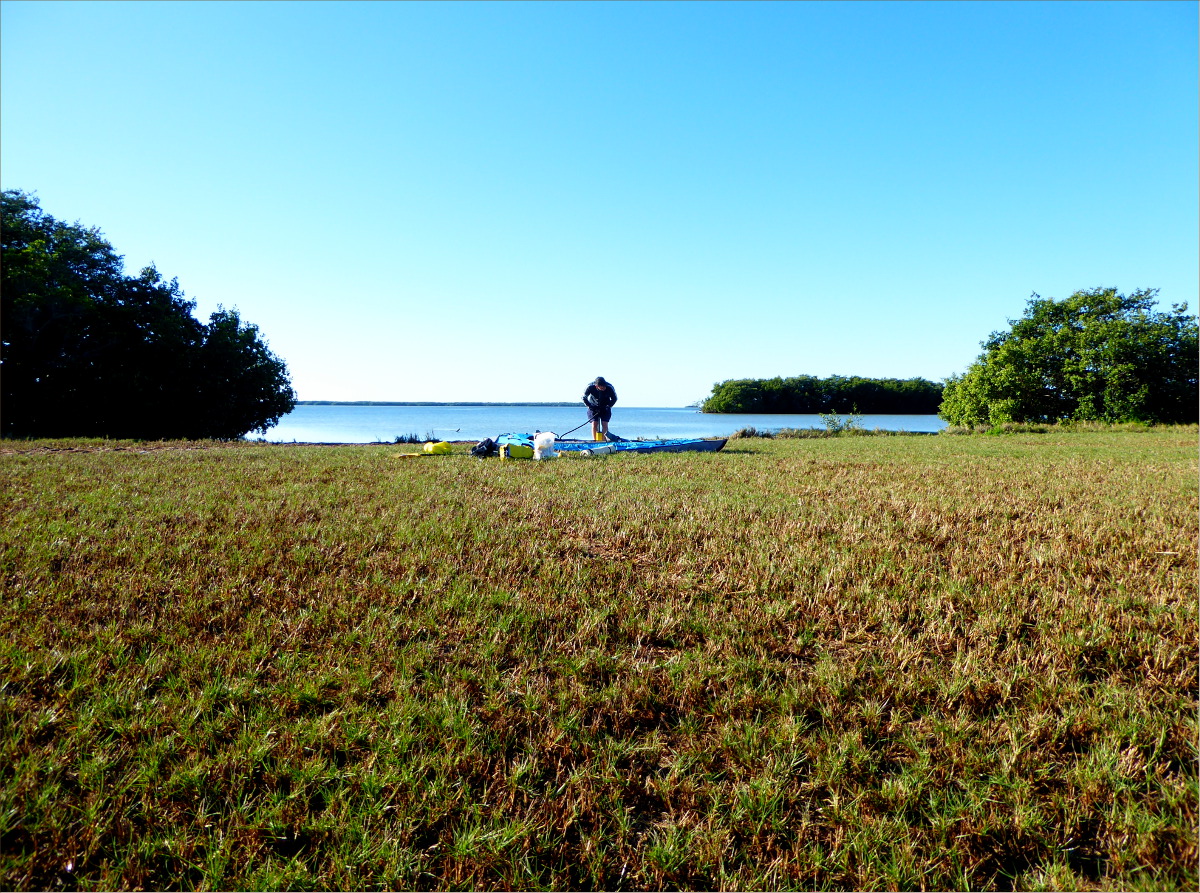
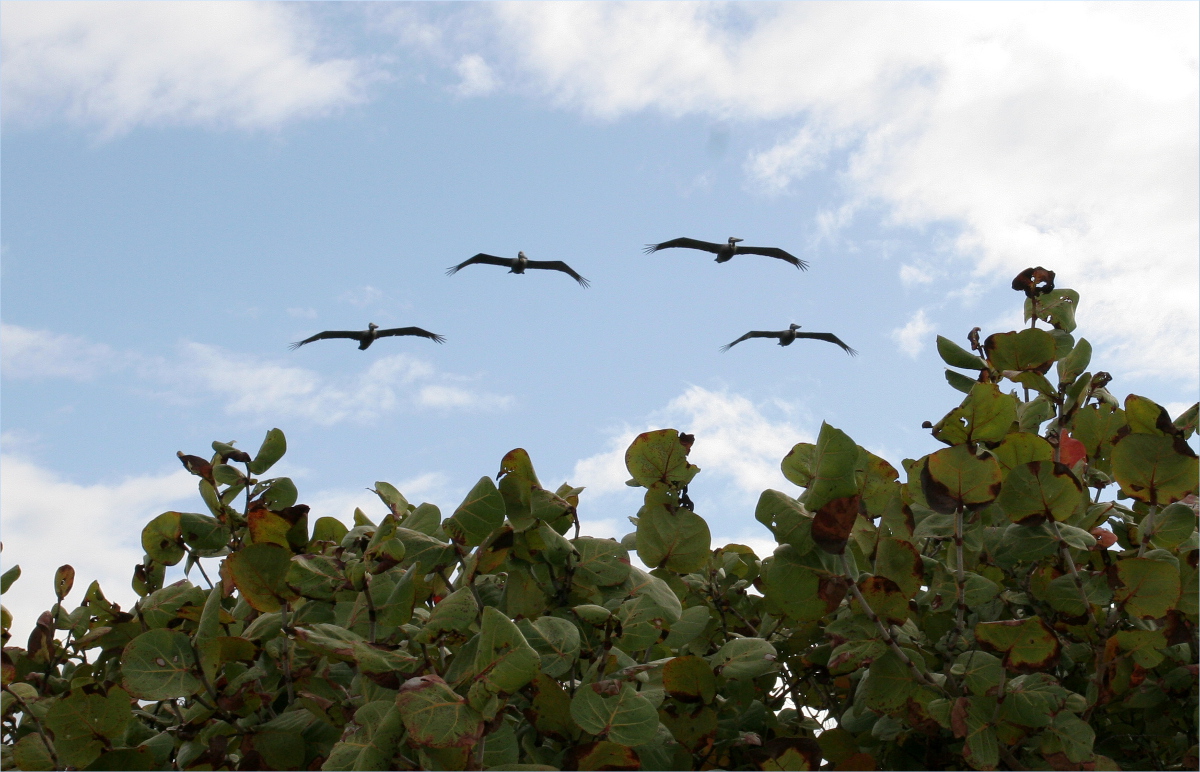
By 4:45, we had set up our tent. As the day faded into night, we passed the time cooking, arranging seashells in the sand, chatting, sipping bourbon, and star-gazing. As the night wore on, the stars grew brighter and brighter, the rising and receding tide lapped against the shore twenty feet away, and giant wading birds stopped to sample insects outside our tent.

P1000841_1200

Gauthier woke up early to watch the sun rise.

P1000851_1200

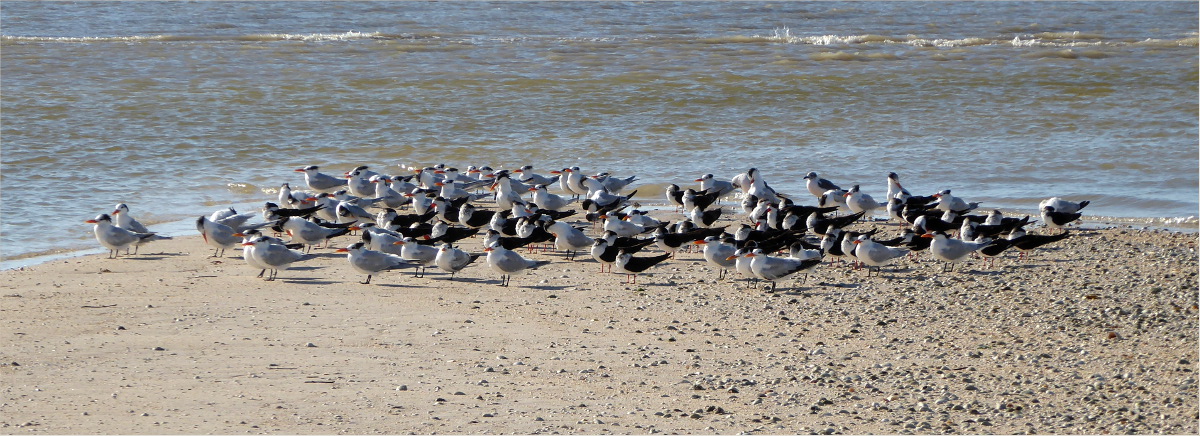
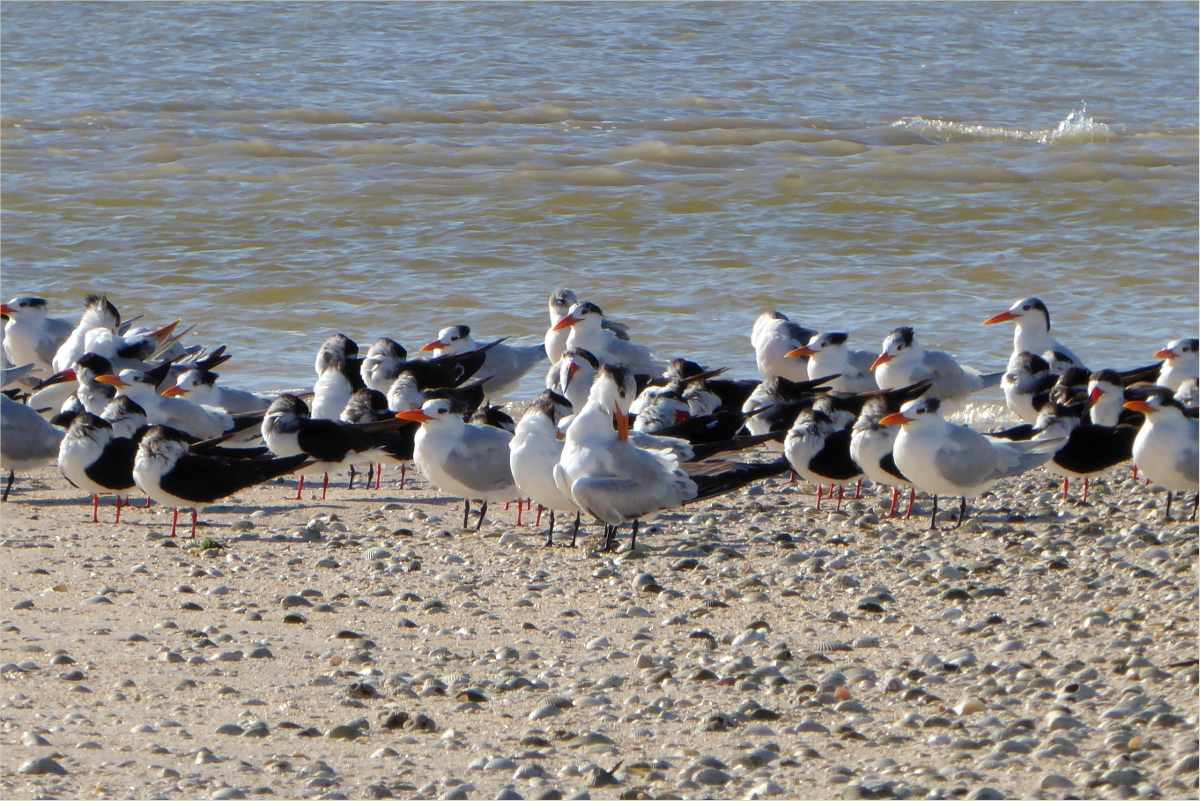
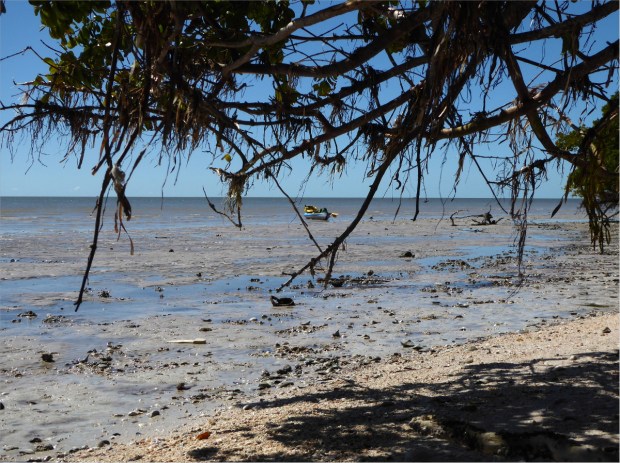
Our friends the Sanderlings were up early as well, as were a flock of Terns. During low tide, the shallow bay reveals muddy tongues protruding from the shoreline that are completely hidden during high tide, like the one these Terns are on.

P1000868_1200

P1000870_edited_1200

One characteristic that all of the beaches we stopped at had was washed up sea sponges. There are over two hundred sponge species in South Florida. The sponges in the photo below are vase sponges.

P1000863_1200

Sea sponges are a foundation species and a sign of a healthy ecosystem. In the photo below, a Sanderling inspects a Haliclona rubens.

P1000879_edited_1200

Marjory Stoneman Douglas had a hard time making a case for the designation of the Everglades as a National Park. Folk saw holes in trees like the one below, assumed they were created by insects with really big teeth, and wanted nothing to do with it. Honestly, we wondered whether that hole, with its serrated edges, wasn’t created by giant, razor-sharp mandibles.

P1000862_1200

Holes in shells like those in the shells in the photo below provide clues as to how the shells died. Those tiny perforations were caused by sponges called Boring sponges. Boring sponges attach to shells for shelter, often smothering the host. The little holes are caused by the chemicals they use to attach themselves. Polychaete worms are the villains that cut grooves in oyster shells. And the little holes that are useful for turning shells into necklaces, those are caused by predatory sea snails and slugs.

P1000882_1200

Gauthier paddled to the southernmost beach on East Cape. The wind had picked up and was blowing from the east at a worrisome clip, so I chose not to accompany him and preserve my energy.

P1000877_1200

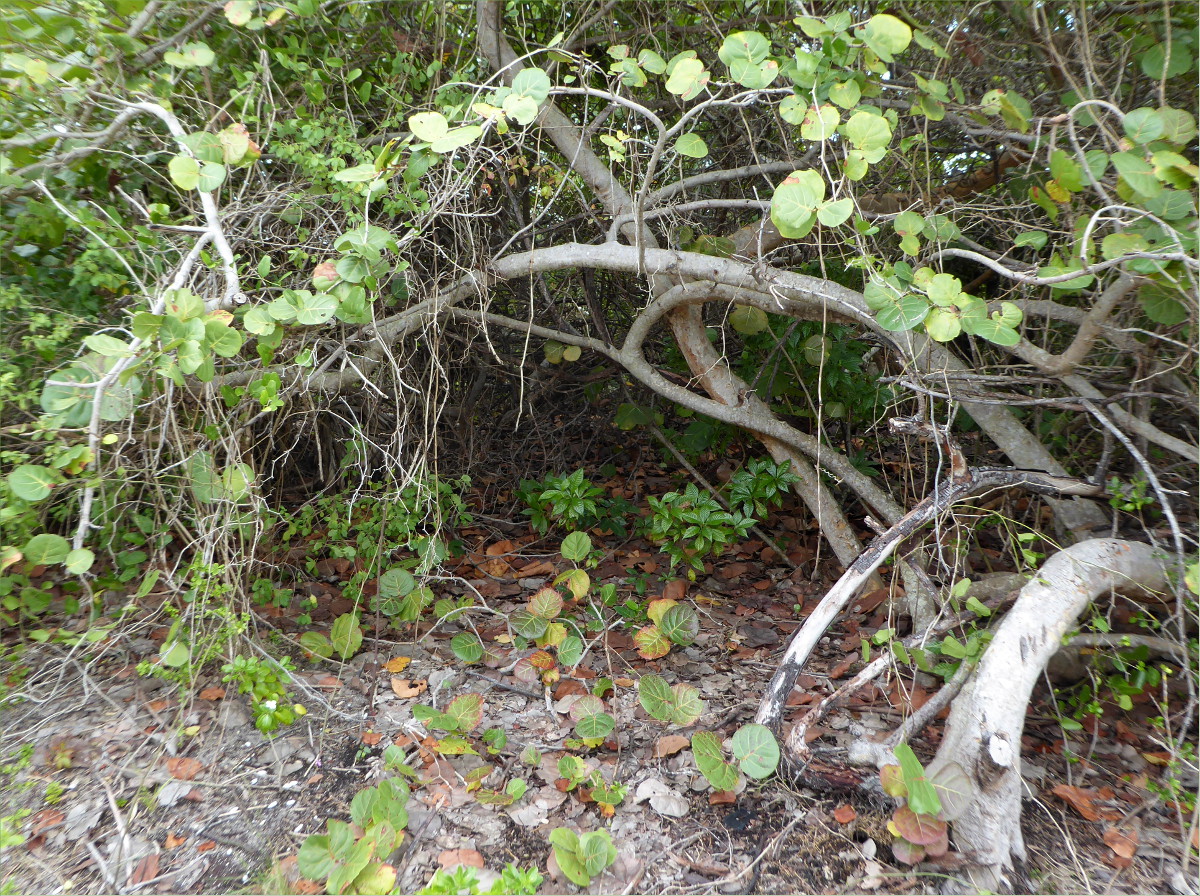
There he saw Gumbo limbos…

P1000895_1200

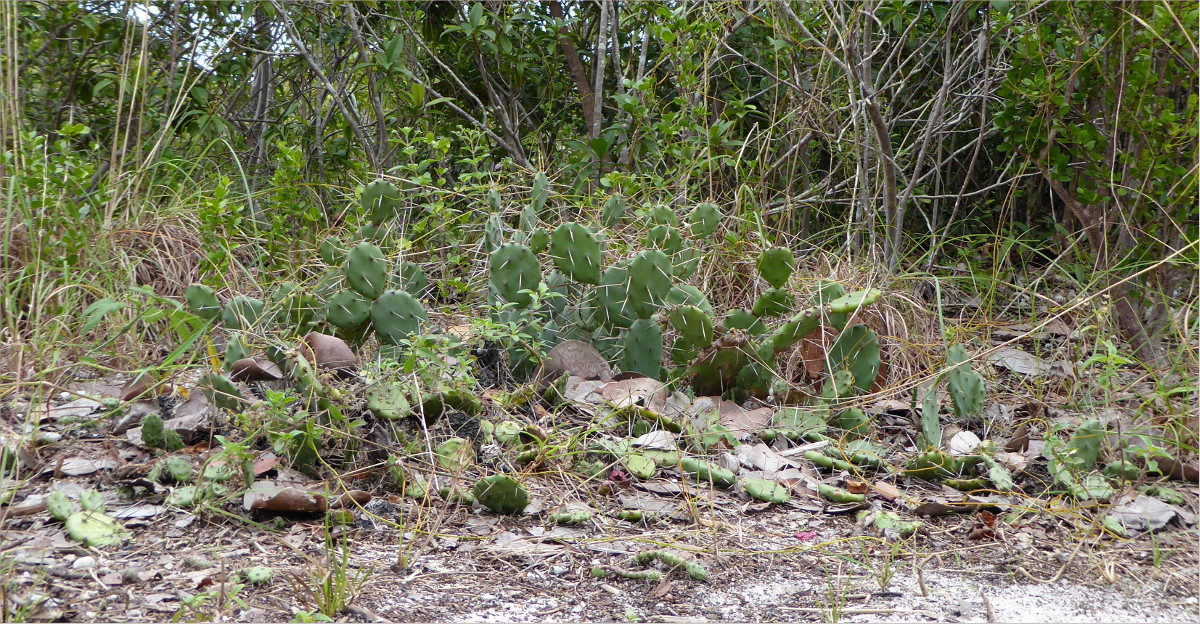
this sprawling Prickly pear cactus…

P1000894_1200

and this giant Horseshoe crab. This lovely lady was around two feet long from head to tail! She should scare me because horseshoe crabs are more closely related to spiders than they are to crabs, but seen from above she’s not very scary-looking. You have to respect a species that’s been around for more than 300 million years!

P1000899_1200

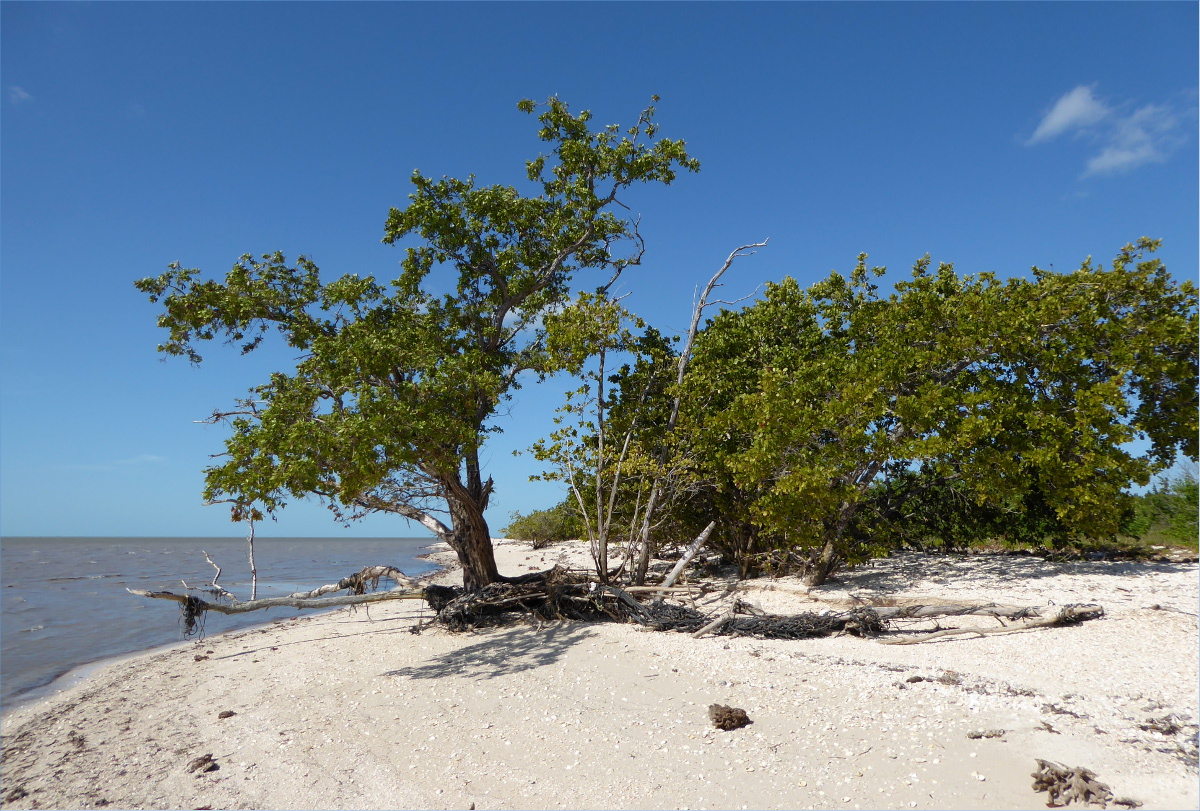
As we headed eastward towards East Clubhouse Beach where we were to spend night two, we paddled against the tide and a wind of around 18-20 mph (8-10 m/s). We used the tree below, which marks the southernmost tip of Florida, to gauge how far we’d traveled. It grew smaller very slowly.

P1000896_1200

Resources Consulted
Horseshoe Crab History
Marjory Stoneman Douglas: Writer & Conservationist
Restoring Florida Bay: Sponges the foundation for thriving ecosystem
Shell Wars (Shell Bioerosion)
South Florida Sponges: A Guide to Identification

Cape Sable – Day One, Feb 2016

25°07’06.31″N 81°04’48.28″W elev 1 ft
East Cape, Everglades National Park
Launch site: Flamingo Visitor Center,
40001 State Hwy 9336, Homestead, FL 33034
(239) 695-2945

Wilderness Trip Planner: A guide to camping in the coastal portions of the Marjory Stoneman Douglas Wilderness

Cape Sable, the southernmost point of Florida, had been on our “To Kayak” list for about three years. The promise of Roseate spoonbills, American crocodiles, Florida gopher tortoise and Smalltooth sawfish, combined with the challenge of a 23 mile round trip ocean paddle, and the lure of secluded shell beaches made this an adventure worth working towards. This year we were ready.

P1000732_1200

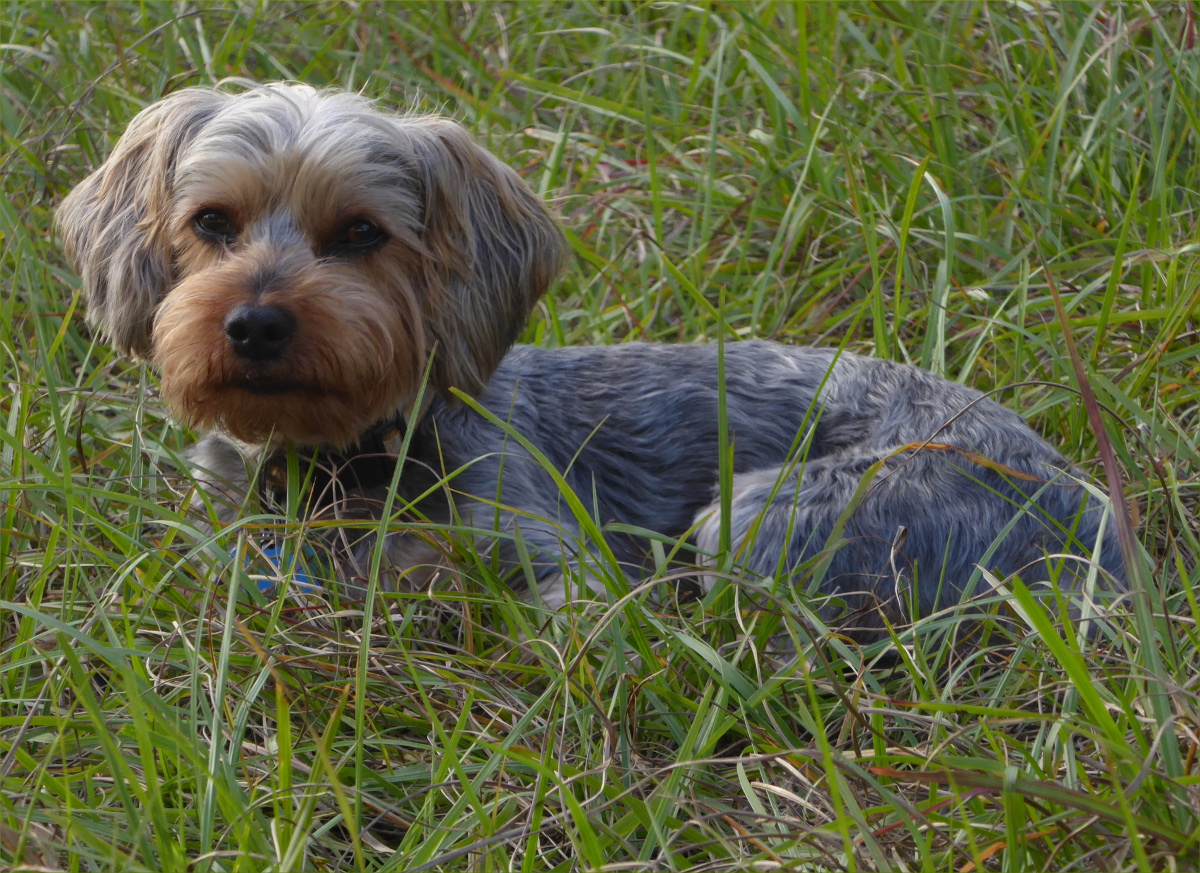
Gauthier had assembled a not unpraiseworthy collection of lightweight camping gear and we had improved our paddling skills and built up enough muscle and endurance to meet Florida Bay’s challenges. Currents, tides, winds, sun, and mosquitoes, we were prepared for them all. Ollie, unfortunately, had demonstrated that ocean kayaking was not his thing, so he stayed behind with his duncles and daunties (dogspeak for doggie uncles and aunties).

P1000740_1200

Our plan: Saturday, February 13, we would paddle 11 miles from Flamingo Visitor Center to Cape Sable. Sunday, we would paddle about half way back to East Clubhouse Beach. And Monday we would paddle the remaining five or six miles back to Flamingo Visitor Center.

FullSizeRender (11)_1200

We arrived at Flamingo Visitor Center just as it opened at 8 AM to pick up our back country pass. During the ranger’s protocols speech,  we were surprised to learn that we would face gusts of up to 25 mph on our return trip, something the forecasts of the previous day, which specified maximum gusts of up to 15 mph, had not mentioned. Somewhere in the back of my mind a voice said, “Should we postpone?” but my unhesitating response to the ranger was “I guess I’ll be getting more excercise than I bargained for!”

P1000751_1200

The mosquito condition was described as “moderate,” which is not bad by Florida standards so long as you use repellent (and not the Whole Foods brands, the real stuff) and have your tent set up before dusk, which is when they come out in force. We planned our paddle out to coincide with high tide. As the Bay drained, it carried us out towards the Gulf. We paddled against a north wind of around 10 mph, but it was easy going overall.

P1000755_1200

We had lunch at Clubhouse Beach, named for a clubhouse Flagler or another developer had wanted to build there many years ago, despite the freshwater marshes, marl prairie, saltwater lagoons and mangrove swamps.

P1000783_1200

If you liked making mud pies or walking barefoot in the rain as a little girl or boy, you may appreciate Florida Bay mud. The sensation of Florida Bay mud squishing between my toes is something I am unlikely to forget. The shallow Bay and receding tide meant anchoring our kayak in the mud and walking to shore.

P1000756_edited_1200

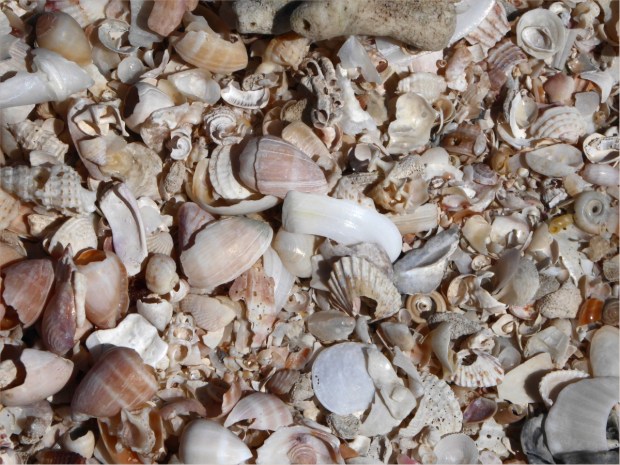
Dimples in the mud near the shore were filled with shells. Angel Wings, Angulate Wentletraps, Antillean Nerites, Atlantic Distorsios, Atlantic Slipper Shells, Calico Scallops, Cancellate Cantharus, Common Bubbles, Common Nutmegs, False Drills, Fan Scallops, Flame Augers, Florida Cones, Florida Fighting Conch, Florida Rock Shells, Fly-specked Ceriths, Golden Banded Cones, Lion’s Paws, Muddy Ceriths, Periwinckles, Rose Petal Tellins, Sanibel Drills, Top Shells, Turkey Wings, we saw them all! After three or four hour’s paddling, there’s nothing more relaxing than arranging shells in the sand.

P1000769_1200

Shells of the Florida Gulf Coast illustrations by Jackie Leatherbury Douglass, copyright 2004 Steven Lewers & Associates

Shells of the Florida Gulf Coast illustrations by Jackie Leatherbury Douglass, copyright 2004 Steven Lewers & Associates

P1000794_1200

Sea pork: there is such a thing and if you venture out to Clubhouse Beach you just might see it. Sea pork is a small glob of cellulose that once housed zooids. Zooids are “a colonial animal that can survive only when connected with other zooids. Each has its individual personality, but collectively they exist as a single being with a shared goal of survival” according to an article in The Guardian (http://www.theguardian.com/environment/gallery/2013/oct/12/portuguese-man-owar-photography).

P1000760_1200

The Red mangrove below lent us its shade. I can never get my mangrove types straight, but here is a slice of mangrove wisdom from Florida International University: “Mangroves must survive the stresses of flooding and salt in the estuary. Red mangroves have prop roots that increase oxygen uptake and line the banks of keys and rivers in the Everglades. Black mangroves exude salt from their leaves and both red and black mangroves are well adapted to salinity changes” (http://fcelter.fiu.edu/education_outreach/Virtual_hydroscape/mangroves/?selected=fringe_mangroves).

P1000790_1200

P1000789_1200

Florida Tree Snails

Florida Tree Snails

Florida Tree Snail

Florida Tree Snail

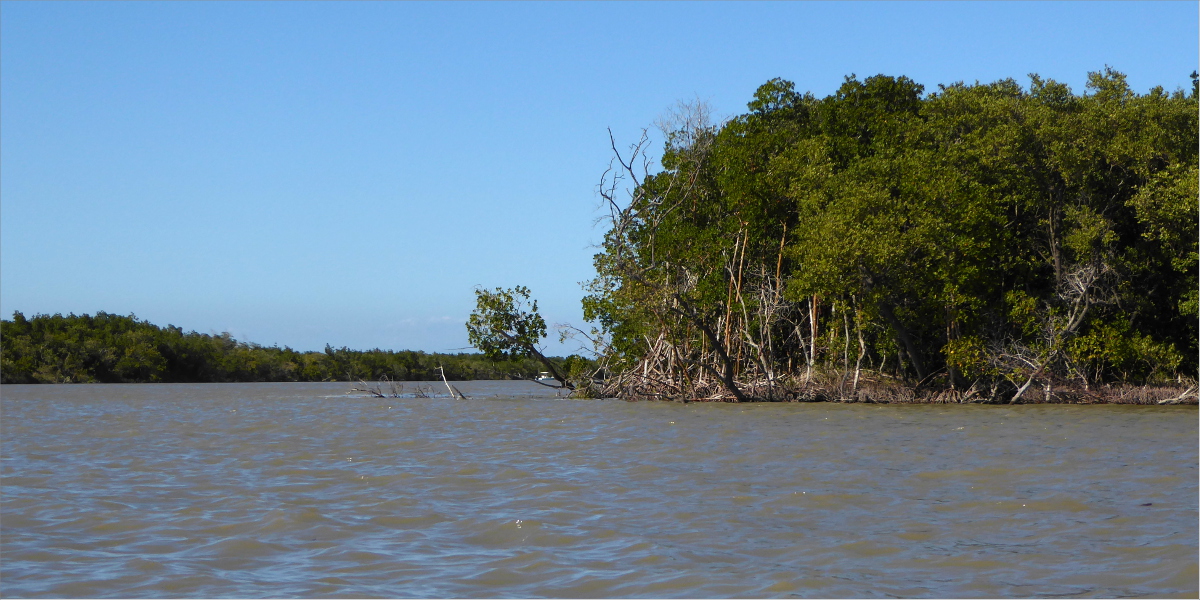
After an expertly crafted meal (Gauthier does love camp cooking), we paddled onwards to East Cape, the easternmost and closest of Cape Sable’s beaches. At MicMac Canal (below) we counted 900 strokes to East Cape.

MicMac Canal

MicMac Canal

East Cape within view

East Cape within view

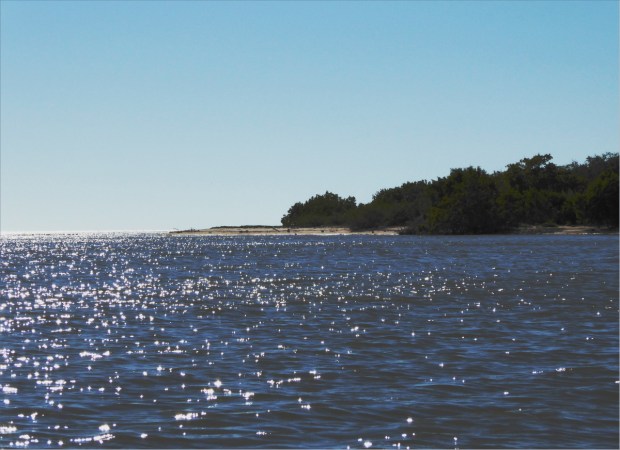
The endless blue sky and mangrove coastline allowed undulating thoughts of work and family to creep into my consciousness. Mangroves transformed into excel spreadsheets, the blue sky transformed into birthday cards, and the sunlight sparkling on the water transported me to a Brownie Guides meeting, Adelaide, Australia, circa 1990… Five girls in brown uniforms seated cross-legged on the floor around a container of silver glitter and a bottle of glue… The container of glitter falls over and ten hands quickly sweep it up before their leader, Lutana of the Moora Mooras, can find out… Five exuberant girls stand in a ray of sunlight, watching their arms and legs sparkle.

P1000815_edited_1200

Resources Consulted
Saltwater Intrusion Threatens South Florida Parks
The Ecology of Florida Bay
Sea Pork

Biking Picayune, Jan 2016

26°05’43.35″N 81°37’06.97″W elev 9 ft
Picayune Strand State Forest,
Naples, Florida 34117
(239) 348-7557

We had been driving west along Tamiami Trail for a while. I occupied the passenger seat and felt a little guilty about it because it meant that I could sight see and Gauthier, in the driver seat, couldn’t. “Holy moly, are there ever a lot of alligators!?” I would exclaim, or “Did you see that Sandhill crane?! I’ve never seen one this far South!” but by the time Gauthier had looked over his shoulder, we had driven past it every time.

trail red

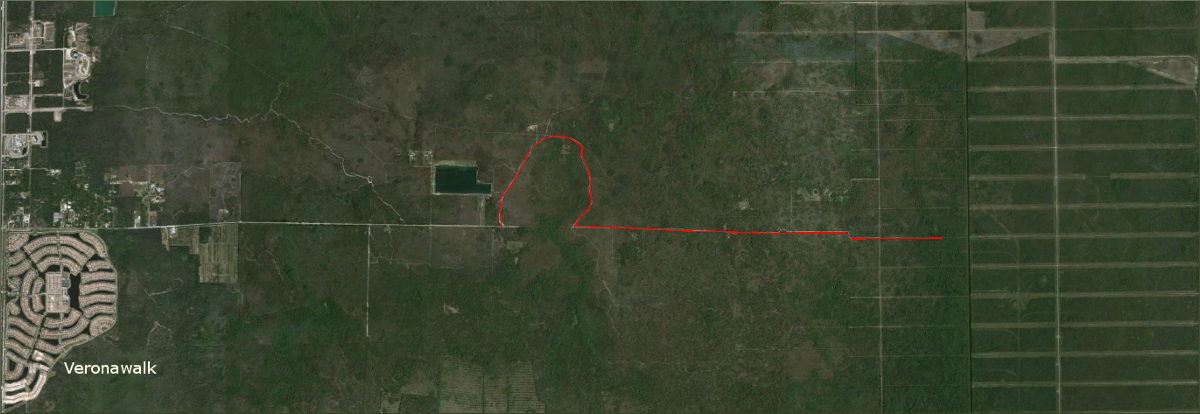
By the time we reached Collier Blvd, my exclamations had become less frequent and their tone had changed. “Veronawalk?” I asked skeptically as we drove past a cement bridge painted a muted red with gleaming white pilasters that led into a gated community. Emerging from a newly tarred four-lane roadway and as-yet vacant strip malls, Veronawalk looked like it could have been snapped together from an “Italian Revival” modeling kit. “Are we going in the right direction?” I asked.

Turning off of Collier Blvd onto Sabal Palm Road, I received my answer.

P1000689_1200

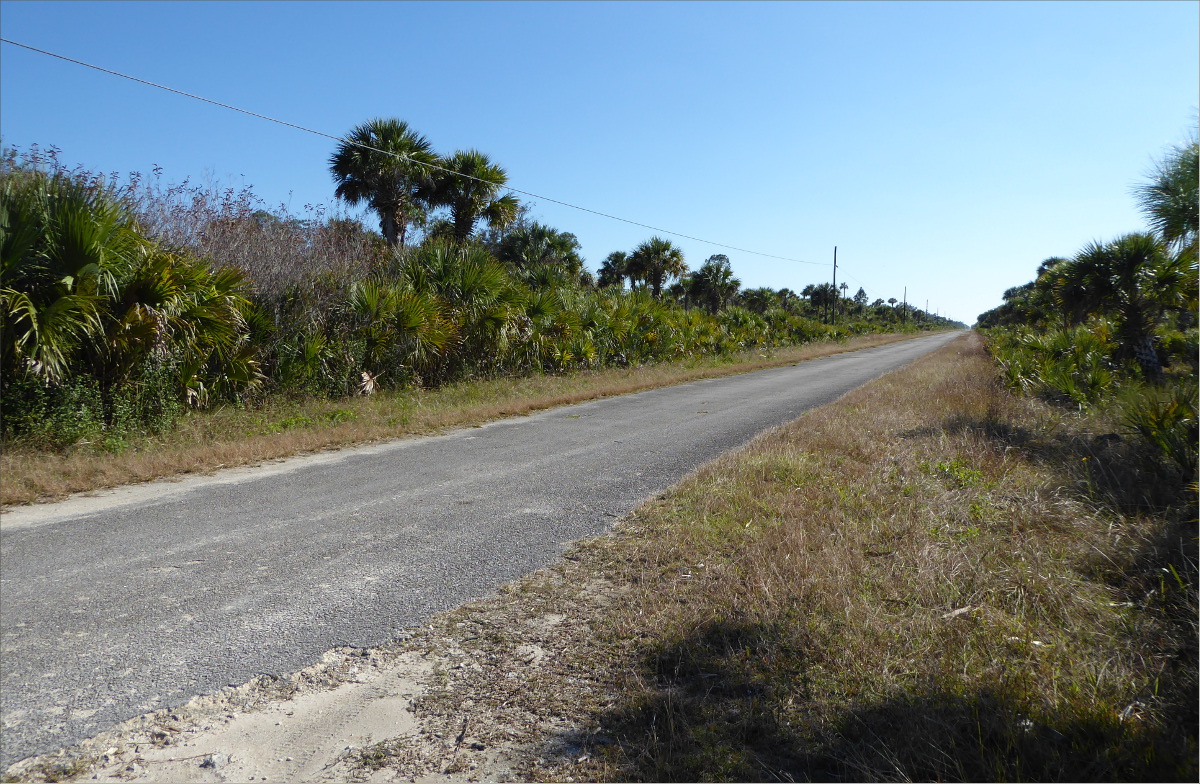
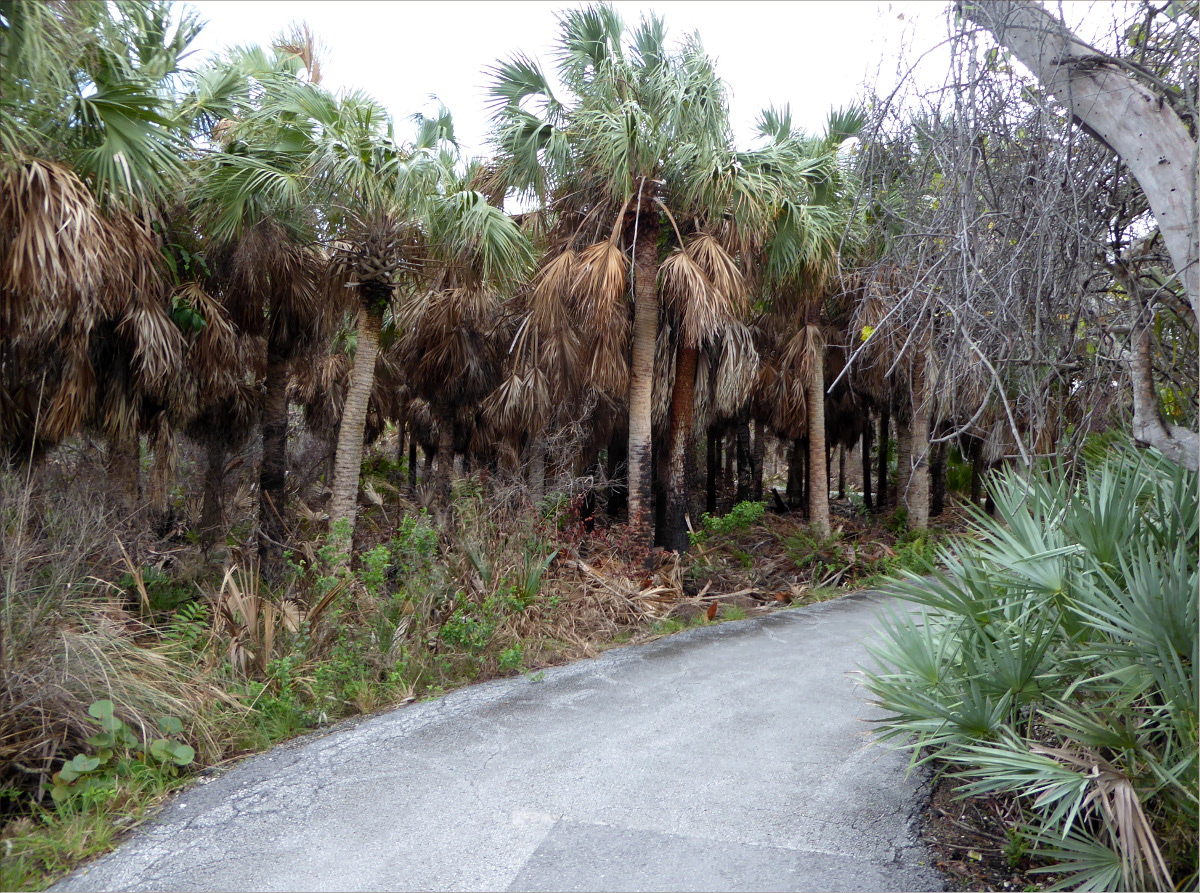
Driving along the narrow dirt road, a filament bounded on either side by a wild array of sable palmettos, saw palmettos and long leaf pines and the occasional elevated house and fern colony, Veronawalk seemed outrageously alien and sterile, the realization of a dream sold to 17,000 unsuspecting victims in one of the first swampland real estate schemes.

P1000690_1200

P1000665_1200

P1000671_1200

Platted, dredged and drained, Picayune Strand State Forest lacks the diversity of its neighbors, Fakahatchee Strand State Preserve, Florida Panther National Wildlife Refuge, and Collier Seminole State Park.

P1000658_1200

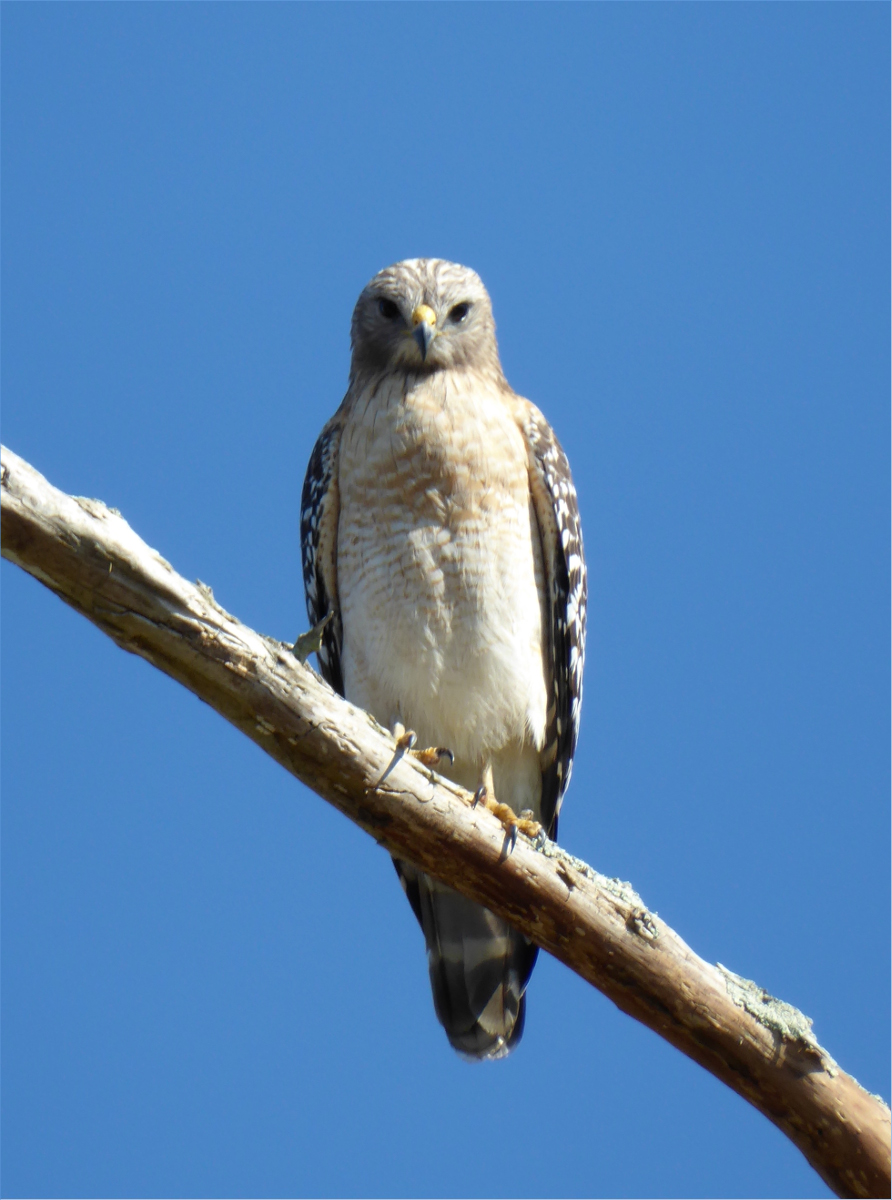
The trunks of erect but dead Australian pines add a vertical dimension to the grid of canals and roads that was “Golden Gates Estate.” Perched atop this trunk was a gorgeous Red-shouldered hawk (Buteo lineatus).

P1000660_1200

P1000661_1200

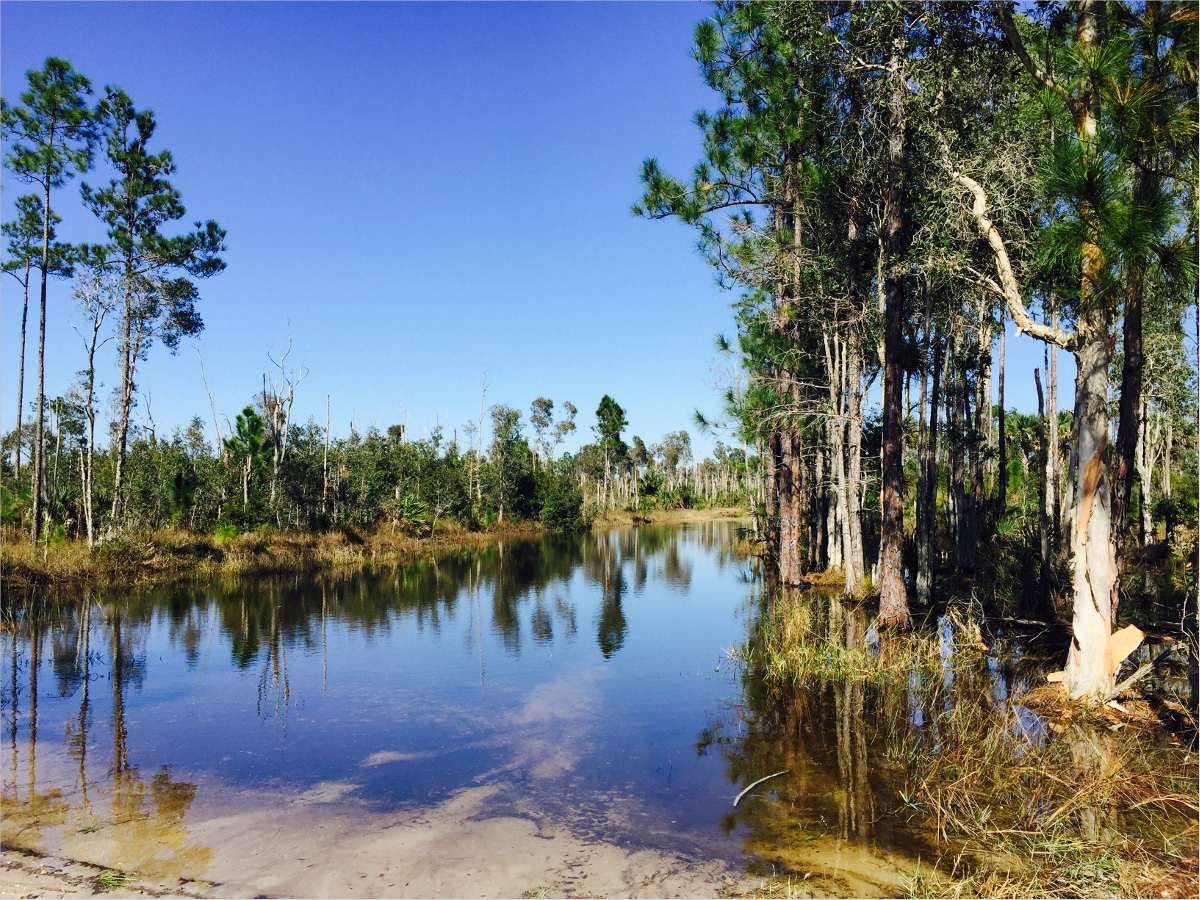
We parked at the edge of the swamp, where the road forks. Two-feet-deep puddles, murky but fresh from the constant sheetflow of the Everglades, had formed in the ruts of tire tracks and spread out across the road in both directions.

P1000664_1200

We hopped on our bikes and headed north, skirting the edges of the puddles and trying not to get wet with little success.

P1000663_1200

We passed a surprising number of jacked-up trucks, SUVs and Jeeps. Hunting is permitted and apparently popular in Picayune. The trail we had planned to take was completely flooded.

trail_1200

One truck stopped to ask us if the road we were on led back to a main road. “Are there any gates?” he asked. At over 76,000 acres, it’s scary to think of how easily you could get lost in Picayune.

P1000679_1200

P1000677_1200

Where the road crumbled and disappeared is where it was wildest.

P1000680_1200

And a good place for a picnic.

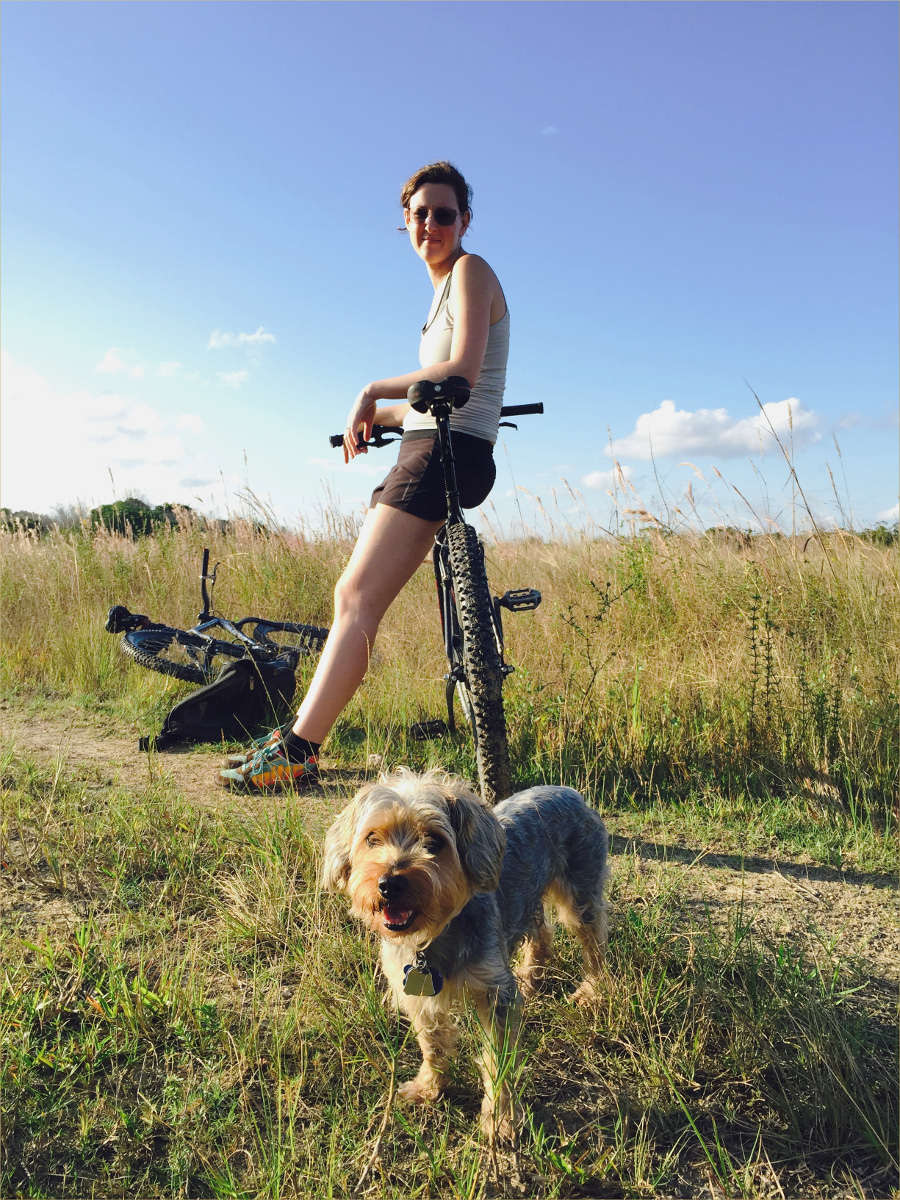
ollie bike me_1200

P1000685_1200

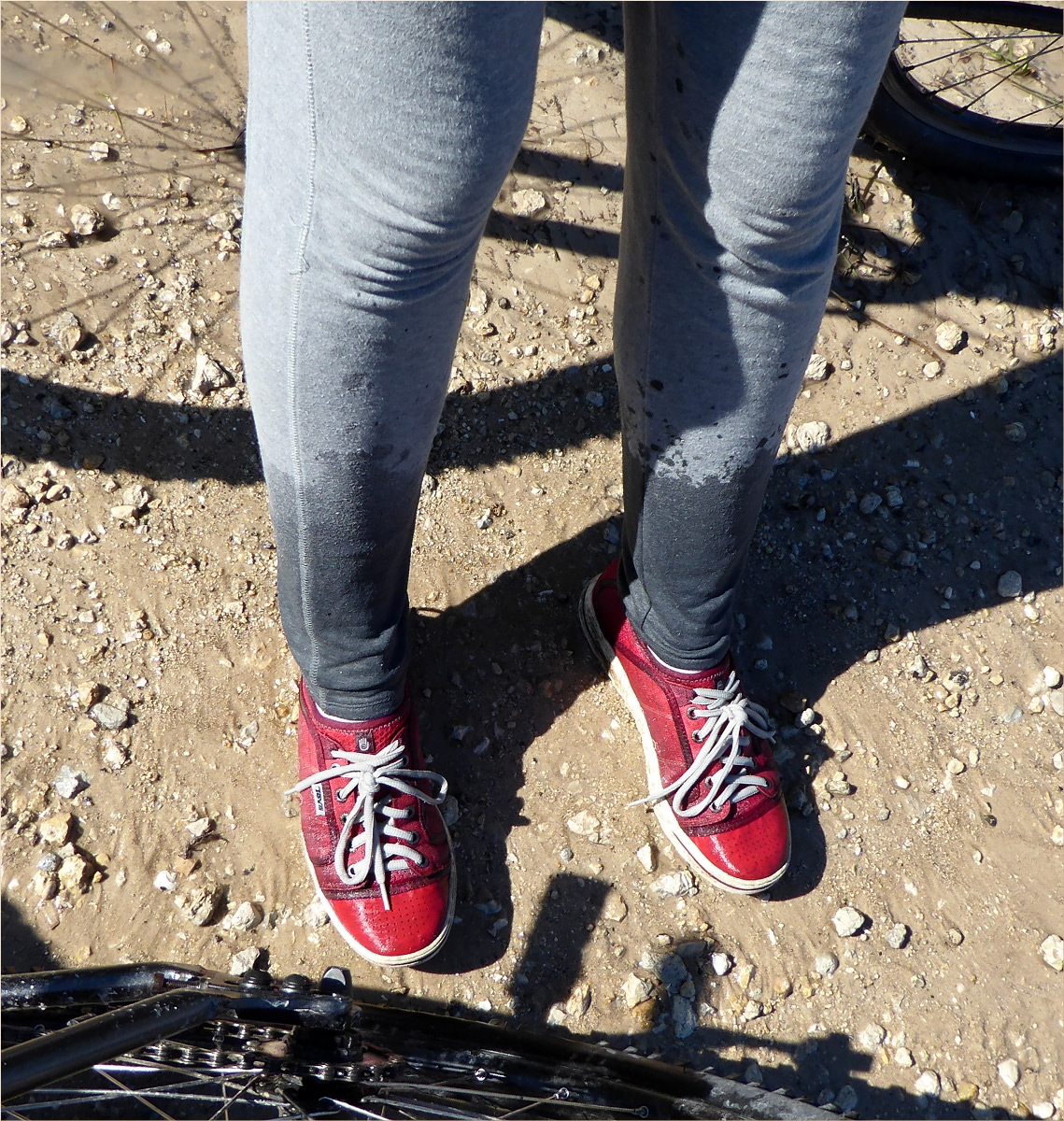
On the return ride, we abandoned the idea of staying dry and rode our bikes straight through the middle of those giant puddles. Fat tires inflated to just the right pressure, seat post shocks and padded underwear eliminated any discomfort we might have felt from the rocky and uneven surface and allowed us to pick up enough speed to keep our balance as our tires sunk into wet gravel and we projected ourselves through the water. It was exhilarating. I almost made it back without falling. Within view of the car, I fell, drenching my pants, but I still felt like a winner.

FullSizeRender (9)_1200

Resources consulted:
Everglades Foundation
Florida Natural Areas Inventory
Florida Fish and Wildlife Conservation Commission
Naples Daily News
Comprehensive Everglades Restoration Plan
Tidewater Florida

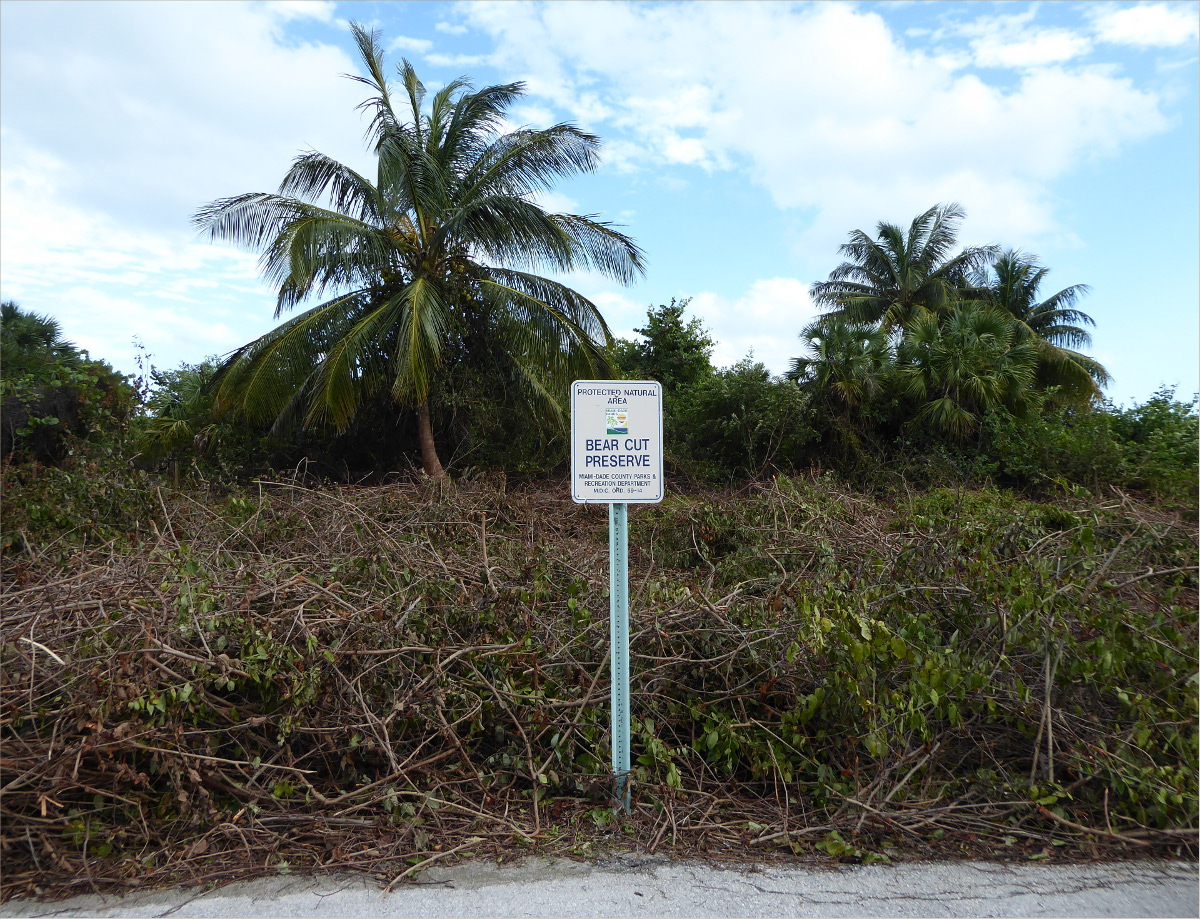
Bear Cut Preserve

25°43’34.35″N 80°09’13.38″W elev 8 ft
Bear Cut Preserve, Crandon Park
Key Biscayne

We hike, jog and bike this short 3.5 mile (5.5 km) trail regularly. I’ve provided the latitude and longitude of the entrance we always use. Parking is free across the street in the Crandon Park Marina. Fifteen years ago, there was ne’er a person to be seen on the trail and the gay community found privacy on the beach. Recently the trail has become popular with bicyclists. The southern end of the beach is popular with kite boarders.

Nov 2012

Nov 2012

At the northern end of the beach is a very cool fossil reef. Before they banned swimming in this section of the beach, we snorkeled there and once as I was parting the sea grass, one single blade failed to move, and when I looked more closely at it, I discovered that it wasn’t a blade of grass at all, but a seahorse! It stayed still only long enough for my eyes to focus on it and then it disappeared. We’ve also seen sting rays and jelly fish.

Apr 2013

Sting ray, Apr 2013

Restricted section of beach where fossil reef is, Jan 2016

Restricted section of beach where fossil reef is; notice the beach erosion; Jan 2016

Although it’s suffered from invasive nickernuts, kudsu and, more recently, beach erosion, it’s still a beautiful trail. All kinds of birds hunt along the coastline and on the many sand bars: plovers and sanderlings, terns, herons, pelicans, cormorants. We’ve even seen yellow warblers in the trees along the trail.

Nicker nut control, Jan 2016

Nickernut control, Jan 2016

Apr 2013

Brown pelicans, Apr 2013

Sometimes you’ll see a metal variety of bird flying high overhead: commercial jets, sea planes, and once we saw a fighter jet darting back and forth across the sky. Cruise ships departing from the Port of Miami are also a frequent sighting.

Apr 2013

Apr 2013

Papaya trees, sea grapes, sable palmettos, coconut palms, mangroves, wild coffee bushes (psychotria nervosa, perhaps the most appropriate Latin name ever given to a plant), American beauty berry, black eyed susans, morning glories, and even a couple edible plants, like sea purslane and prickly pear grow along the trail.

Sea purslane, Apr 2013

Sea purslane, Apr 2013

Prickly pear, Apr 2013

Prickly pear flower, Apr 2013

Prickly pear, Jan 2016

Prickly pear, Jan 2016

Psychotria nervosa under the protective arm of a sea grape, Jan 2016

Psychotria nervosa nestled under the protective arm of a sea grape, Jan 2016

Sea grapes, Jan 2016

Jan 2016

Sable palmettos, Jan 2016

Jan 2016

Path leading to beach from Osprey trail, Jan 2016

Jan 2016

Apr 2013

Dogs are not permitted on the beach, but until recently it wasn’t patrolled, Apr 2013

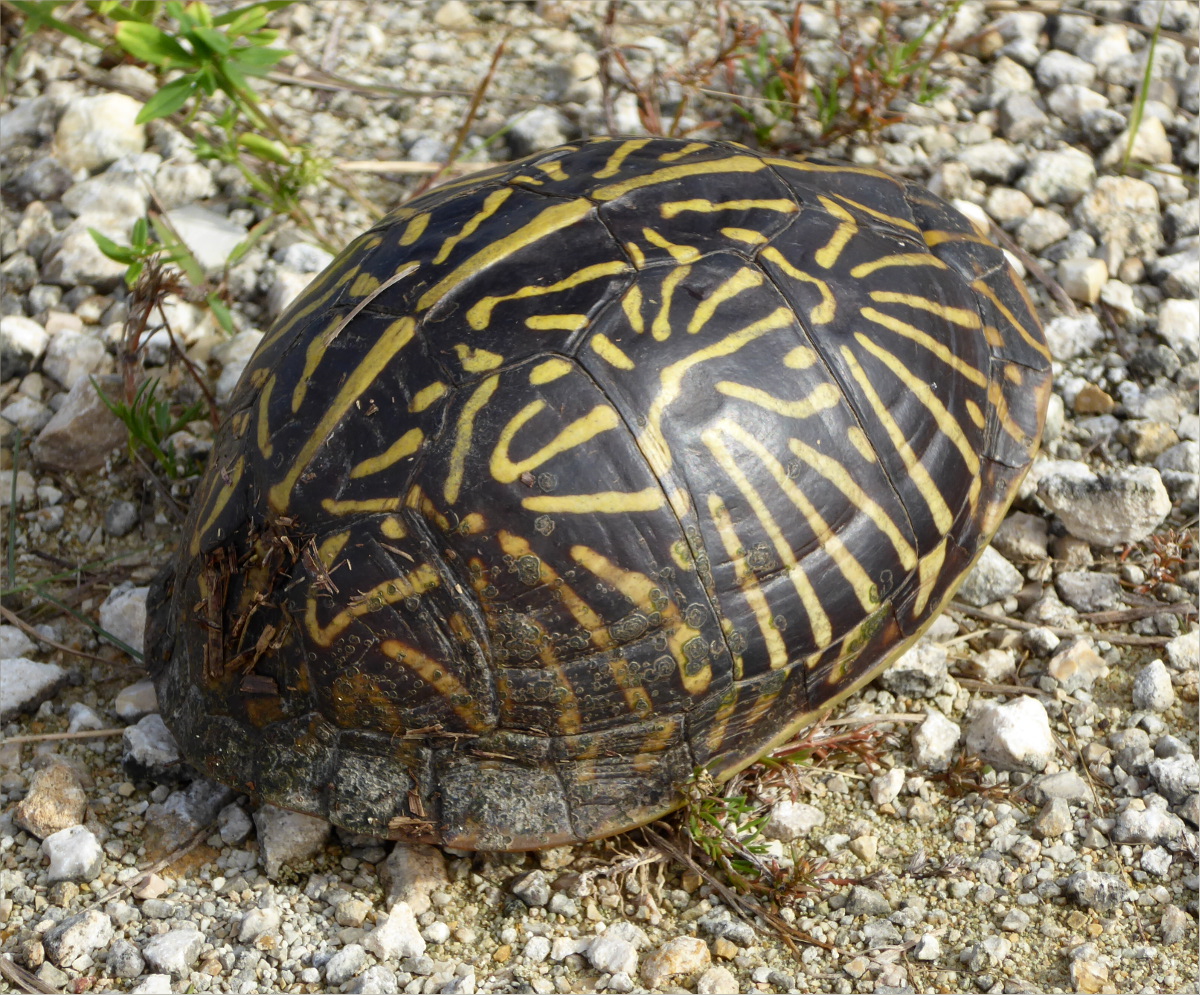
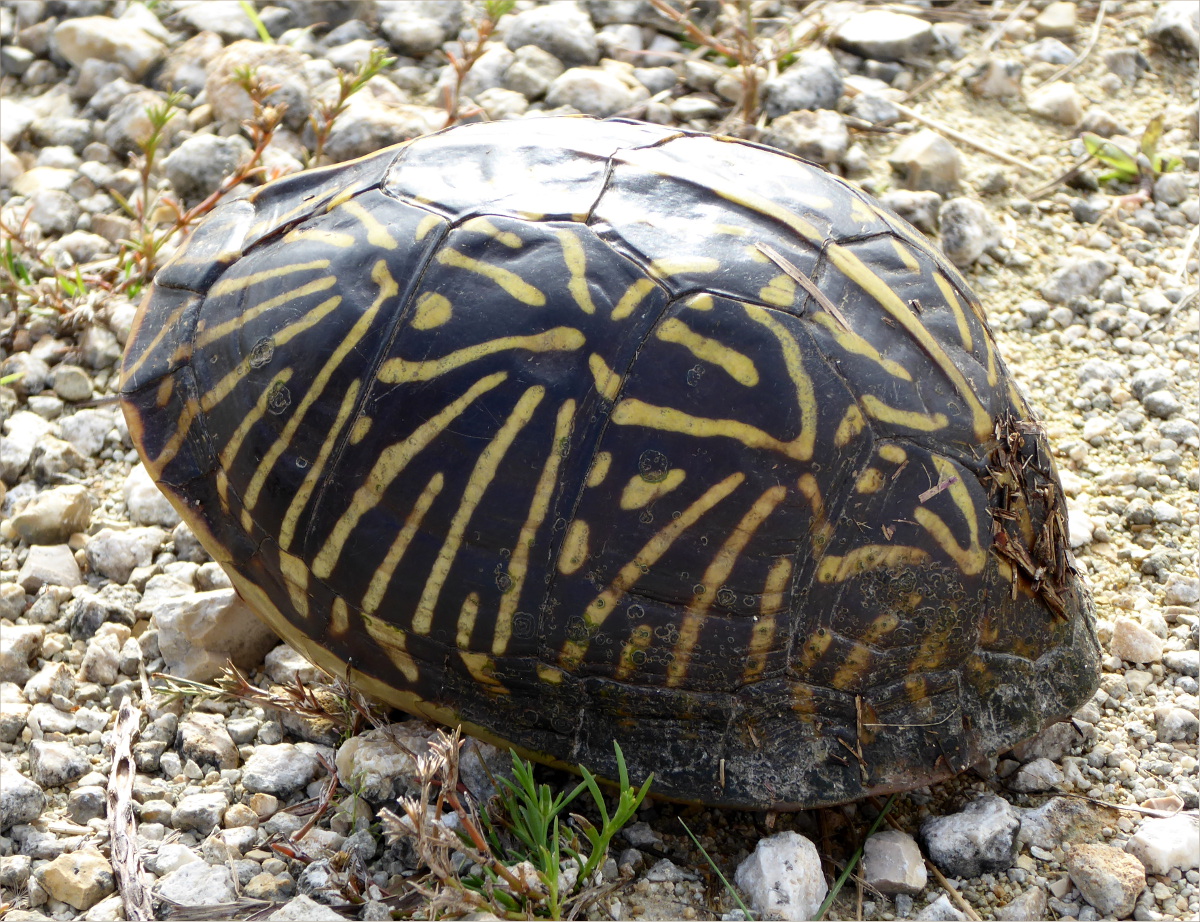
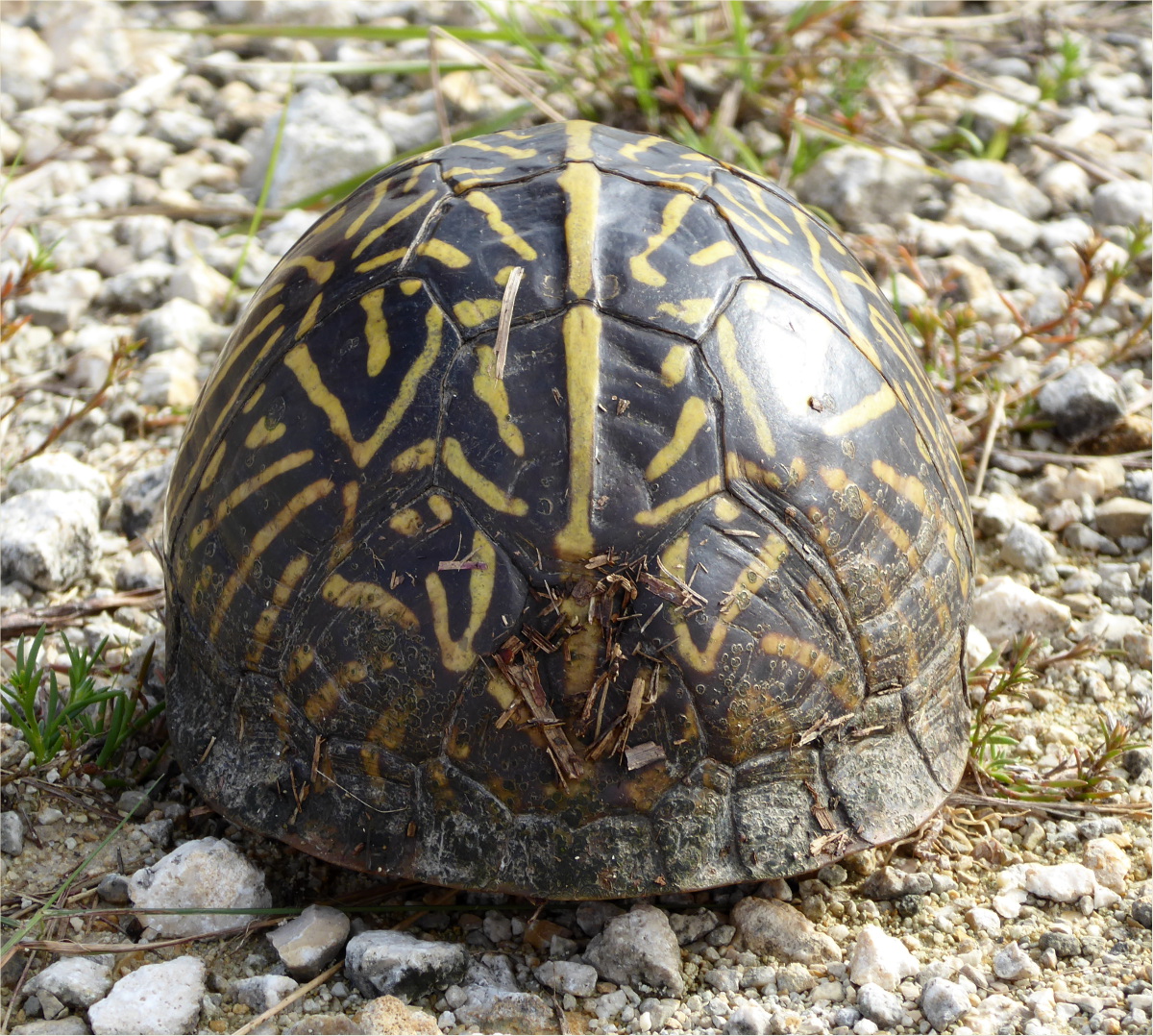
We Saw a Florida Box Turtle! Dec 2015

25°38’56.13″N 80°30’55.71″W elev 5 ft
Edge of Everglades Trail
Everglades National Park
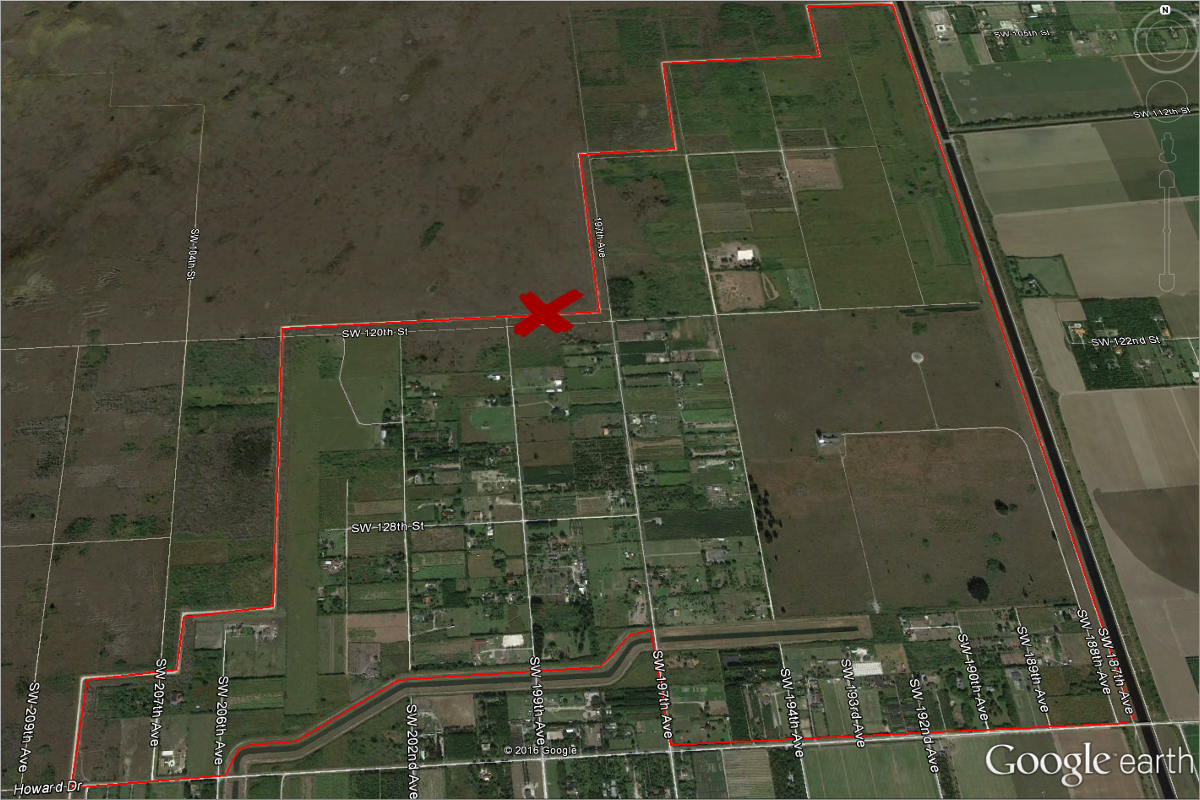
Red line represents 8.7 miles (14 km)

Edge of Everglades North map_1200

“X” marks the spot where we saw it. [Nous avons vu une Terrapene carolina bauri! “X” marque l’endtoit ou nous l’avons vu.]

P1000458_1200

A hinged plastron enables it to close its shell tightly. [Un plastron a charnieres le permet de bien fermer la carapace.]

P1000459_1200

P1000461_1200

P1000460_1200

P1000462_1200

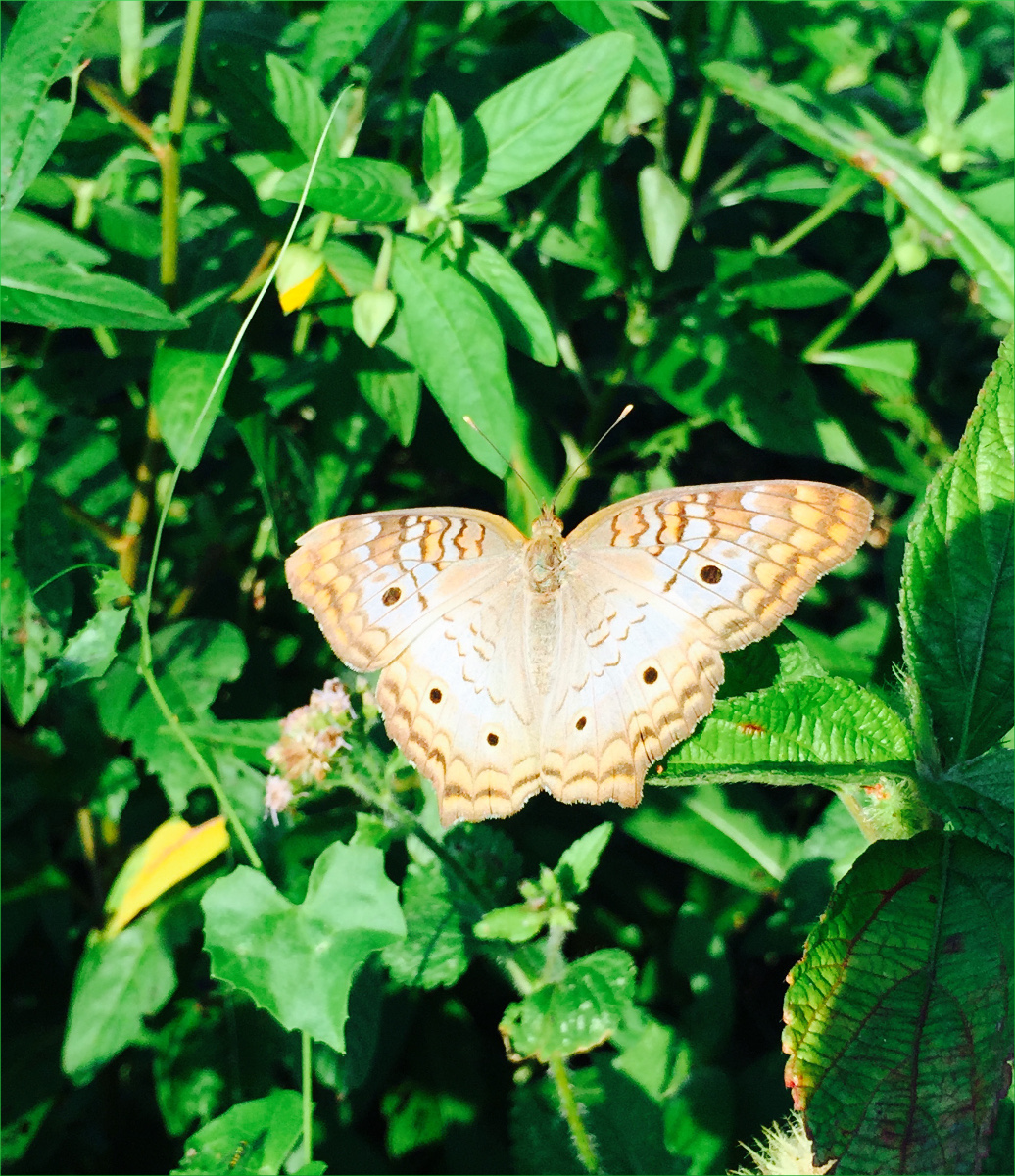
We also saw Gulf fritillary (Agraulis vanillae) butterflies. [Nous avons vu des Agraulis vanillae egalement.]

P1000441_1200

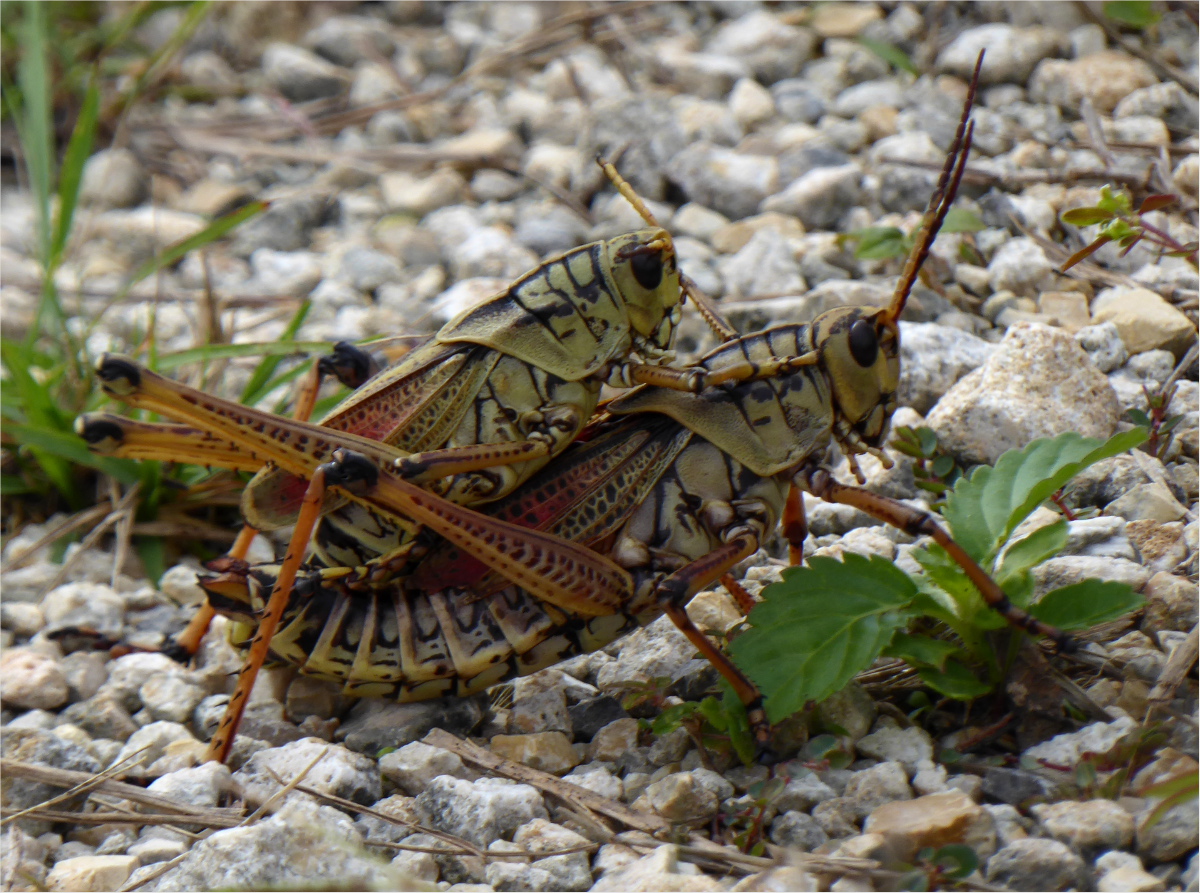
And some horny Southeastern lubber grasshoppers (Romalea microptera). [Et des Romalea microptera tres excites.]

P1000445_1200

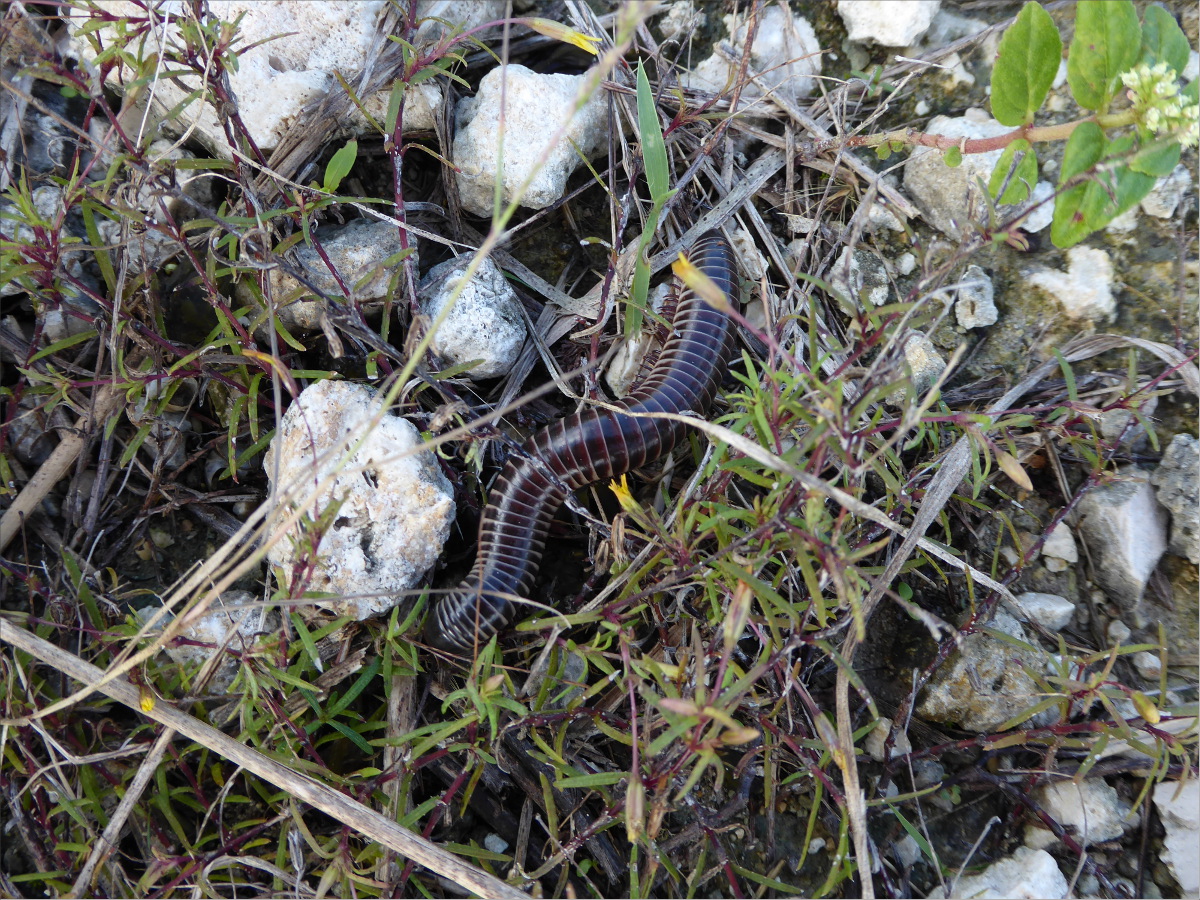
And four-inch long Florida ivory millipedes. I love their colorings. Their stomachs are white! [Et des Florida ivory millipedes qui etaient dix centemetres de long. J’aime leur couleurs. Leur ventres sont blancs!]

P1000451_1200

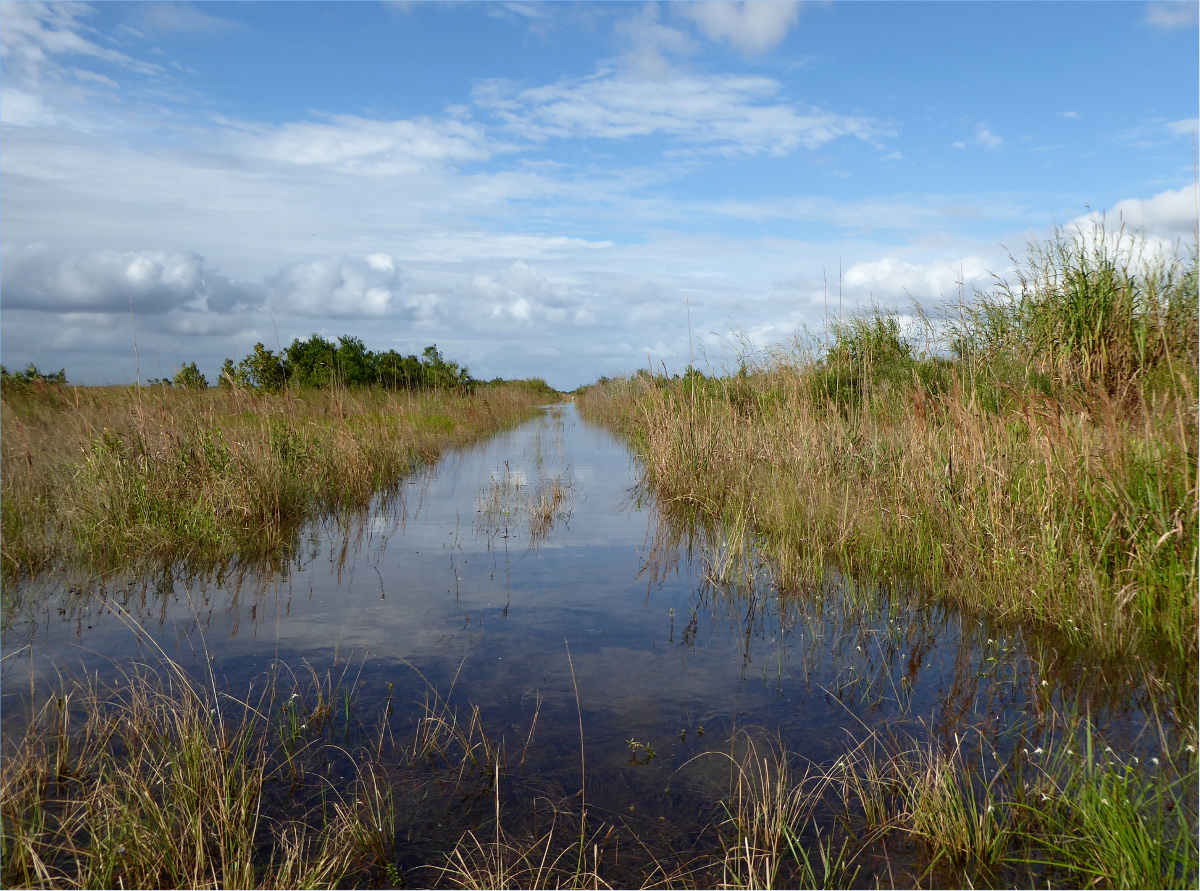
Florida is a strange place. Its relationship with nature has a fraught history. [Florida est un pays etrange. La relation avec le millieu naturel a une histoire tendue.]

P1000455_1200

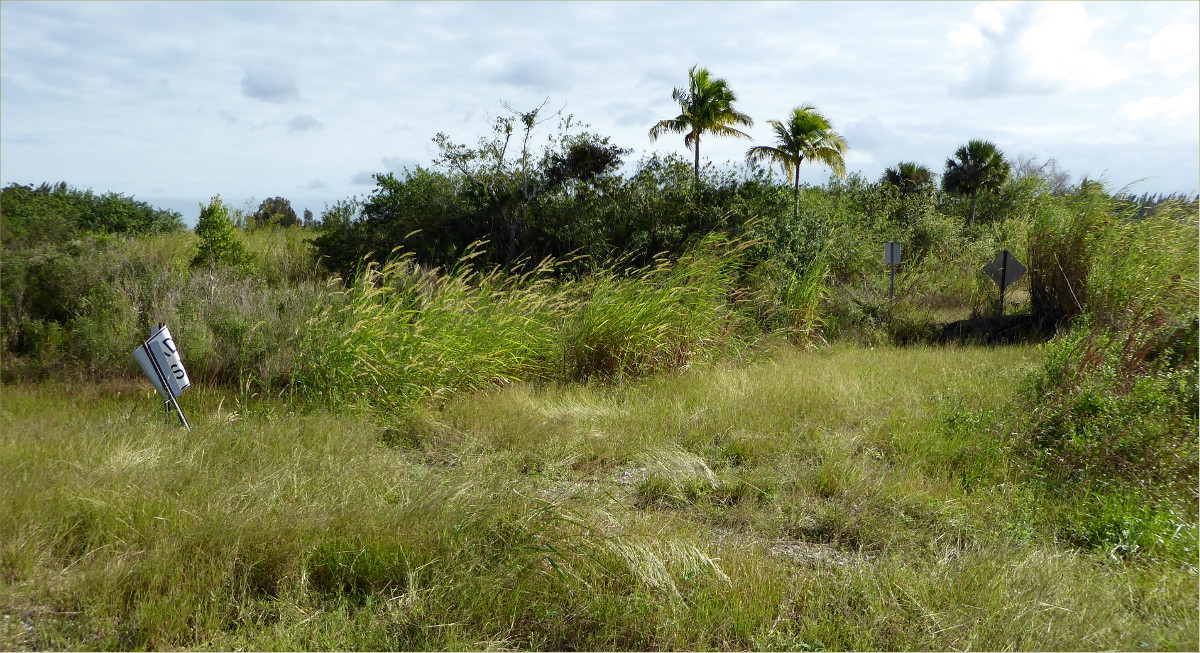
Can you believe that this was once a street? [Pouvez vous imaginer que il’y avais une route ici?]

P1000454_1200

[Je m’excuse pour n’utiliser pas des accents. C’est difficile les utiliser avec WordPress.com.]

Bird Highway, Nov 2015

27°44’49.91″N 81°46’47.98″W elev 74 ft
Launch site: Fort Meade
Landing site: Pioneer Park, Pioneer Blvd, Zolfo Springs, FL 33890, (863) 735-0330

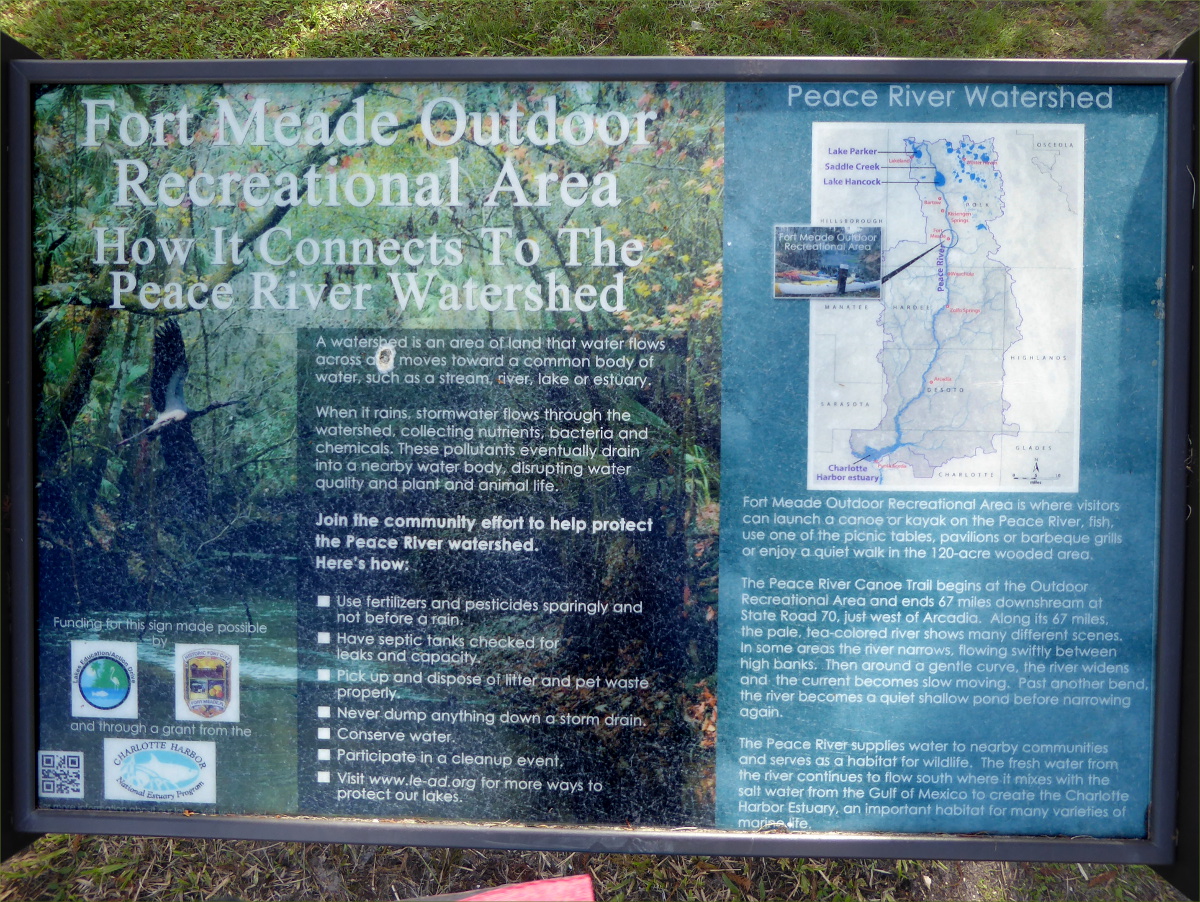
We returned to Peace River for Thanksgiving. This year we kayaked upper Peace River, from Fort Meade to Zolfo Springs. We left the car at Pioneer Park, where you can park overnight for free, and took a cab to Fort Meade for $40 including tip. Our cab driver, Mario, said it would be ok to give out his phone number: (863) 245-1527.

PeaceRiverNov2015001

PeaceRiverNov2015005

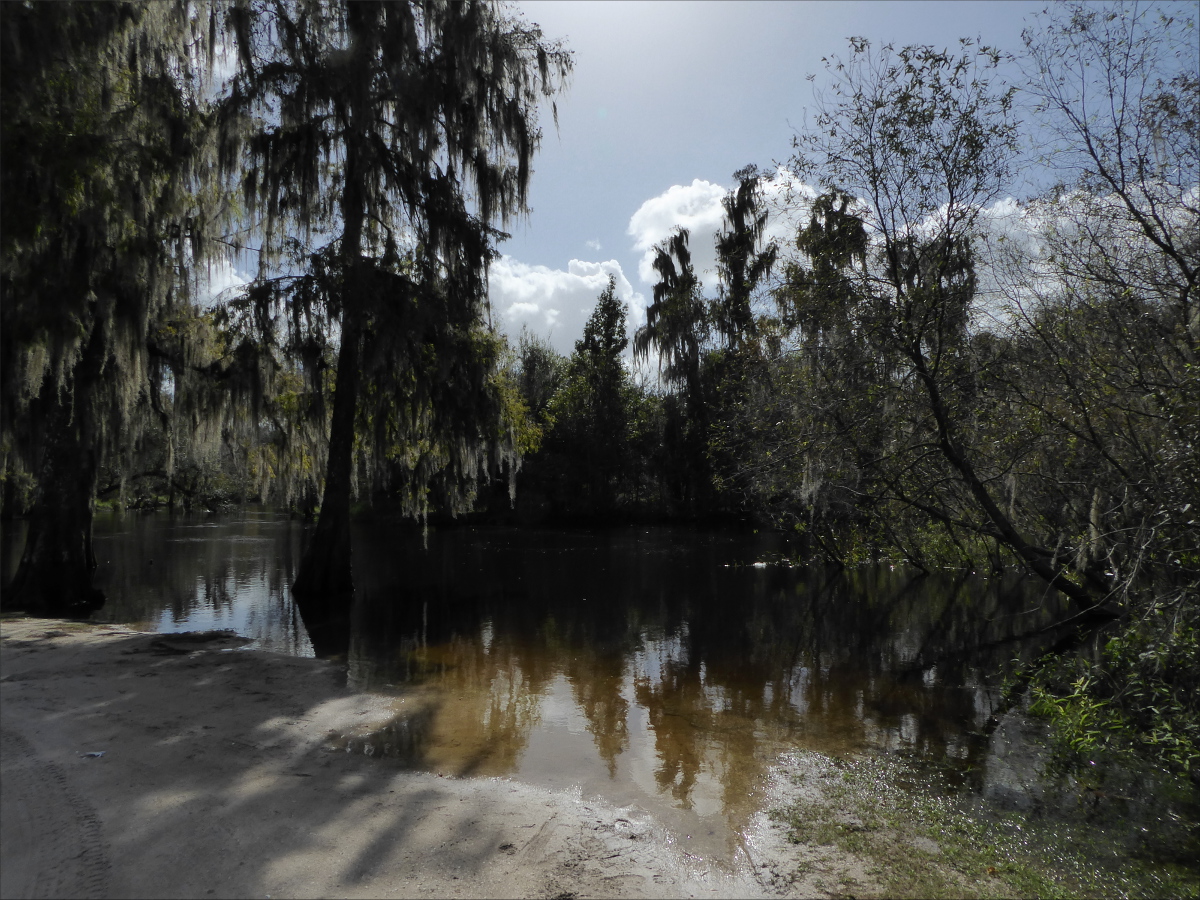
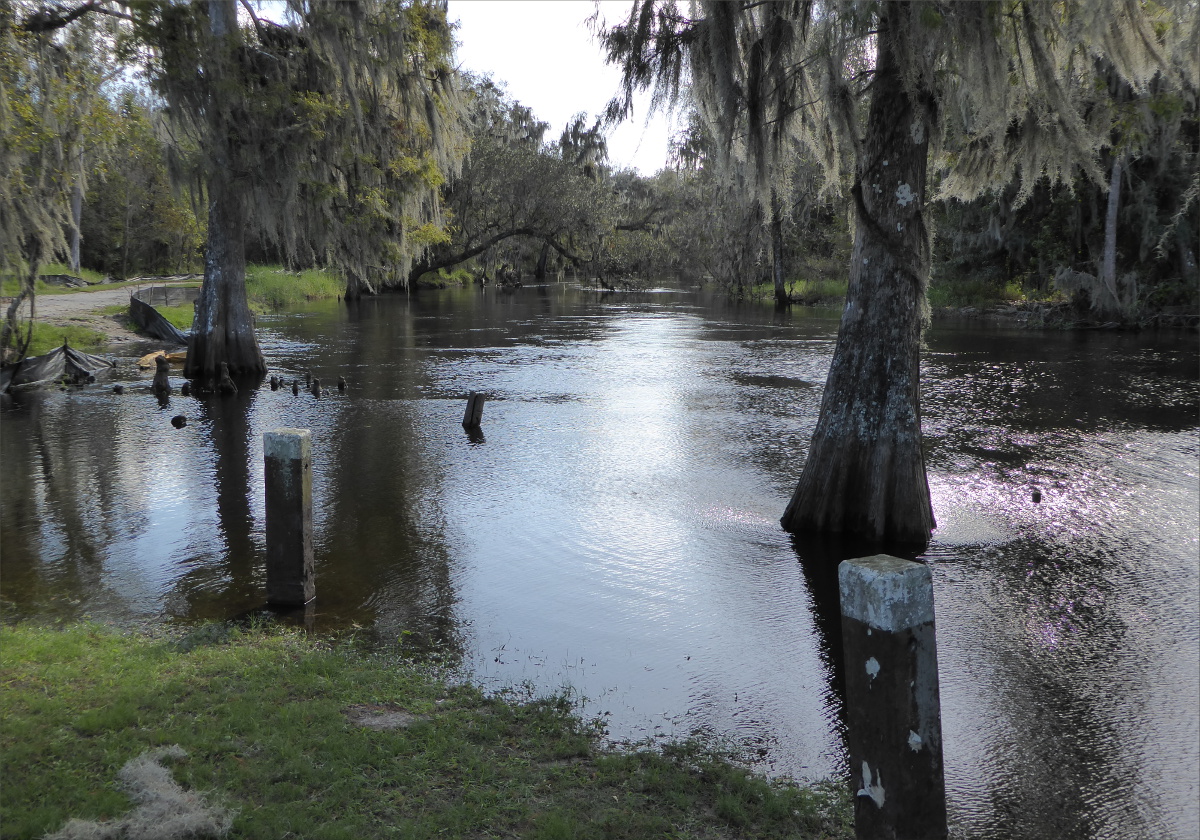
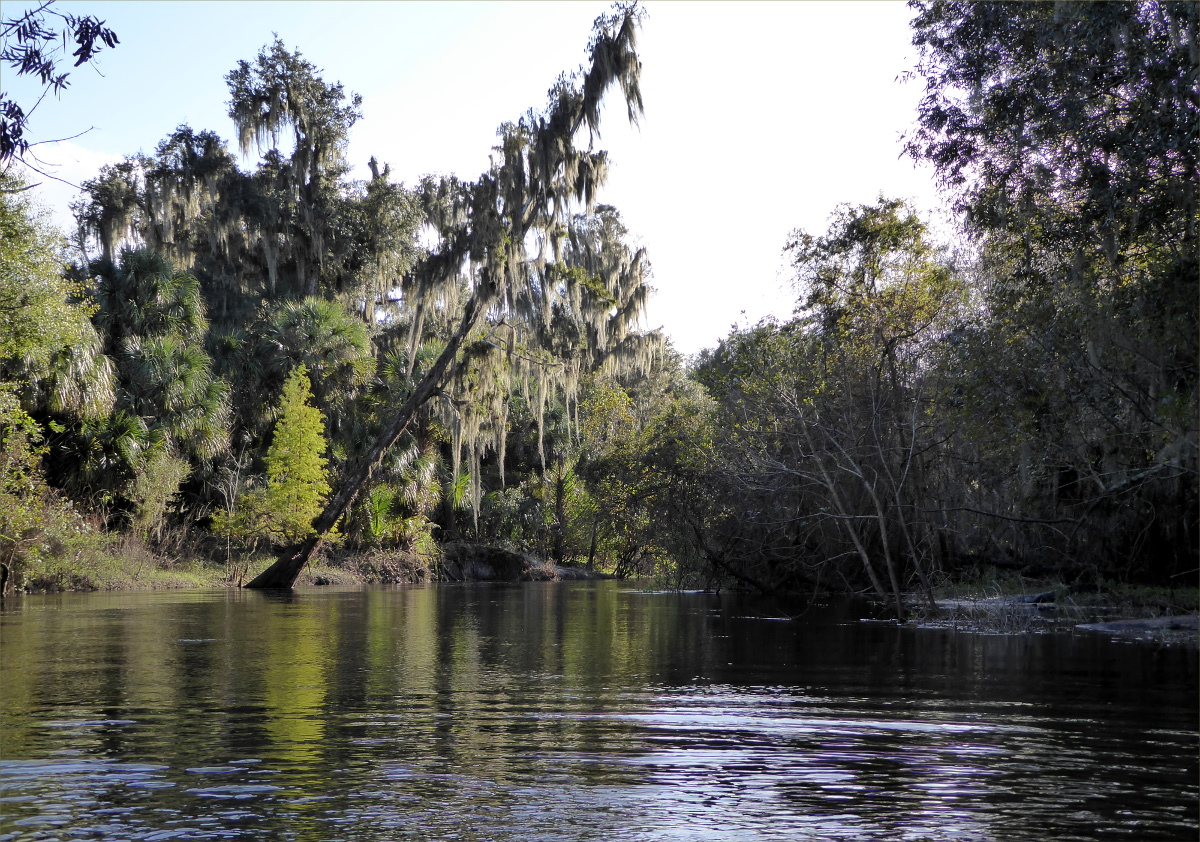
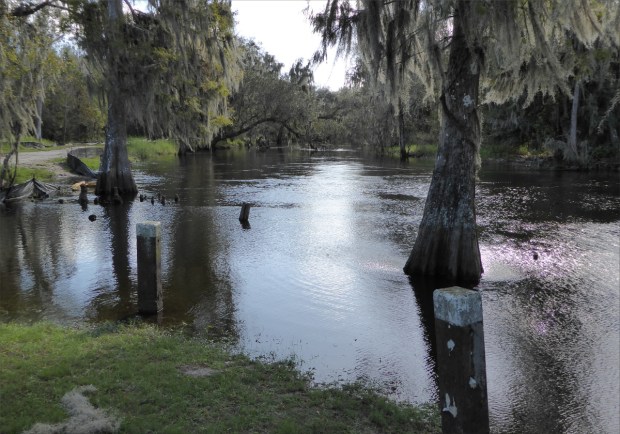
At fort Meade the river is narrow and intimate. It had overflowed from several days of rain, which sometimes made it difficult to tell which way the river bent. The current was fast and there were many downed trees, making paddling a little more rigorous than the year before.The thorny water locust trees that lined the banks were a concern in our inflatable kayak.

PeaceRiverNov2015002

PeaceRiverNov2015004

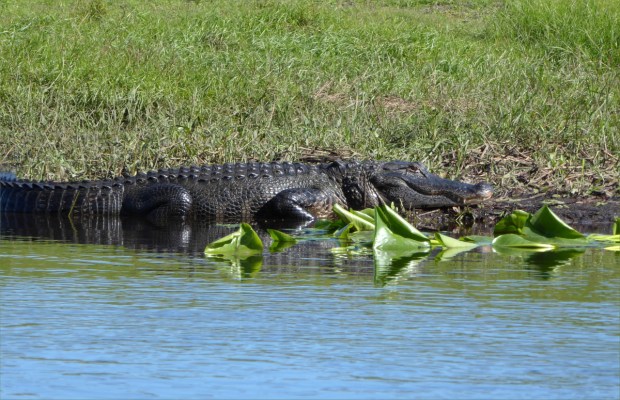
We heard lots of alligators; we saw few because they tended to jump in the water with a loud splash before we could get close enough to see them.

PeaceRiverNov2015024

PeaceRiverNov2015031

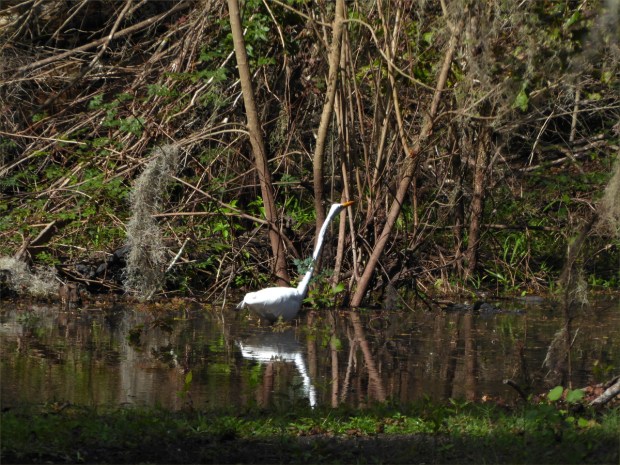
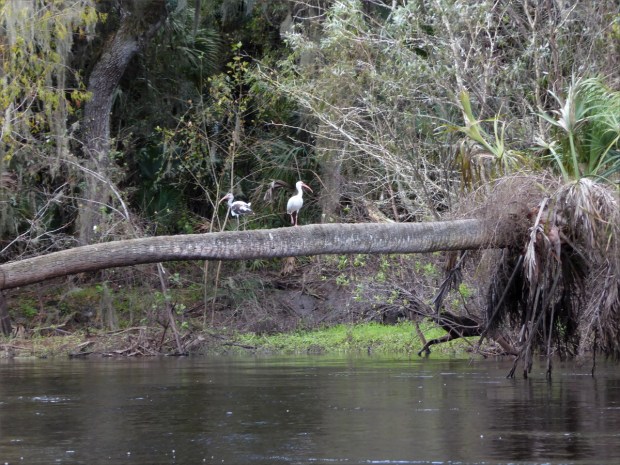
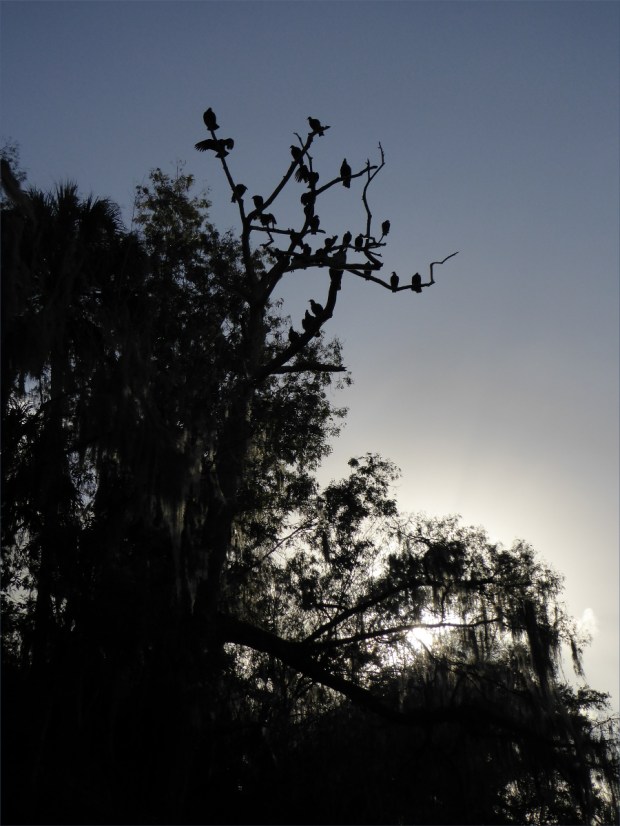
It was like a bird highway. Great blue herons coasted down the river 20 feet above the water, following its bends like a race car driver follows the bends of a race track. Brown and white ibises poked about for crayfish in pairs, little blue herons, their beaks a striking midnight blue in the sunlight, hunted frogs, egrets waded up to their bums in search of fish, white herons scanned the surface of the river for insects from atop fallen trees, and black headed vultures hung out in flocks high above the water hoping to spot a cow or armadillo carcass.

PeaceRiverNov2015008

PeaceRiverNov2015003

PeaceRiverNov2015029

PeaceRiverNov2015022

River cooters are shy like alligators and jump, sometimes from impressive heights, into the water when they hear us coming. Their compact little bodies make melodic plopping sounds when they hit the water.
PeaceRiverNov2015010

PeaceRiverNov2015011

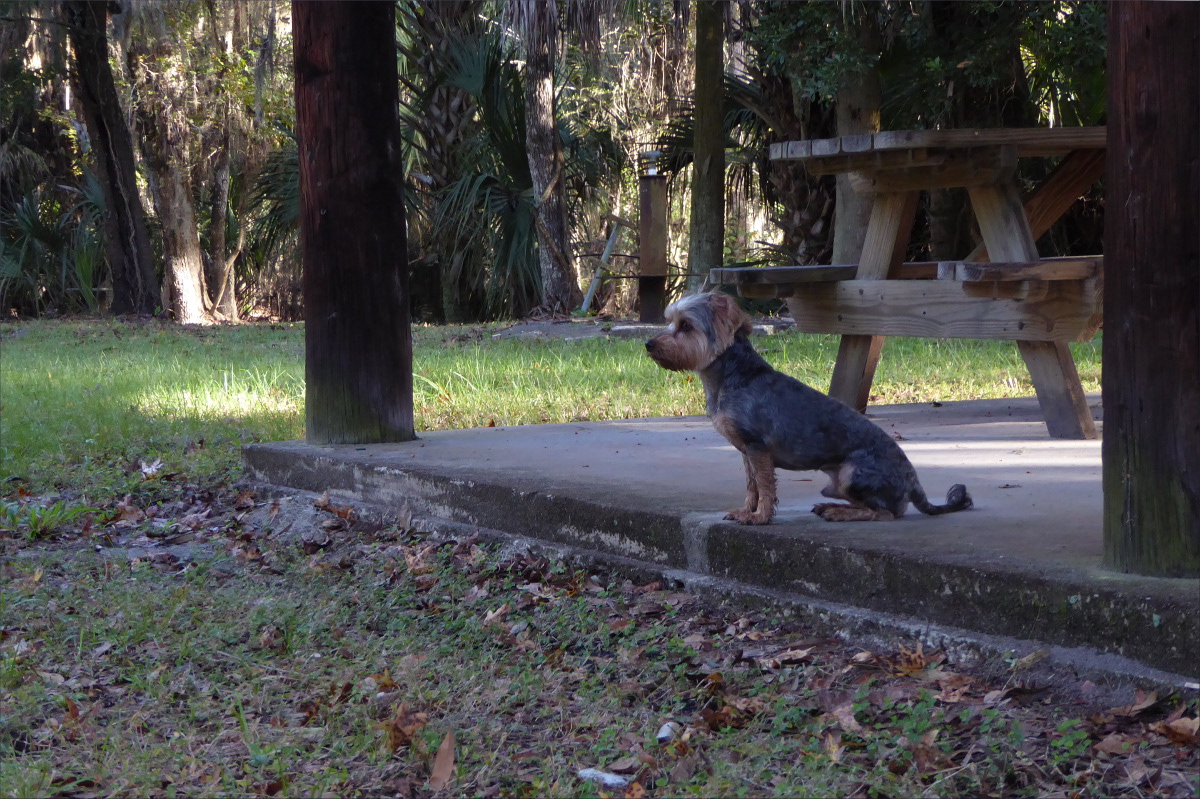
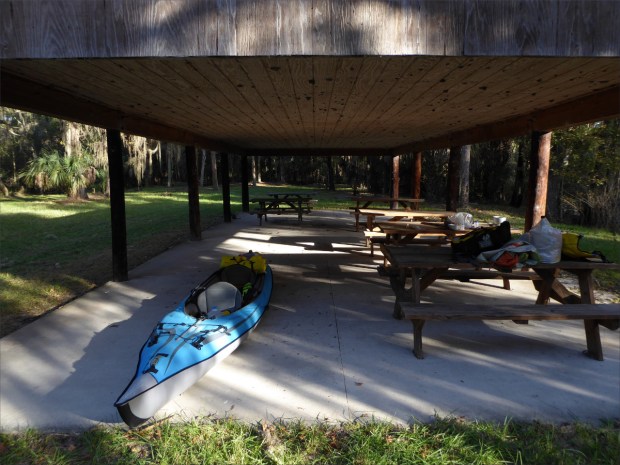
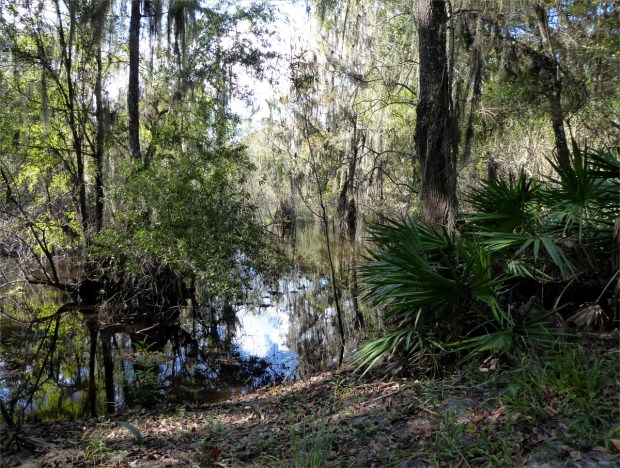
We arrived late the first day, leaving us only three hours of paddling before it was time to set up camp. A campground provided a convenient place to spend the night. Rustic, it had no water or electricity, although there was a pavilion, bonfire pit, porta-johns, an elaborate, four-grill barbecue and a dumpster. The porta-john was green with lichen and neither Gauthier nor I dared to go in it. I was afraid of what it might smell like, but Gauthier was afraid of what we might find in it.
PeaceRiverNov2015018

PeaceRiverNov2015017

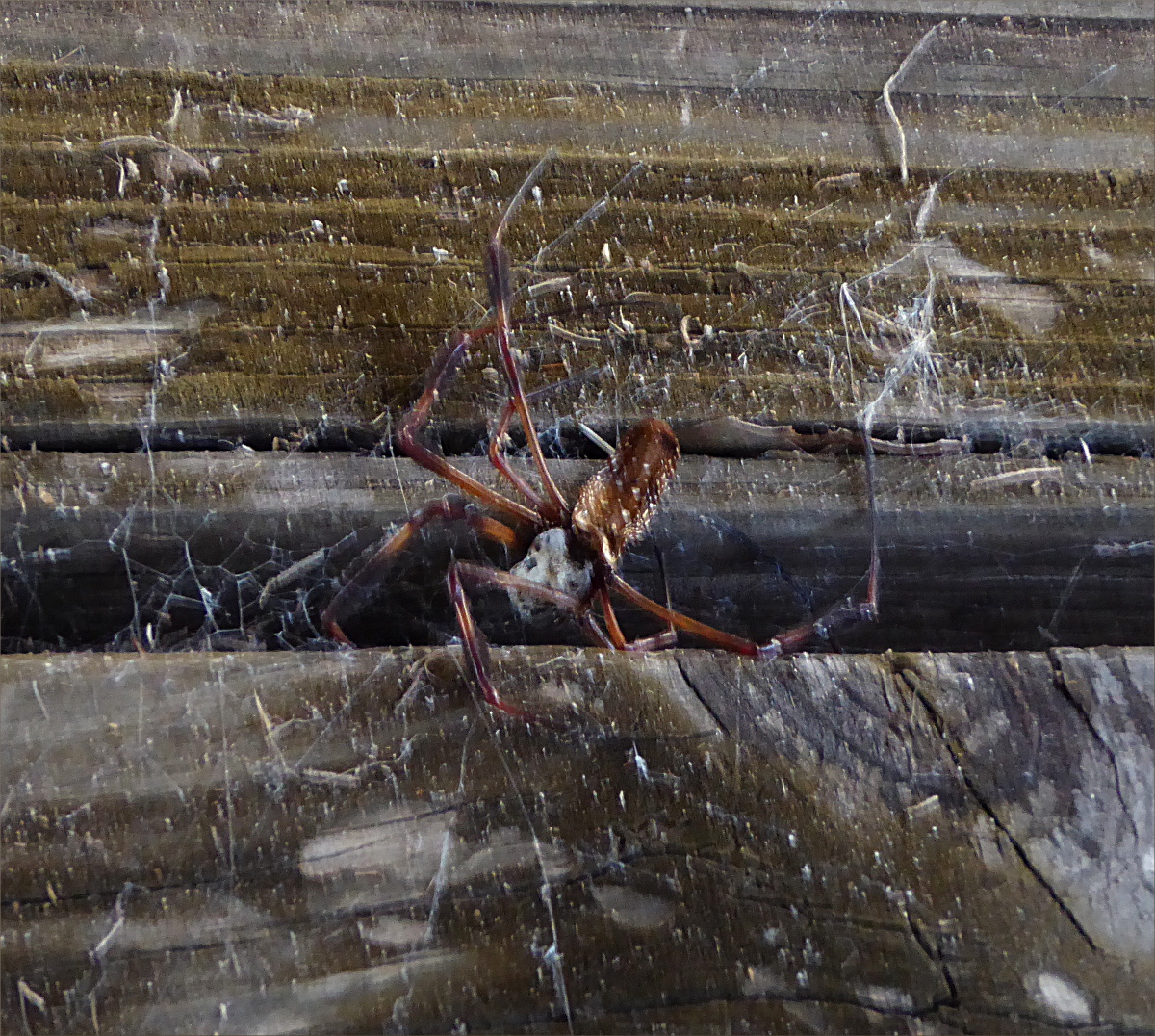
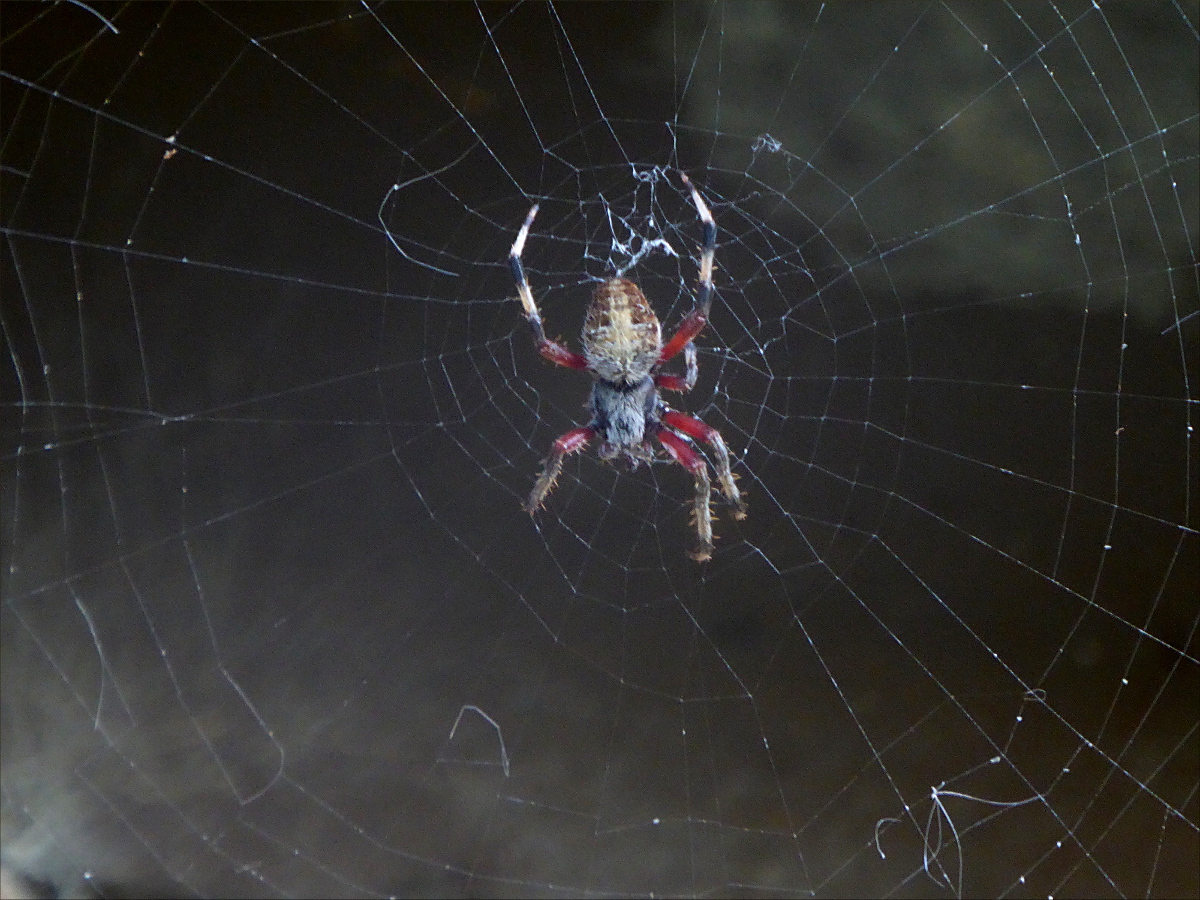
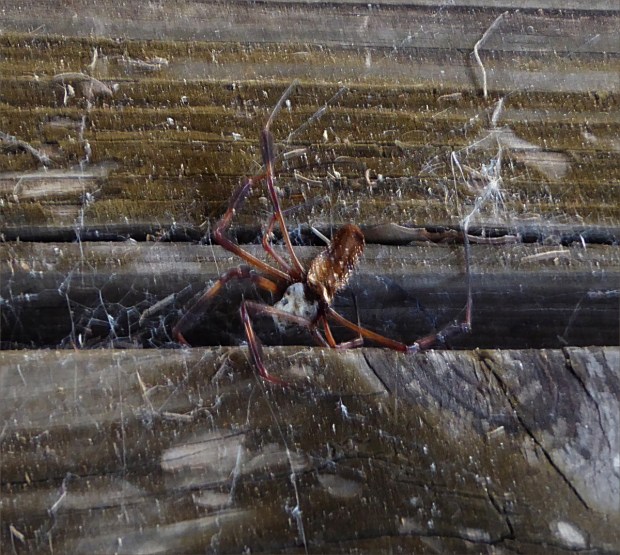
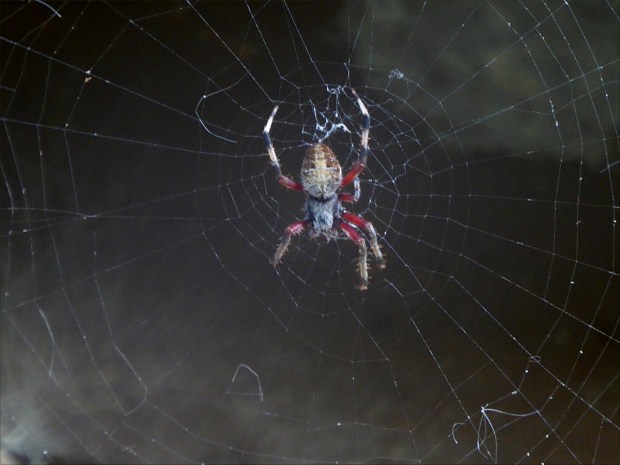
The ceiling of the pavilion was covered in spider webs and mud dauber nests. Spider carcasses made it look like a macabre scene from a movie. I was terrified and transfixed. Gauthier wanted to set our tent up under the pavilion, but didn’t argue when I suggested that we set it up under the stars instead.

PeaceRiverNov2015015

PeaceRiverNov2015014

Gauthier made moong dal and couscous with harissa for dinner, and southern hospitality supplied us with sweet potato pudding. Shortly after we arrived, a truck pulling a trailer drove up and a man in his 50s stepped out. Walking over to us, he introduced himself as Martin and asked us how we were doing. He was talkative and told us the park was built and maintained by the company he worked for, Mosaic. I told him I recognized the name because a sign in the entrance to the park said that the park was dedicated to all the people from Mosaic who had donated their time and labor to the construction and upkeep of the park. That made him smile. He said the park was built 40 years ago and had suffered greatly during the 2005 hurricane, but that everyone had chipped in to restore it.

PeaceRiverNov2015012

PeaceRiverNov2015027

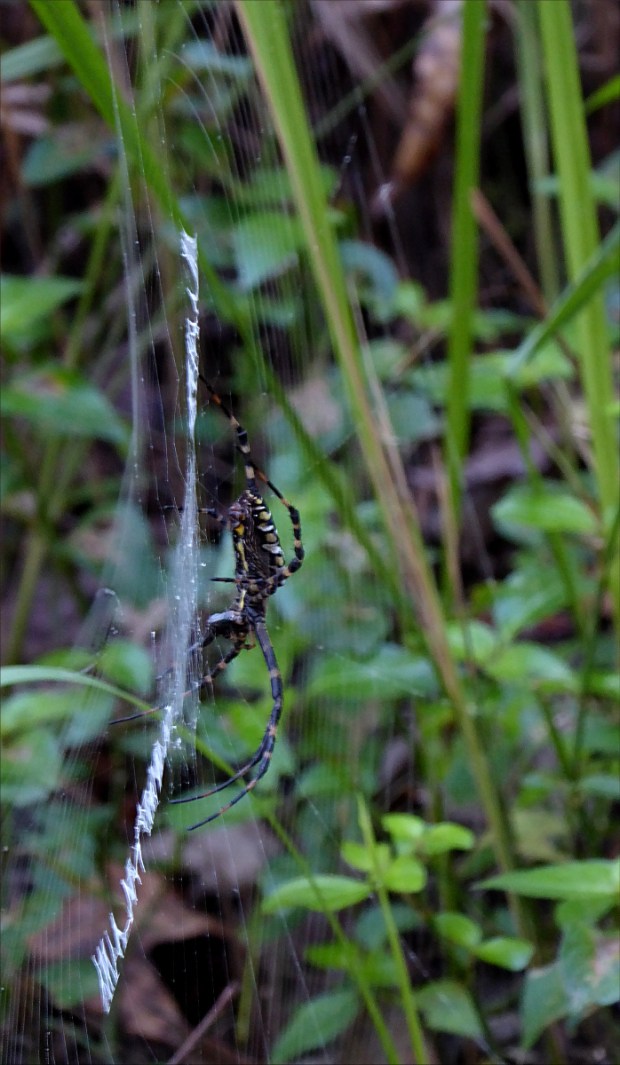
I asked him about the spiders and he said they were harmless, that they called them “house spiders” (I later learned that they are called neoscona domiciliorum or spotted orb weaver). He said the mud daubers wouldn’t hurt you unless you crushed one, which was unlikely to happen unintentionally.
PeaceRiverNov2015013

Before he left, he said he and his two children would be camping on the other side of the campground and that we wouldn’t hear from them again, and insisted that we have some of his home made sweet potato pudding, still warm. It’s easy to regard the Mosaic phosphate mining company as the enemy – breaking EPA laws and decimating the landscape – but it was hard not to like Martin.
PeaceRiverNov2015016

Mosquitoes made it necessary to stay inside the tent, but there was a full moon and a clear sky and it was warm, but not humid, and we left the rainfly off the tent so that it was flooded with moonlight. I woke up several times throughout the night; every time I woke up the moon had traveled a little further across the sky, reminding me that we are all just floating in space.
PeaceRiverNov2015020

PeaceRiverNov2015019

Breakfast was scrambled eggs with fresh green onion, followed by pita bread filled with Nutella, peanut butter and honey. After sticking my foot in a fire ant’s nest, we returned to the river around 9:30 AM.
PeaceRiverNov2015021

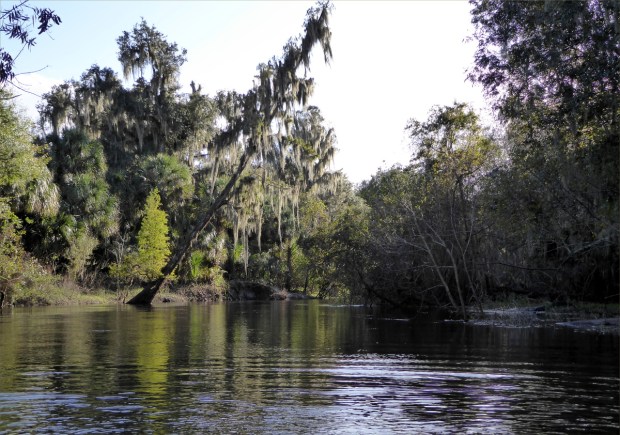
The river widened near Wauchula. As we approached the city we expected to see other kayakers, and were very surprised when we didn’t. The only other boat we saw was a fishing boat with a trawler. There was one man inside the boat and another chest deep in the water outside the boat. The man in the boat yelled to us in a delightful, southern accent, “Did you see that alligator over there?! It’s 12 feet long!”  The man in the water smiled and nodded his head and pointed in the direction of the alligator. And there you have it. If a local fisher is not afraid to be up to his chest in the water with a 12 foot alligator nearby, I am not afraid of alligators either. Well, not very afraid.
PeaceRiverNov2015007

PeaceRiverNov2015009

It was the most peaceful paddling imaginable; effortless in a gently moving current that guided us around bends and islands. We took tiny sips of aromatic heirloom whiskey by Widow Jane.
PeaceRiverNov2015025

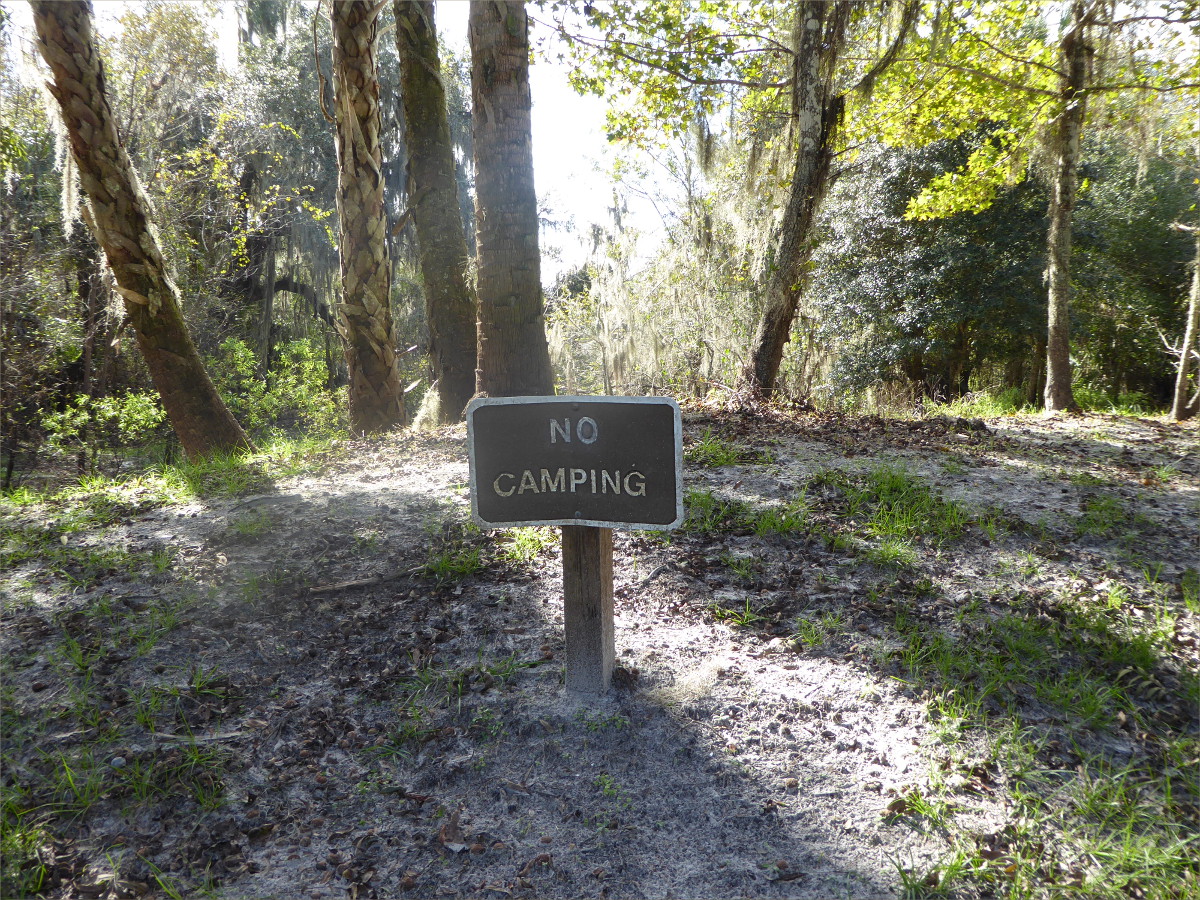
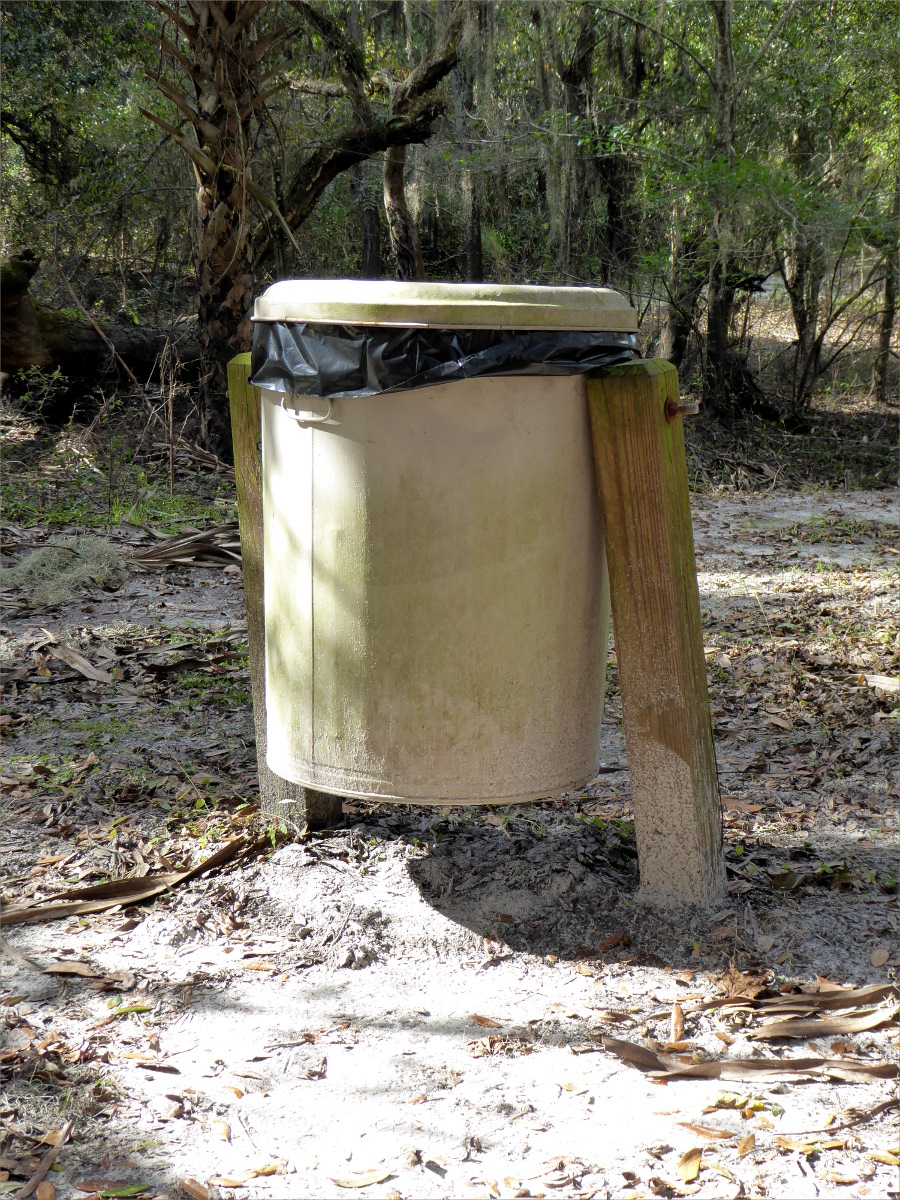
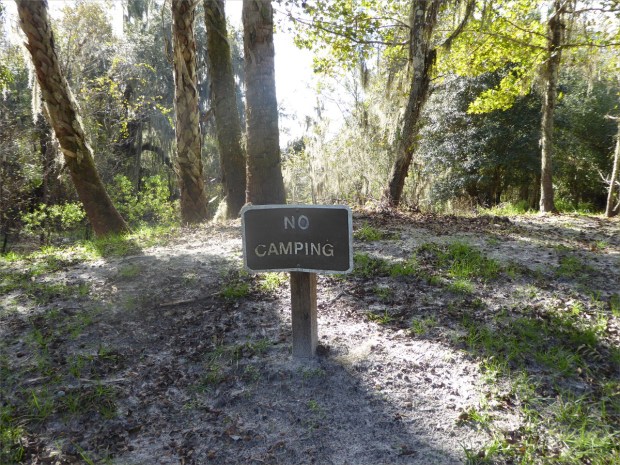
We stopped for lunch at Paynes Creek Historic State Park where we were welcomed by a “No Camping” sign. I wondered why they needed swinging trash cans. Did they prevent raccoons from making a mess?

PeaceRiverNov2015026

PeaceRiverNov2015023

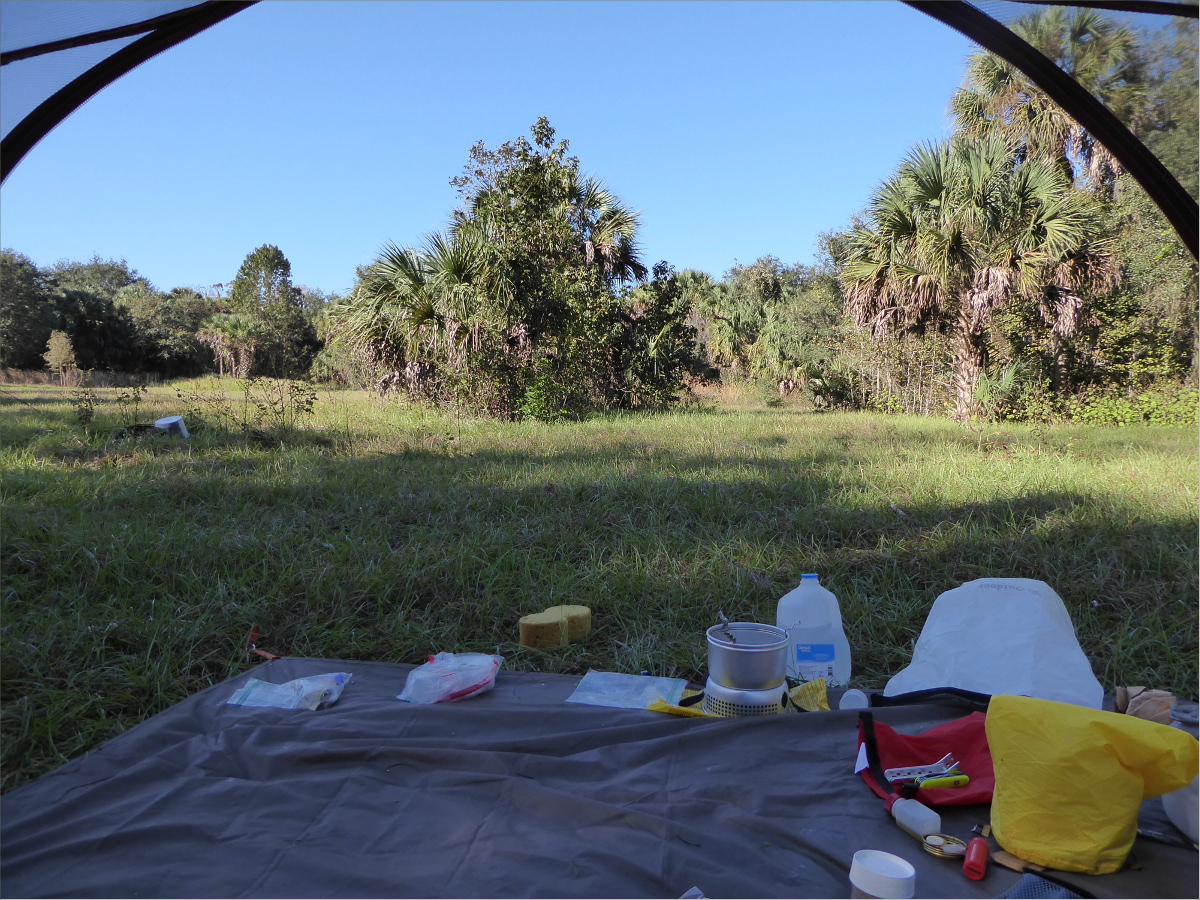
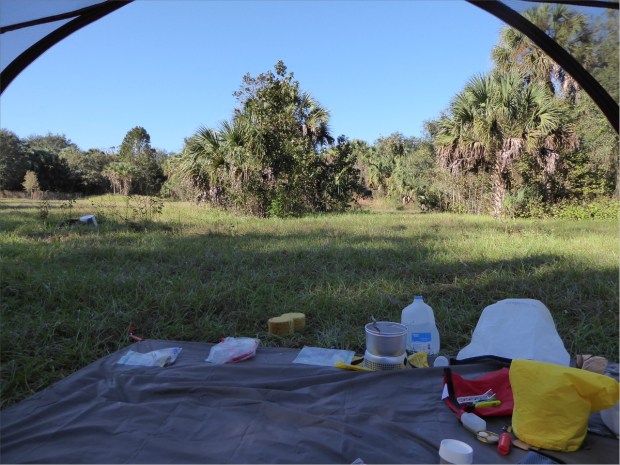
Come 4:00 it was time to start looking for another place to camp. A lovely field on a high bank seemed safe from unsuspecting alligators. We had mashed potatoes and pouched tuna followed by split pea soup for dinner.
PeaceRiverNov2015030

That night, something large and solid rustled in the bushes nearby. An auroch, Gauthier said it was. But Ollie and I weren’t fooled. We knew it was an armadillo.

PeaceRiverNov2015035

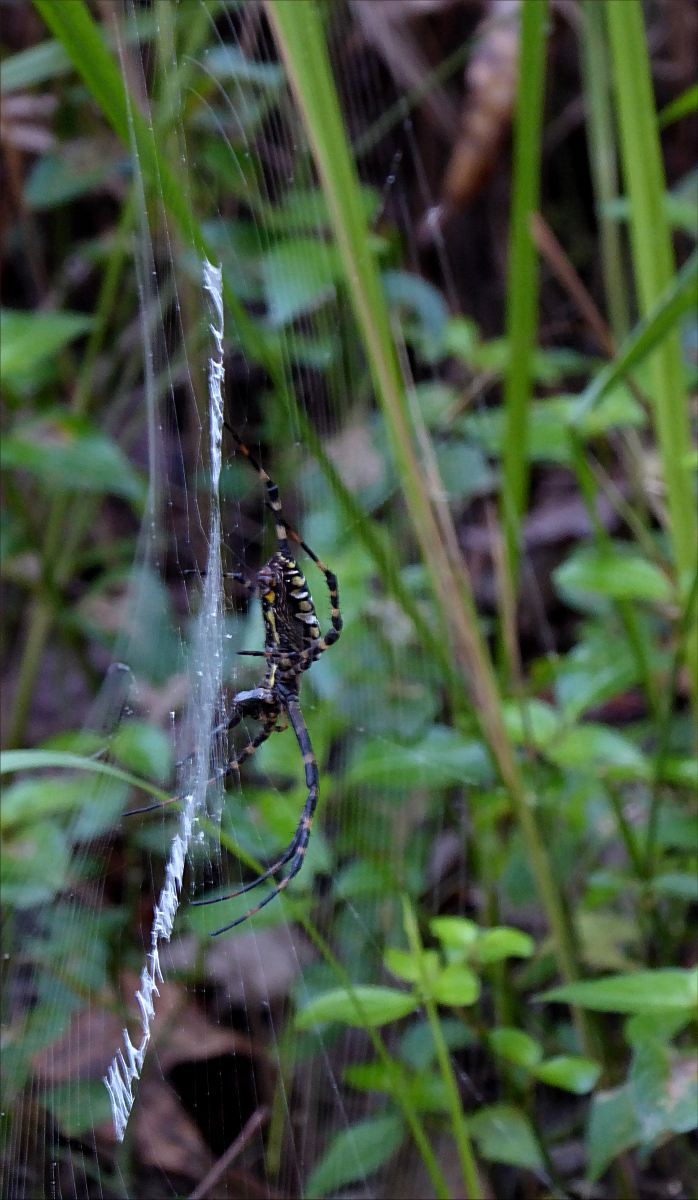
In the morning, dew-drenched grass sparkled in the sunlight and revealed many tiny spider webs – orb and three dimensional – suspended from blades of grass. Ollie and I explored the webs for a while until we discovered a tick. Thankfully it was the only tick we saw. It was an all-black specimen, not like the red dog ticks we have around Miami.

PeaceRiverNov2015028

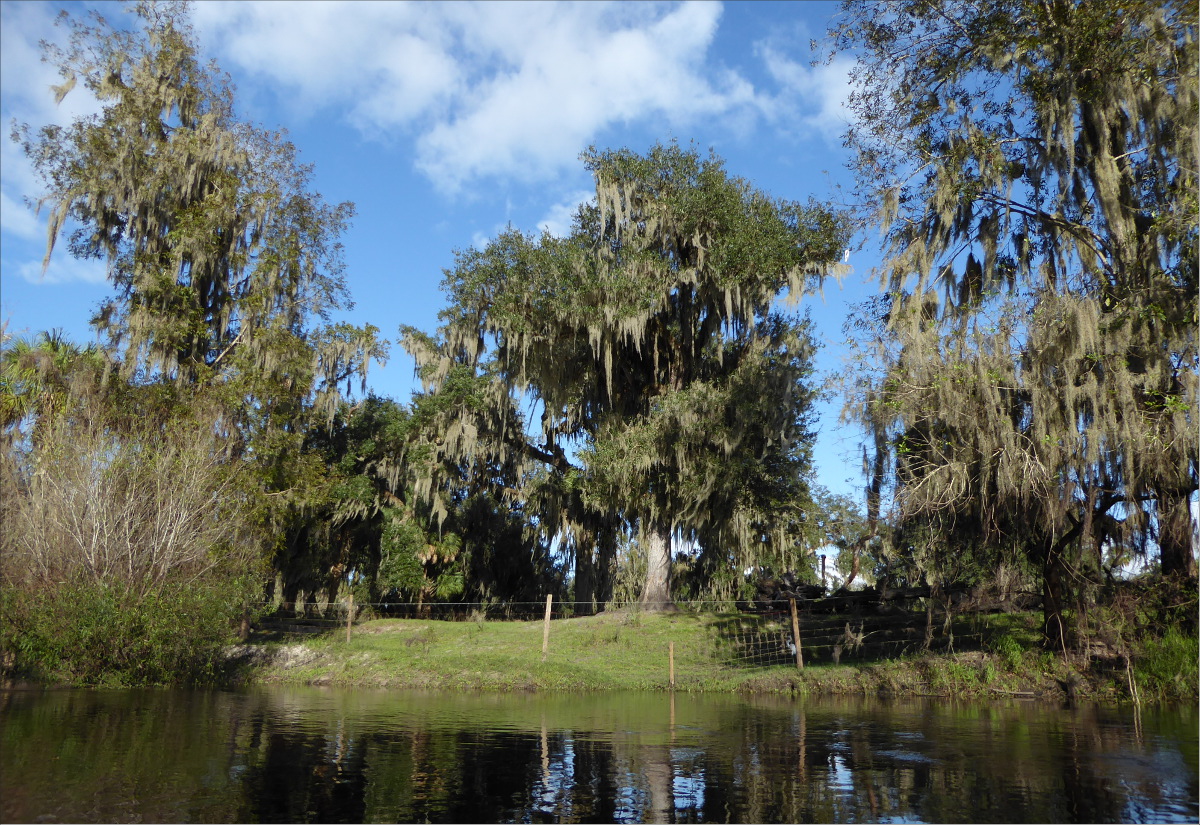
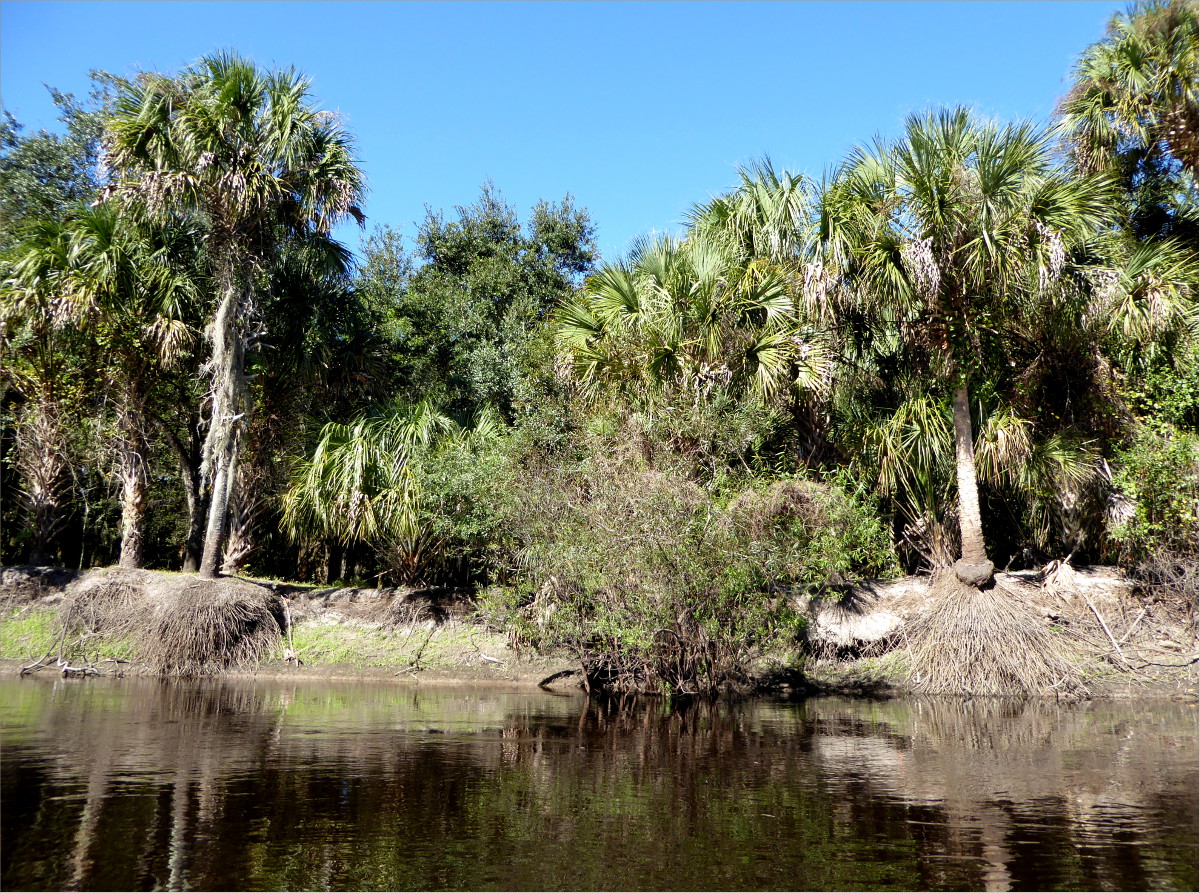
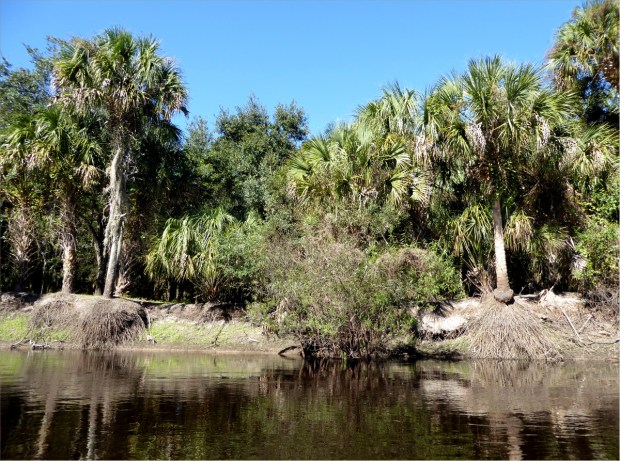
Between Wauchula and Zolfo Springs we passed many ranches and private homes. We saw confederate flags, enormous live oaks, and sable palmettos clinging to the river bank with roots that looked like hair. Once, we heard the sound of human voices interspersed with gun fire a little too close for comfort.
PeaceRiverNov2015032

Just before Zolfo Springs boat launch at Pioneer Park, you learn why it’s called Zolfo Springs. Gurgling up into the river, springs cause the tiniest bit of white water. I was very sorry to reach Pioneer Park, although the prospect of a shower tempered my disappointment.

PeaceRiverNov2015033

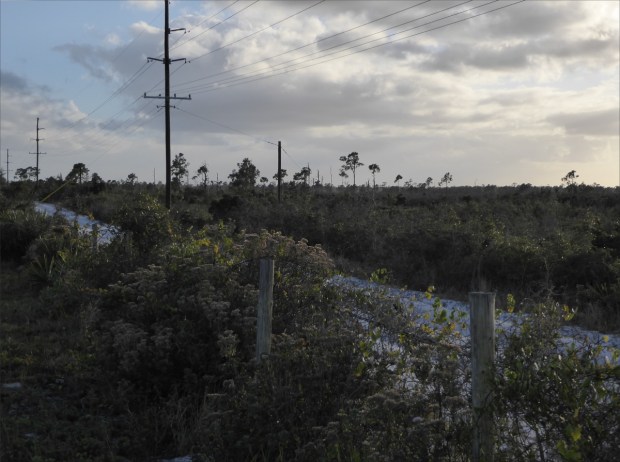
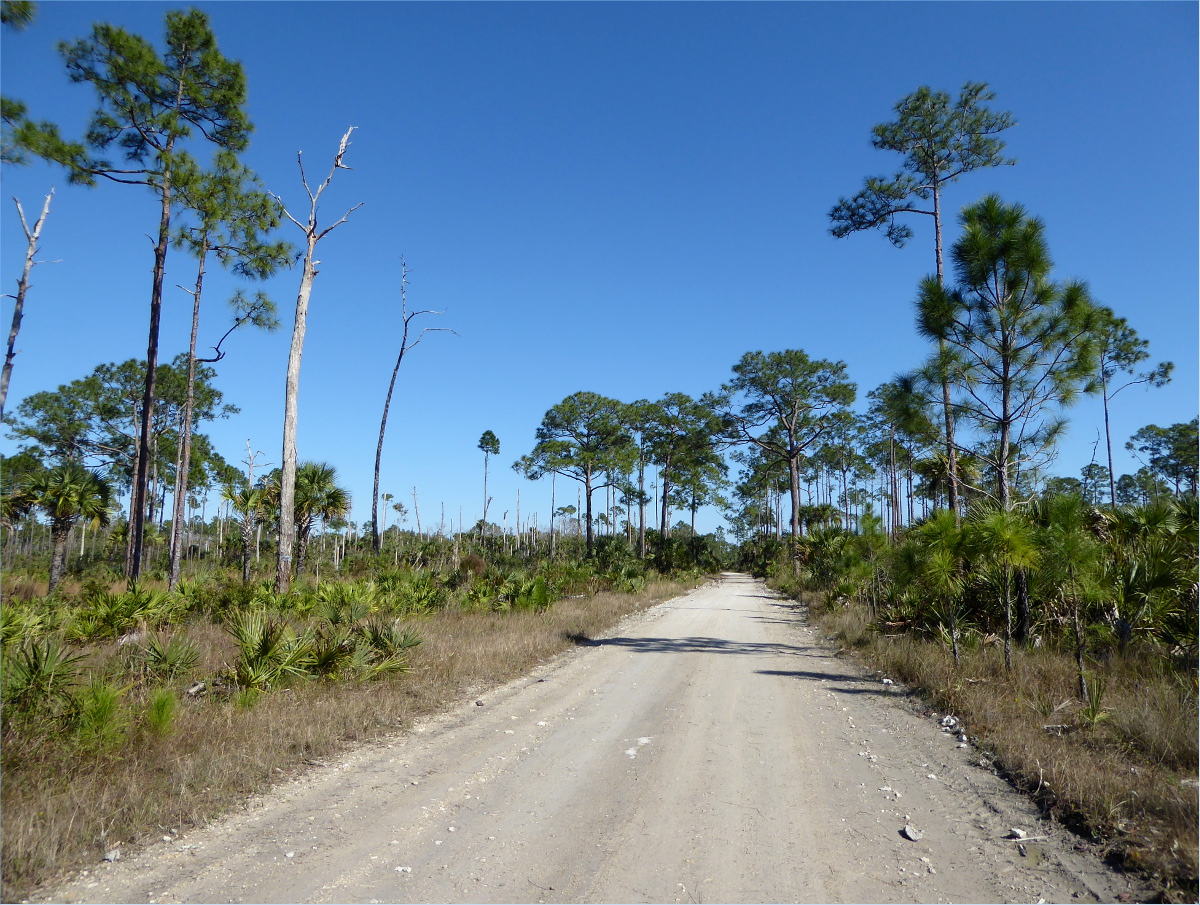
On the way home we stopped for lunch at Wheeler’s in Arcadia and browsed the antiques on sale in the stands that line the street every Saturday. An amazing traveling companion, Gauthier drove us through some very unique landscapes on the way home. Although we couldn’t go in the Archbold Biological Station to explore the unique Florida scrub because we had Ollie with us, we drove through it on Old State Route 8.
PeaceRiverNov2015034

We also drove by a pine tree plantation. On one side of the road was a vast forest of pines trees growing in eerie rows, and on the other side was the muddy and desolate remains of a harvested forest.

We traveled through Florida flatlands that reminded Gauthier of the south of France, and alongside massive orange groves, and around gigantic ranches with “Beef, it’s what’s for dinner!” signs hung outside. The Brahman cattle with their humped backs were a sight to see.

Closer to home, near Lake Okeechobee, they were harvesting sugar cane in the cane plantations. Bright lights lit up the fields like fire flies.

Mystery Channel, Nov 2015


John Pennekamp Coral Reef State Park
(305) 451-6300
25°11’38.86″N 80°20’45.26″W elev 4 ft

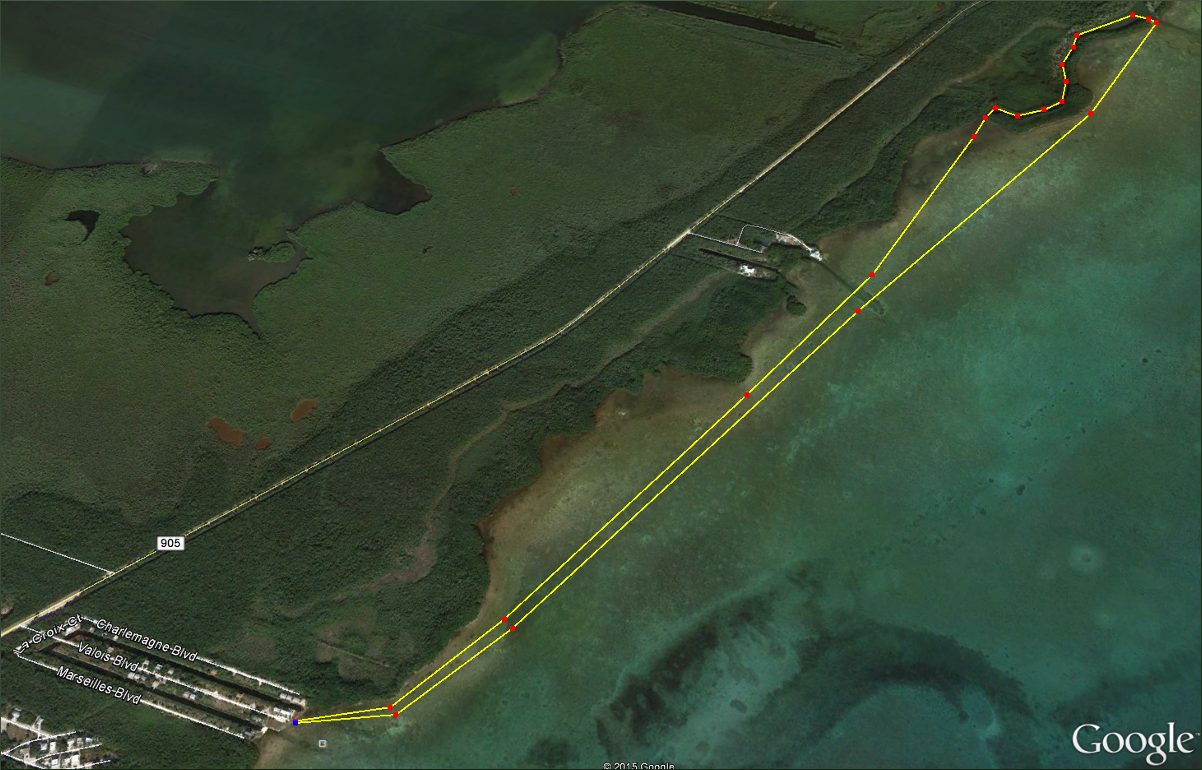
Gauthier had spent days reading maps, so I knew he was planning another adventure. The spot he picked this time was John Pennekamp Coral Reef State Park. The launch site he selected was near Basin Hills, Key Largo.
basin hills

It’s easy to find on a map because of the street names; they’re all French: La Croix Ct, Charlemagne Blvd, Valois Blvd and Marseilles Blvd.
KeyLargoNov2015_011_1200

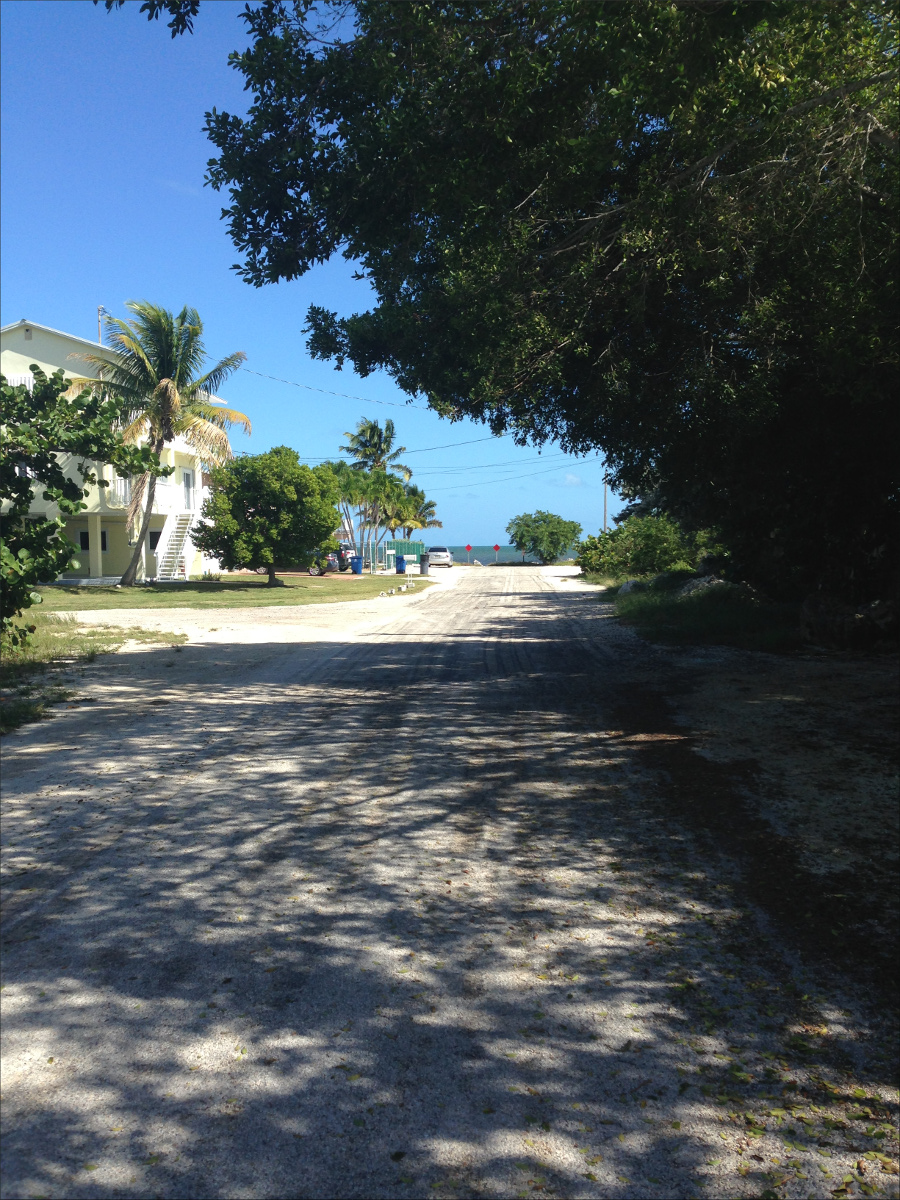
There’s a somewhat public boat dock and launch site at the end of Valois Blvd.
KeyLargoNov2015_010_1200
KeyLargoNov2015_013_1200

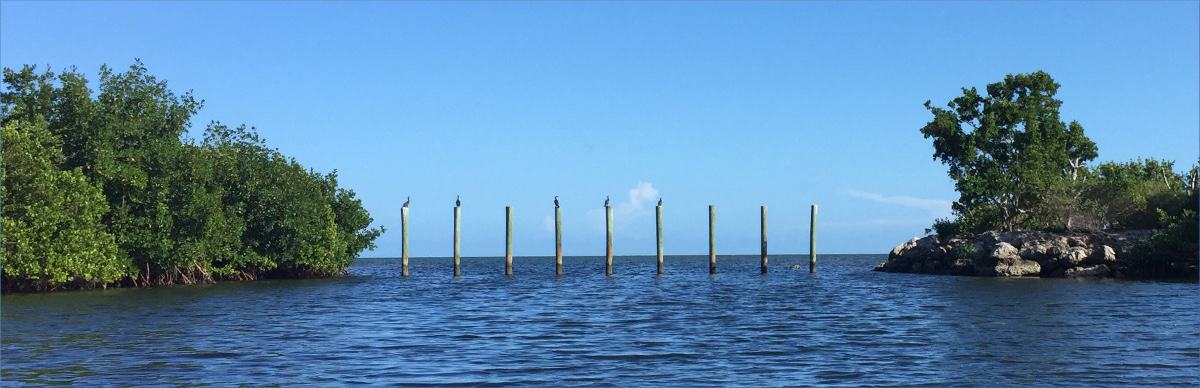
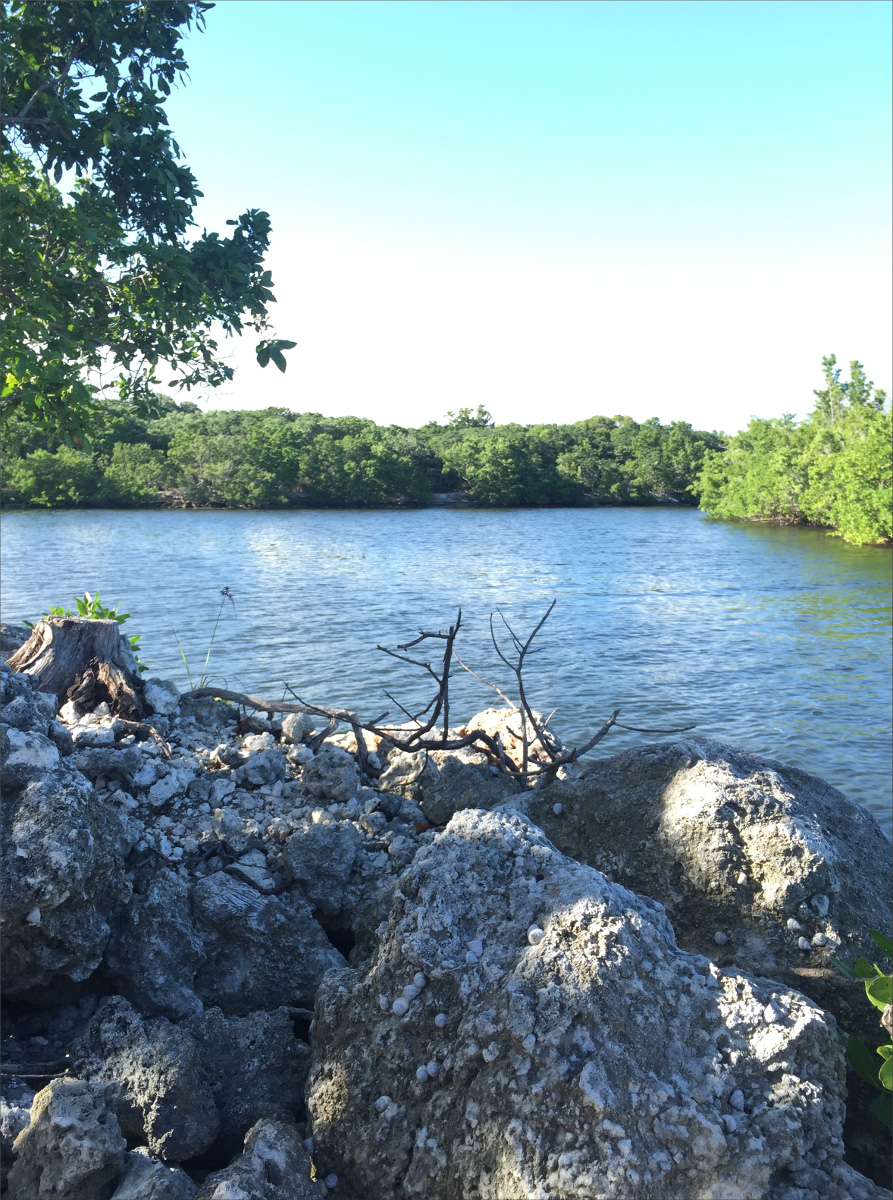
A half hour paddle takes you to a secluded channel fringed on one side by a mangrove swamp and on the other by a rockland hammock.
KeyLargoNov2015_014_1200
KeyLargoNov2015_015_1200

Wooden poles prevent all but the smallest of water vessels from passing into it.
KeyLargoNov2015_001_1200
KeyLargoNov2015_017_1200

The shallow channel was obviously dredged, but whether it was dredged during the early part of the last century by developers to build houses or after the Cuban Missile Crisis by the government to transport nuclear missiles, we couldn’t say.
KeyLargoNov2015_016_1200

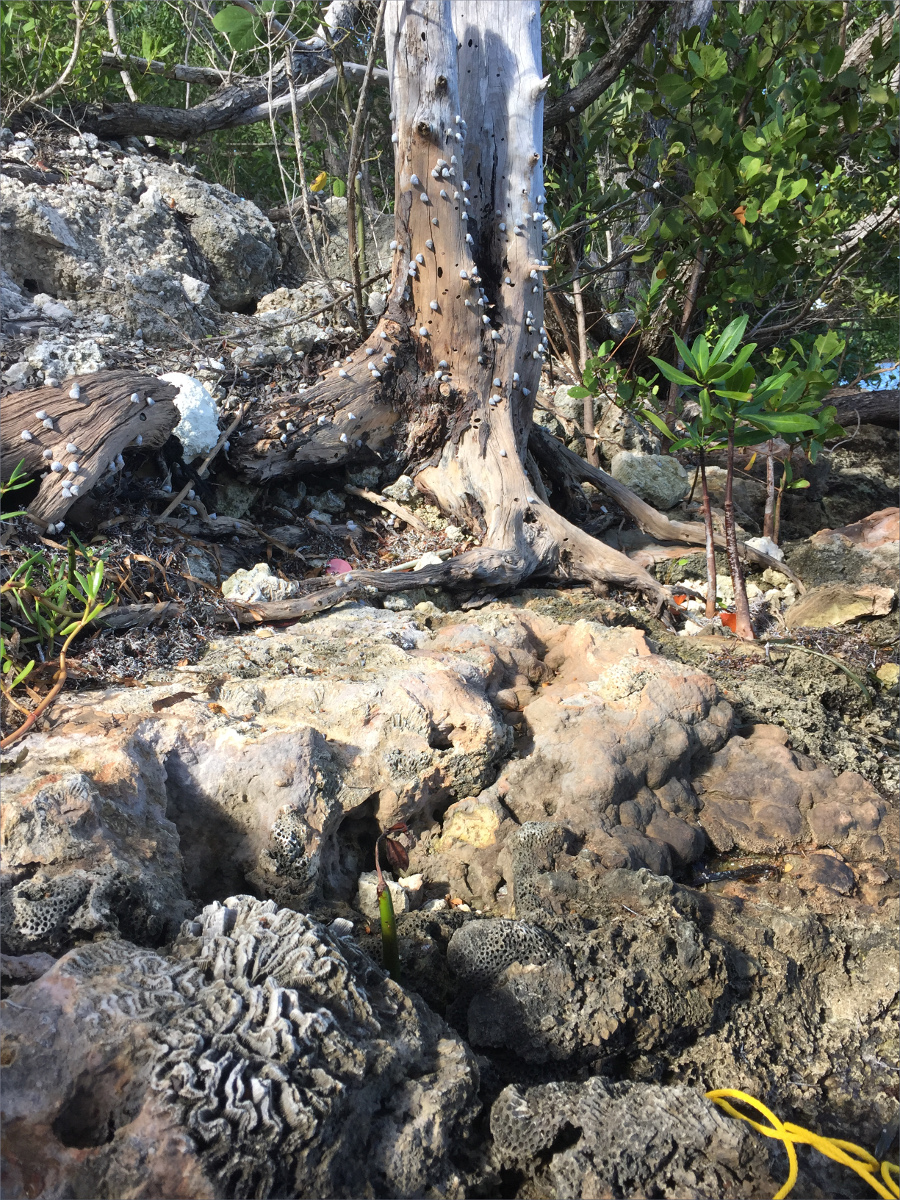
What looked like a crumbled concrete slab stretched along much of the rockland hammock. We saw many birds – cormorants, pelicans, egrets and herons – but my favorite find was chitons.
KeyLargoNov2015_006_1200

Chitons are a primordial animal and have the sharpest teeth on the planet, and some species have evolved into carnivores. We were also impressed by the blown up chunks of keystone coral.
KeyLargoNov2015_003_1200
KeyLargoNov2015_018_1200

A mound of logs laid horizontally piqued our curiosity.
KeyLargoNov2015_002_1200

On our way home we stopped at Alabama Jack’s.
KeyLargoNov2015_009_1200

Spring and Fall in Southwest Miami-Dade County, 2015


Spring starting point:
Silver Palm, FL 33170
25°33’03.40″N 80°26’43.82″W elev 11 ft

Fall starting point:
SW 168 Street and SW 208 Avenue, Miami FL 33187
25°36’30.57″N 80°31’30.14″W elev 5 ft

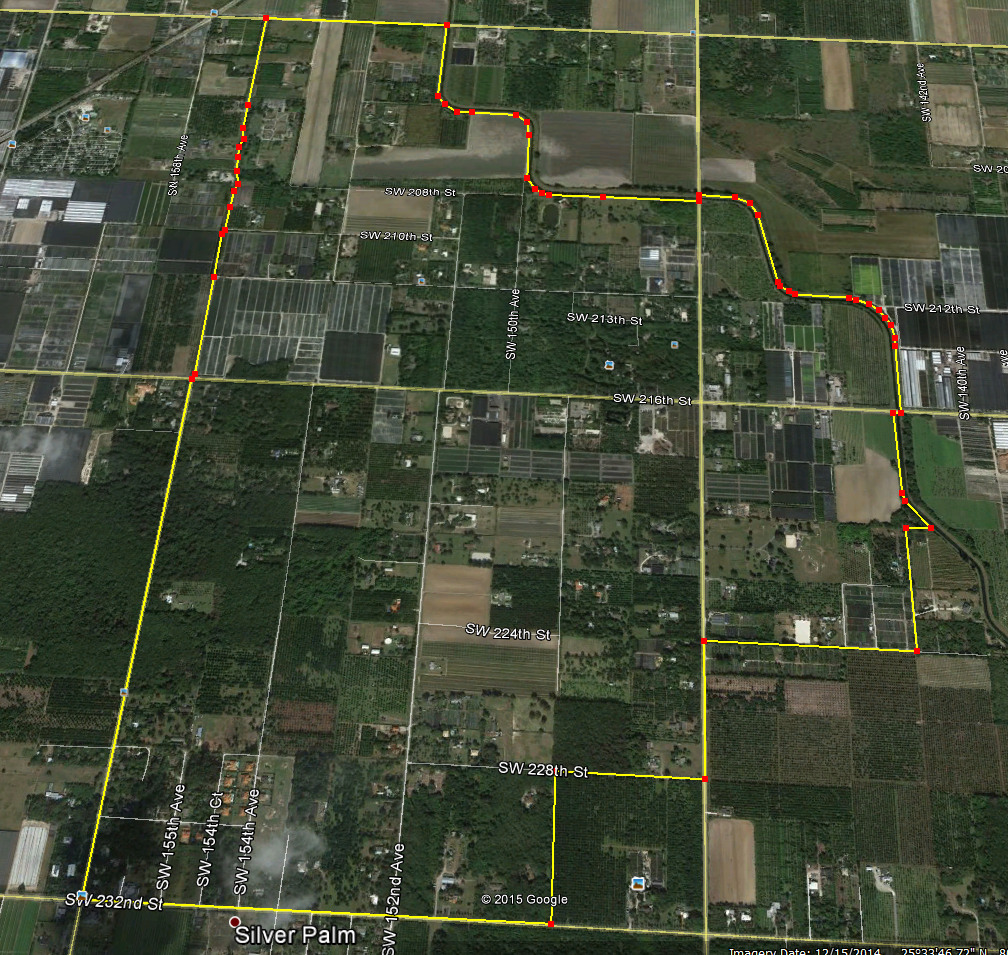
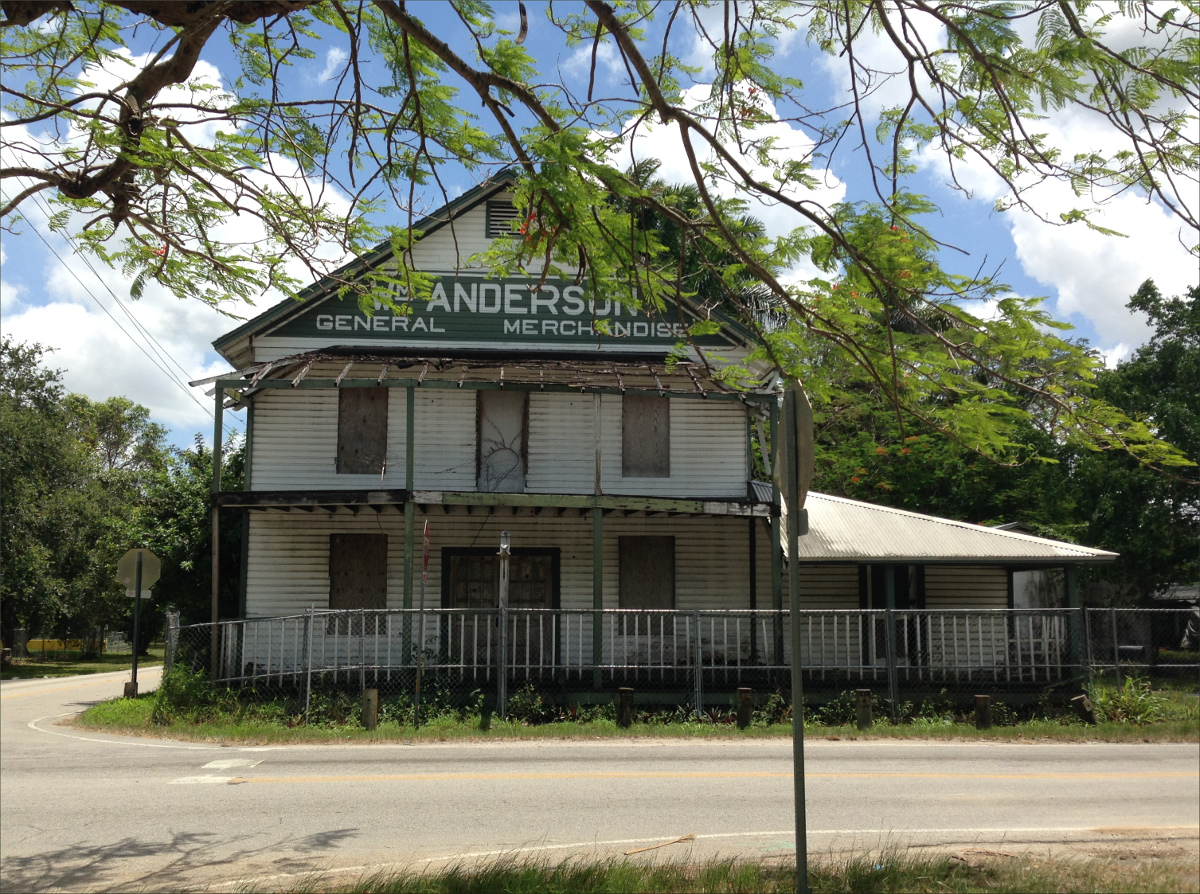
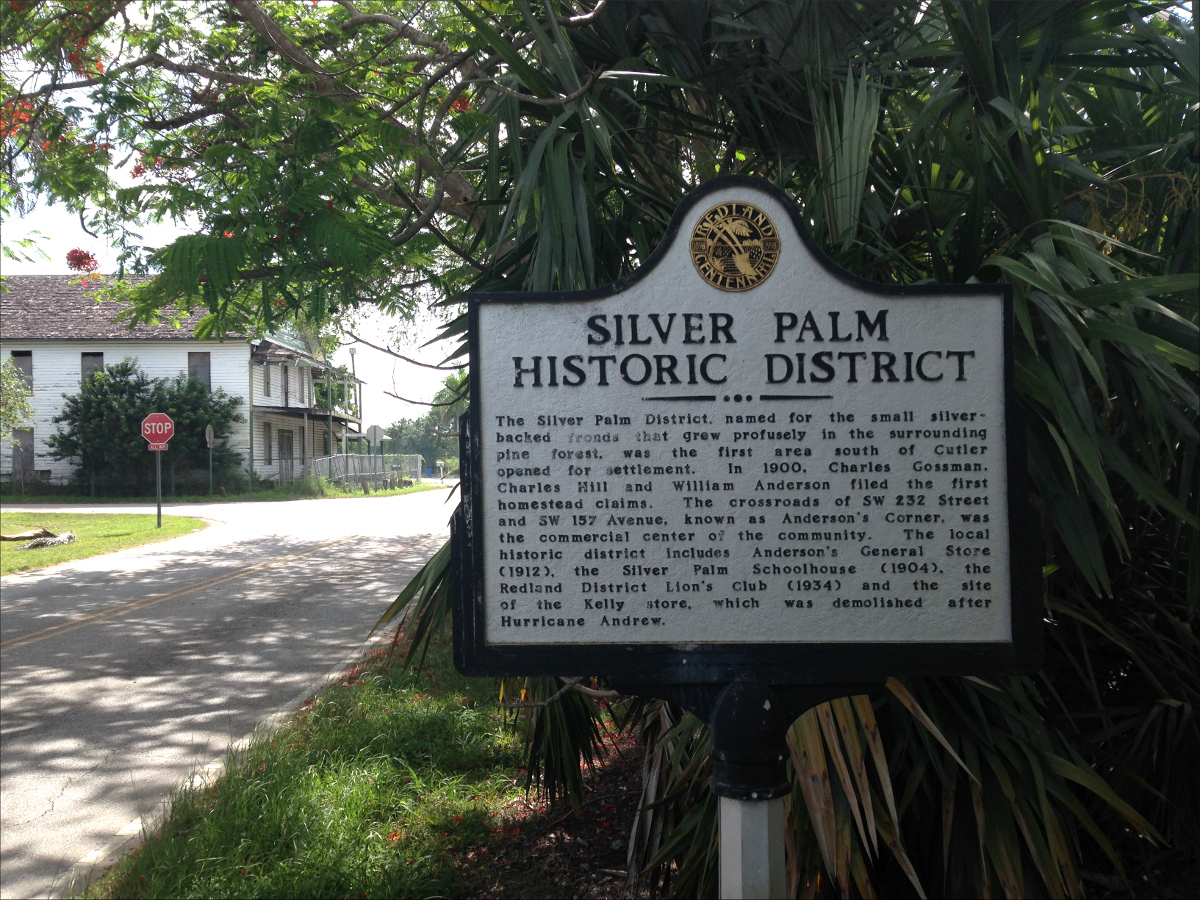
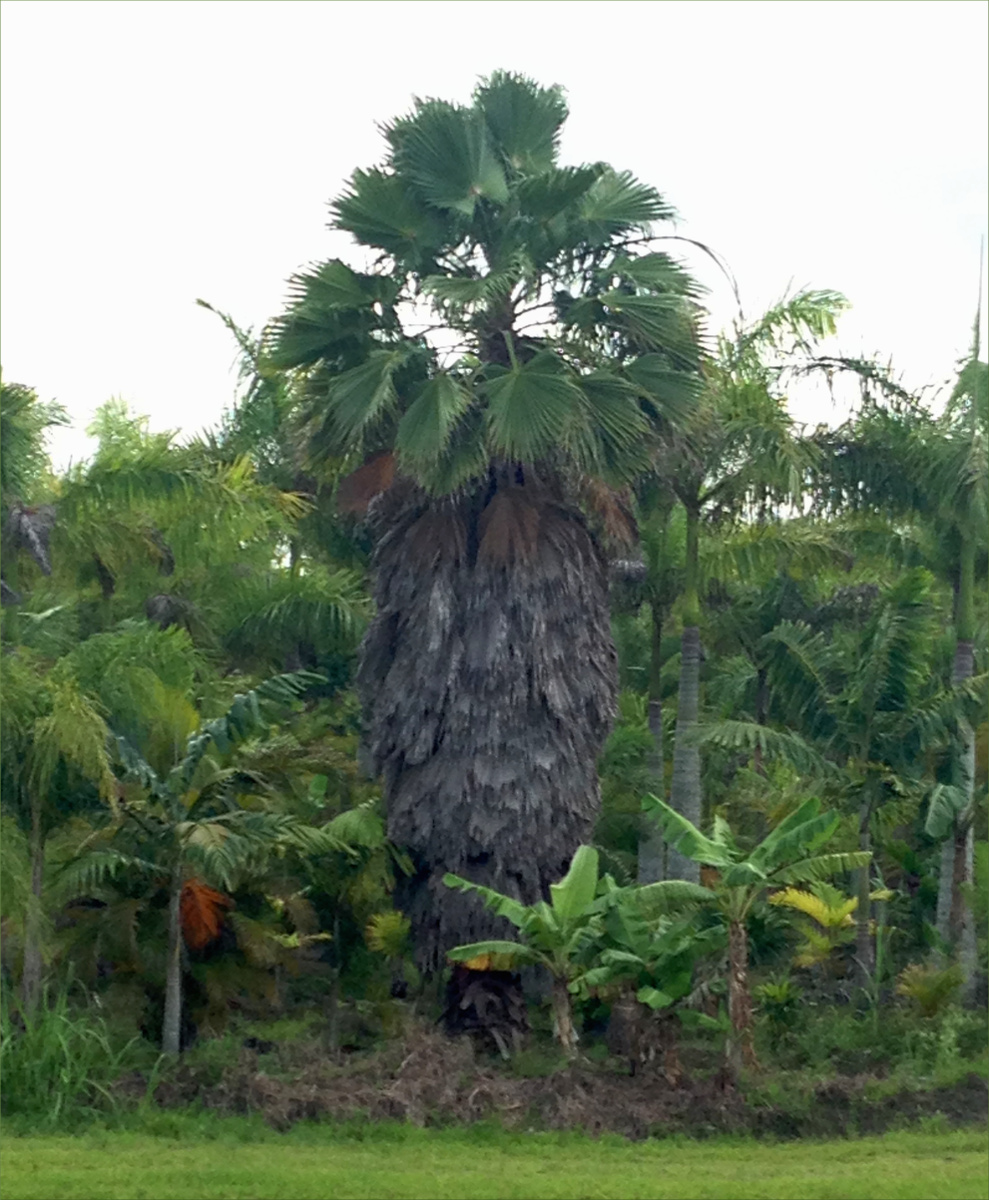
Our bike riding adventures took us to southwest Miami Dade County twice this year. In May, they took us to the Redland historic agricultural area. Our path followed public roads barely recognizable as roads and canal C-102. We saw a variety of farms: avocado, palm tree, mango, dragon fruit, bromeliad and many others. We also saw donkeys and purple love grass.
In November, we ventured into the fringe of Miami Dade County just west of the C-357 seepage canal where “farmburbia” peters out and the Everglades National Park begins. Once again we followed the ruins of public roads. This time they were overgrown with grasses as thick as your thumb and so high they blocked out the sun. Once inside the perimeter of Everglades National Park, there were two roads to choose from. One was cut out of the native limestone floor. We took this road as far as we could before it became flooded, which wasn’t very far. The other was made of raised hard pack and offered a great view of the endless horizon of Shark River Slough. We saw mocking birds, blue jays, butterflies, goats, chickens, cows, horses, dogs and, unfortunately, discarded tires, soda pop cans, mini fridges and cell phone accessories circa 2005. We also stumbled upon Julio’s Apiary, a licensed bee farm.

redlands

1505-4

1505-9

1505-7

1505-5

1505-3

1505-12

1505-11

1505-6

1505-2

1505-10

1505-8

1505-1

7 miles on the Fringe

151101-1

151101-2

151101-3

151101-6

151101-5

151101-4

Resources
Select Florida Native Grasses for North Central Florida – Fact Sheet #67, by Gale Kempner, University of Florida IFAS Extension
Modified Water Deliveries to Everglades National Park, 8.5 Square Mile Area, by Michael J. Collis, US Army Corps of Engineers, Jacksonville District, May 23, 2012
Agrilicious: Julio’s Apiary & Avocado/Mango Grove

Just Down the Street, Mar 2015


Chapman Field Recreation Center
13601 Deering Bay Dr, Coral Gables, FL 33158
(305) 665-3837
25°38’42.13″N 80°17’25.47″W elev 16 ft

Chapman Field Recreation Center, or Chapman Field Park as it’s better known, is a ten minute drive down the lushly canopied Main Highway from where Gauthier and I live in Coconut Grove. We launched from Chapman Field for the second time two Sundays ago. I love this spot. It was quite busy on both occasions. On our first visit, we ran into a kayaker training to become a kayak tour guide in Alaska. On our second visit, we met a man who had just completed a 25 mile paddle on a Hobie. There were also several groups of kayakers.

Blog_MG_3487

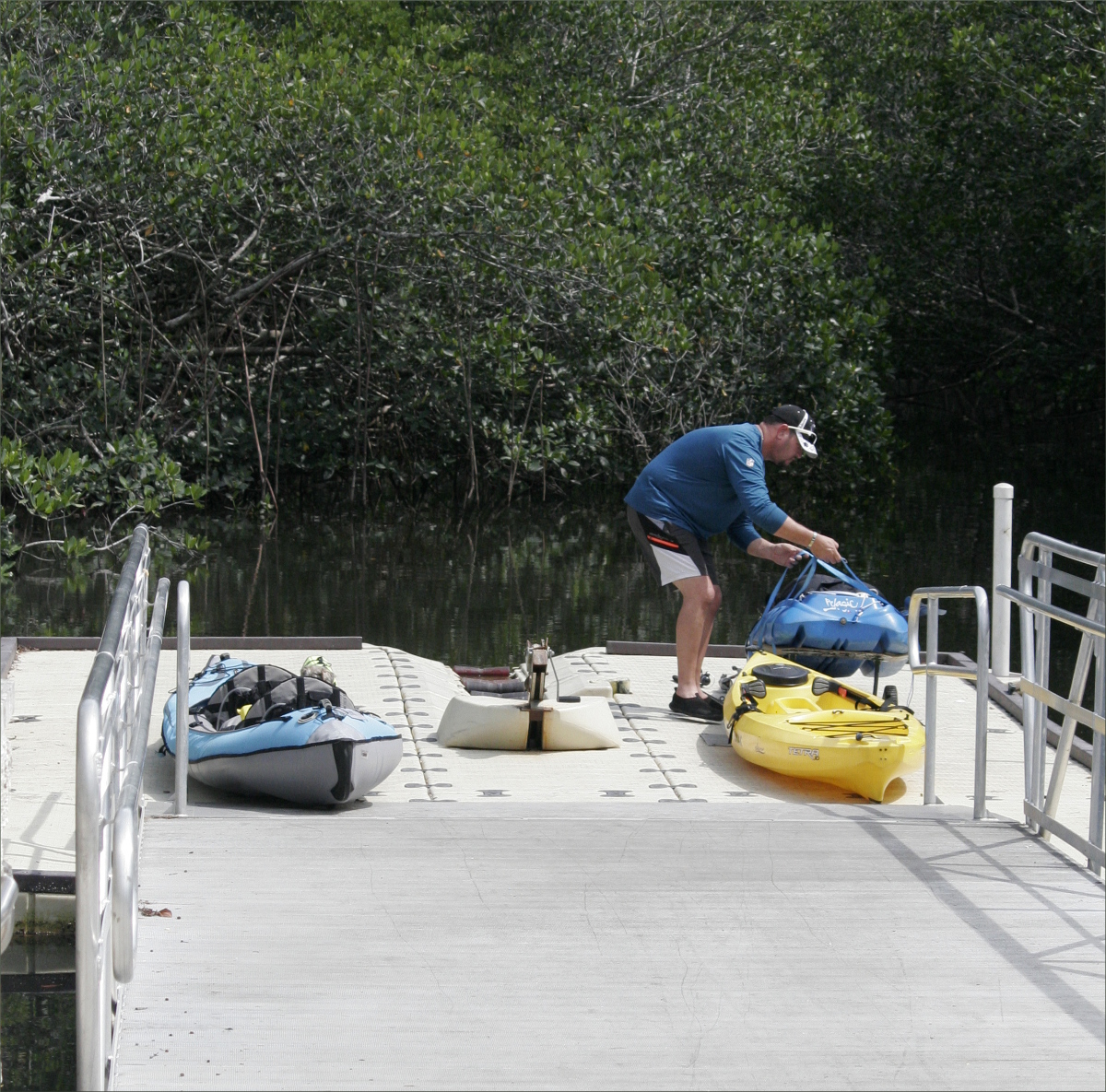
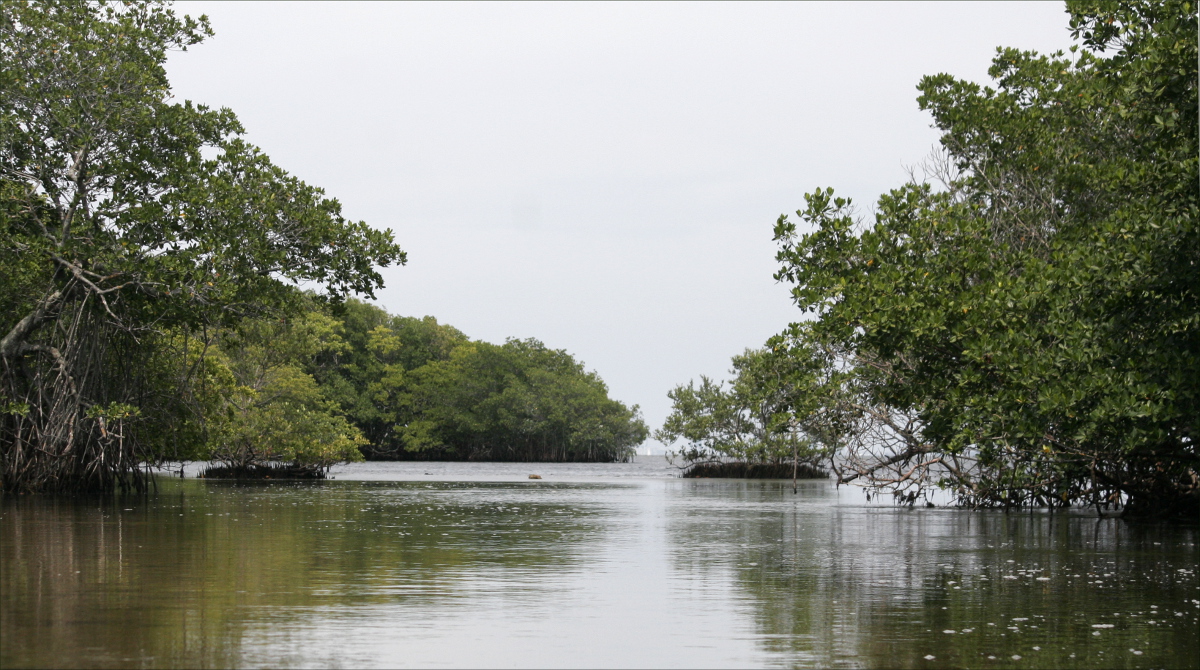
The individual in the photo of the launch dock was part of a group of three who loaded their kayaks with beer, fishing gear and a boom box. We ran into them on our return trip. They were hanging out where Biscayne Bay meets the labyrinth of canals that takes you back to the launch. One of them was swimming and, as we approached, his buddy yelled “Alligator!” That brought him upright in a rush!

Blog_MG_3490

The history of Chapman Field is rather complicated, but fascinating. I found a very well written and detailed account of it here: Chapman Field – The Evolution of a South Dade Army Airdrome, written by Raymond G McGuire formerly of U.S. Department of Agriculture, last updated 2005.

Blog_MG_3491

What follows is a summary of that document:
The U.S. military created Chapman Airfield in 1918 to assist with the war effort. The site consisted of a marl landing field, a lagoon for water landings, channels into Biscayne Bay, and a town with electricity, waterworks, a sewage system and a hospital. It was named after the first American pilot casualty of the war. Abandoned after the war, the land was used by the United States Department of Agriculture.

Blog_MG_3496

Under the leadership of Dr. David Fairchild, a plant explorer in charge of the Bureau’s Office of Foreign Seed and Plant Introduction, and creator of Miami’s famous Fairchild Tropical Botanic Garden, the site was used as “an ‘Ellis Island for plants’ – a place where sensitive plants could be propagated and bred for resistance to colder temperatures prior to their introduction to areas of the U.S. farther north.” By 1938, they had brought over 9000 new plant specimens to the site. In 1935, the site was expanded to include space for conducting rubber research.

Blog_MG_3505

Portions of Chapman Field were subsequently used by Embry-Riddle flight school, the University of Miami, and passed through the hands of a private developer or two. As of 2001, according to the author, neighbors and environmental concerns had “stalled large-scale development sufficiently long that community interest has turned toward preservation of Chapman Field Park as a natural area.” The USDA has continuously occupied a section of the property since 1923, and continues to conduct plant science research there.

Blog_MG_3508

If you’ve ever wondered what an overgrown baseball field looks like, Chapman Field Park will provide you with the answer. The first thing you see when you enter the park is a small, elevated, outdoor recycling center, followed by a series of three overgrown baseball fields. The park also includes a hiking/bike trail. But of course, my favorite part is the kayak launch.

Blog_MG_3530

Blog_MG_3486
(In case you were wondering where Ollie was!)

Fakahatchee by Bike, Jan 2015


Fakahatchee Strand Preserve State Park
137 Coast Line Drive, Copeland, FL 34137
(239) 695-4593
26°01’14.37″N 81°24’29.28″W elev 8 ft

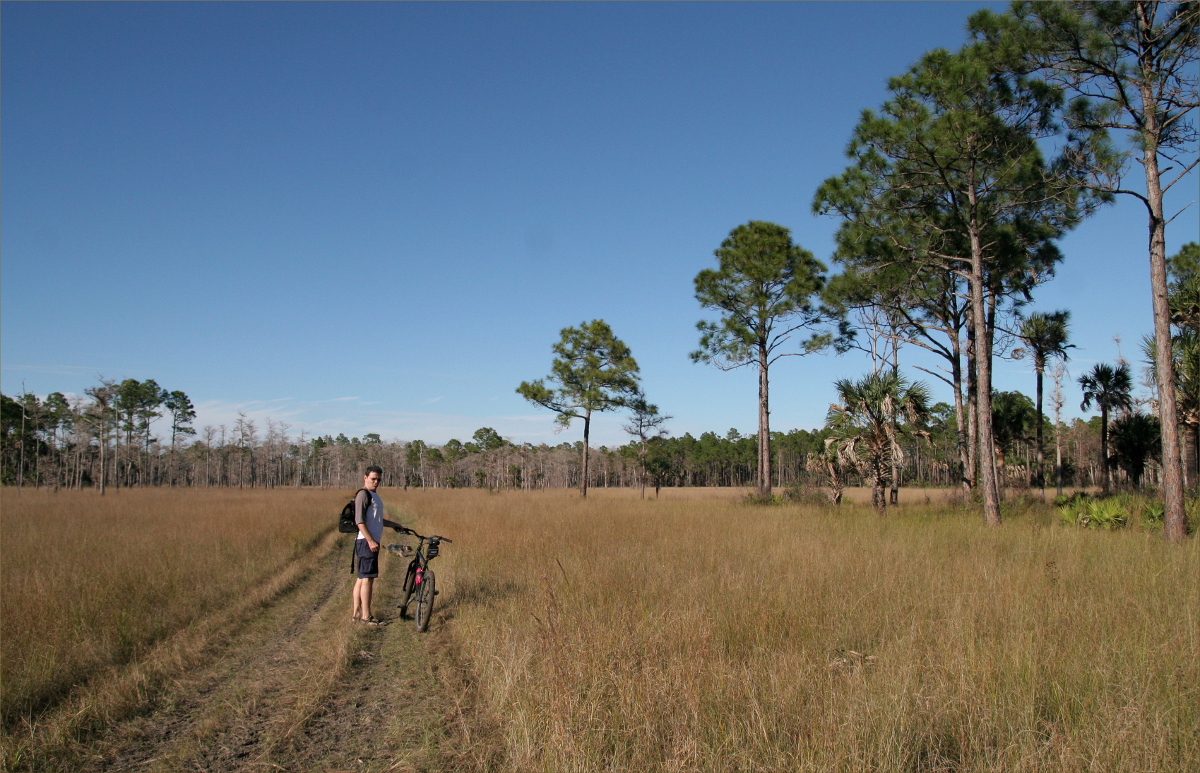
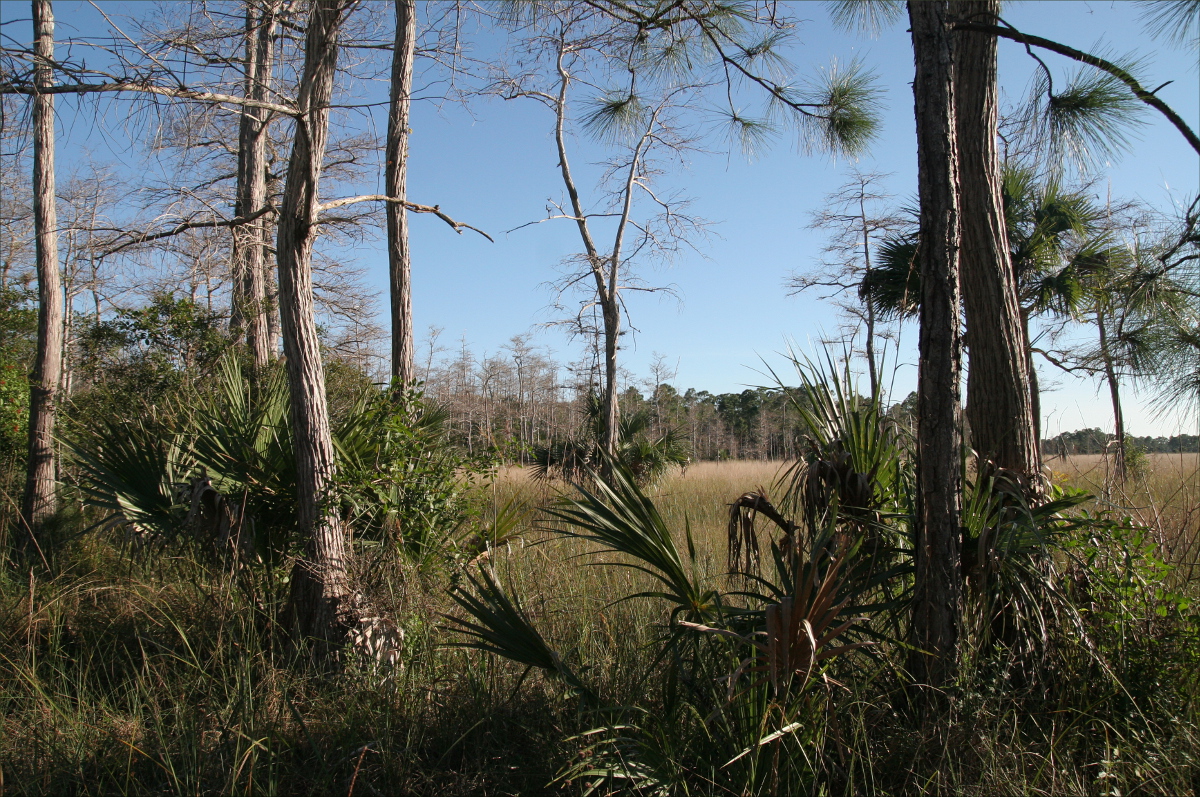
The rumors about Fakahatchee are true: it is breathtakingly beautiful with incredible diversity. Several trails loop through the sub-tropical strand swamp. We took the shortest loop – 12 miles, four over dirt roads and eight through the wilderness – and it took us four hours.

IMG_3211_1200
The oranges in those wild orange trees were super sour.

IMG_3214_1200
Originally purchased in 1913 by the Lee-Tidewater Cypress Company, logging began as a war time measure in 1944 and continued into the ’50s. Approximately one million board feet of cypress per week were removed. This guy looks to have been a casualty.

IMG_3225_1200
In 1966, the Lee-Tidewater Cypress Company sold the Strand to a real estate company, who platted it and sold 1 1/4-acre residential lots. In 1972, the Florida Land Conservation Act was passed and the State started to buy back the land. Consequently, abandoned dwellings, such as this one, appear occasionally along the trail.

IMG_3227_1200
One of the draw-backs of biking the trail is that you miss seeing some of the smaller details of the trail, like the ghost orchids that the trail is famous for. However, there was no missing the giant leather ferns, one of 36 fern species that grow in the Strand.

IMG_3230_1200
This section of the trail is called Four Stake Prairie. As you can see, it got a little muddy. Although the 3.8 mile section of trail through Four Stake Prairie to Mud Tram Road was moist, we didn’t encounter mud like this again.

IMG_3243_1200
The pine dotted Florida prairie

IMG_3247_1200

IMG_3255_1200
This is where the trail veered away from the Four Stake Prairie and into Mud Tram Road

IMG_3256_1200
Biking along Mud Tram Road was a bit of a challenge. Knee high grass and vines hid cypress knees, tree roots, and holes in the oolitic limestone out of which the road was carved. But they were nothing an urban assault bicycle couldn’t handle… I wish I could say the same for the rider. We walked most of this section.

IMG_3258_1200

IMG_3260_1200
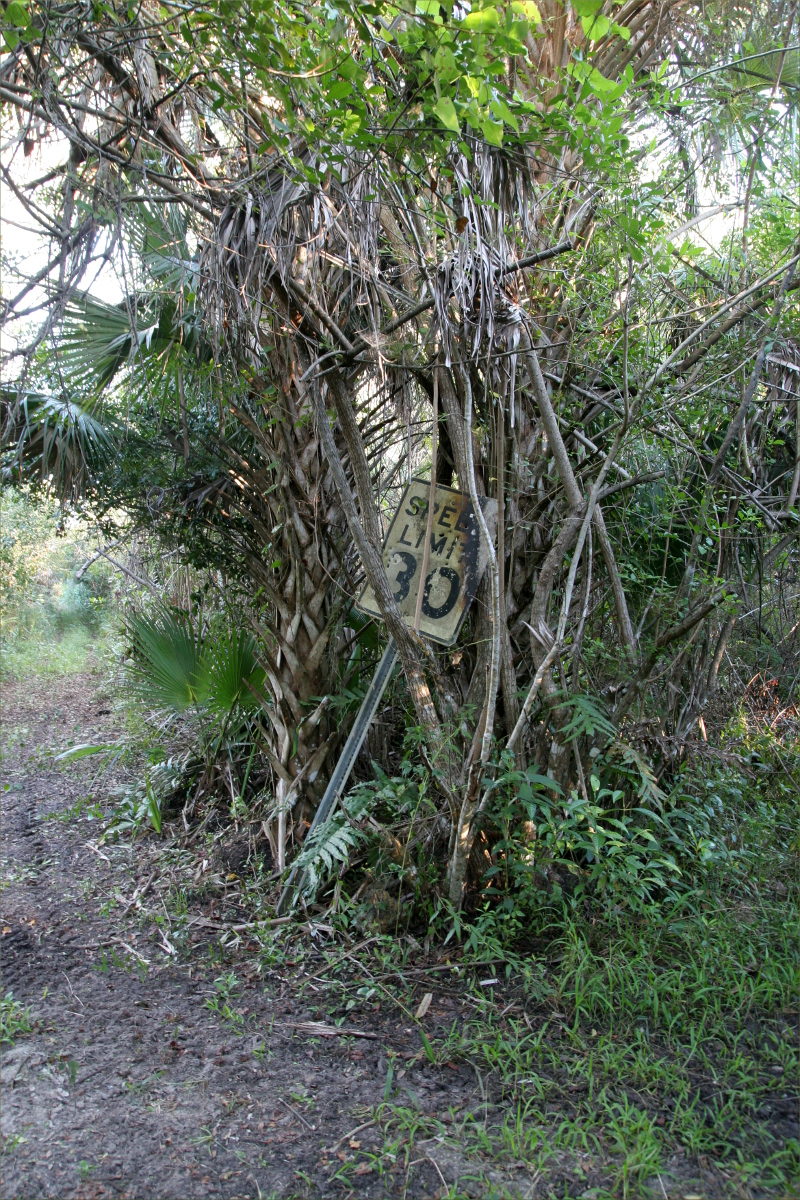
A speed limit we could handle.

Resources
The History of Fakahatchee Strand, by Franklin Adams, Friends of Fakahatchee historian
Experience the Fakahatchee East Main Trail
The Ferns of Florida: A Reference and Field Guide, by Gil Nelson